Introduction to Hyperledger Blockchain Technologies (Linux Foundation)

Offered by Linux Foundation,
Introduction to Hyperledger Blockchain Technologies (Linux Foundation)

An introduction to blockchain, distributed ledgers and Hyperledger technologies. Discover the power of business blockchains and distributed ledger technologies with an overview of Hyperledger and introductions to its key frameworks. All over the global market there are ledgers that organizations and individuals alike must trust. Blockchain technologies record promises, trades, transactions or simply items we never want to disappear, allowing everyone in an ecosystem to keep a copy of the common system of record.

This introductory course is carefully curated for nontechnical, business-oriented audiences. It examines blockchains for the enterprise and a number of pertinent use cases from Hyperledger, a global cross-industry community of communities hosted by The Linux Foundation and advancing business blockchain technologies. Hyperledger is incubating and promoting enterprise grade, open source business blockchain software, on top of which anyone can set up apps to meet cross-industry needs.
The course covers key features of blockchain technologies and the differentiators between various types of Hyperledger projects. We’ll start with ‘what is blockchain’ and open the discussion to identifying suitable blockchain use cases for your business requirements. We will then take a deeper dive into the enterprise-ready Hyperledger blockchain frameworks and tools.
Students will gain an understanding of how blockchains work and how they can create value for their business through cost-savings and efficiencies, in terms of speed and simplicity. They will view how information is generated, stored, and shared in various blockchains, as well as gain tools to evaluate whether or not a blockchain solution would be suitable for their particular business case.
Industries today are using blockchain technologies to increase efficiency and solve business problems associated with data privacy, security, information sharing, and inclusion. Be on the cutting edge; learn about these innovative technologies and bring unique value to your business.

What you’ll learn:

  • Describe Business Blockchain and Distributed Ledger Technologies
  • Gain familiarity with current Hyperledger projects and cross-industry use cases
  • Become involved in and contribute to the open source Hyperledger projects

Course Syllabus:

  • Welcome!
  • Discovering Blockchain Technologies
  • Introduction to Hyperledger
  • Hyperledger: Distributed Ledger Frameworks and Domain Specific Blockchains
  • Hyperledger Tools
  • Hyperledger Libraries
  • The Promise of Business Blockchain Technologies
  • What’s Next?
  • Final Exam (Verified track only)

Note: This course is currently not available.

Related Courses

How to Validate your Startup Idea (Coursera) Coursera
UNSW Sydney - University of New South Wales

How to Validate your Startup Idea (Coursera)

Starting a new business begins with an idea that needs to evolve through experimentation, iteration and interactions with people. This course is for existing and potential entrepreneurs who are looking for guidance and support to make their ‘great idea’ a reality. In addition to reviewing the basic principles of entrepreneurship, this course guides you through the process of actively validating your idea in the market.

Jun 22nd 2026
5-12 Weeks
Introduction to Spreadsheets and Models (Coursera) Coursera
University of Pennsylvania

Introduction to Spreadsheets and Models (Coursera)

The simple spreadsheet is one of the most powerful data analysis tools that exists, and it’s available to almost anyone. Major corporations and small businesses alike use spreadsheet models to determine where key measures of their success are now, and where they are likely to be in the future. But in order to get the most out of a spreadsheet, you have know how to use it. This course is designed to give you an introduction to basic spreadsheet tools and formulas so that you can begin harness the power of spreadsheets to map the data you have now and to predict the data you may have in the future.

Jun 22nd 2026
4 Weeks
New Models of Business in Society (Coursera) Coursera
University of Virginia

New Models of Business in Society (Coursera)

In this course, developed at the Darden School of Business at the University of Virginia and taught by top-ranked faculty, we will be discussing the emergence of a new story about business. This new story locates business within a societal framework. Almost every business creates or destroys value for customers, suppliers, employees, communities and society, in addition to shareholders and other financiers. A number of new models of business can be built on this idea such as corporate responsibility, philanthropy, shared value and sustainability. Profits and stakeholder value go together, and this course explains how. The final session explores the idea of how to become a stakeholder entrepreneur and create a business that makes money and makes the world a better place.

Jun 22nd 2026
4 Weeks
Blockchain Opportunity Analysis for Global Commerce (Coursera) Coursera
INSEAD

Blockchain Opportunity Analysis for Global Commerce (Coursera)

In this fourth and final course of the specialization, you will synthesize your learning into a project deliverable called a Blockchain Opportunity Analysis. The goals of this course are twofold: One, it’s for you to identify a specific need or problem in Global Commerce that can potentially be solved using blockchain technology. Two, it’s for you to investigate possible solutions to this problem, including how these solutions might be executed. You will accomplish different project milestones each week, and will be introduced to several tools that entrepreneurs use to organize their findings.

Jun 28th 2026
5-12 Weeks
Decision-Making and Scenarios (Coursera) Coursera
University of Pennsylvania

Decision-Making and Scenarios (Coursera)

This course is designed to show you how use quantitative models to transform data into better business decisions. You’ll learn both how to use models to facilitate decision-making and also how to structure decision-making for optimum results. Two of Wharton’s most acclaimed professors will show you the step-by-step processes of modeling common business and financial scenarios, so you can significantly improve your ability to structure complex problems and derive useful insights about alternatives. Once you’ve created models of existing realities, possible risks, and alternative scenarios, you can determine the best solution for your business or enterprise, using the decision-making tools and techniques you’ve learned in this course.

Jun 22nd 2026
4 Weeks
The Art of Negotiation (Coursera) Coursera
University of California, Irvine

The Art of Negotiation (Coursera)

The art of negotiation comes into play daily in the life of employees at all levels and in every position. Participants explore how current approaches to negotiation strategy and tactics are used, what negotiation entails, types of negotiation relationships that exist from hard bargain to win-win, to fully partnered relationships and personal ones. The course explores the personal and behavioral characteristics of an effective negotiator. Participants discuss how empowerment, power, and authority affect the negotiation process and outcome. Topics include how important it is to plan and prepare for a negotiation session.

Jun 22nd 2026
4 Weeks
Intercultural Communication and Conflict Resolution (Coursera) Coursera
University of California, Irvine

Intercultural Communication and Conflict Resolution (Coursera)

Intercultural Communication and Conflict Resolution is a growing area of importance considering the pace and volume of global transactions. The ease of global communication using technology, the abundance of cheaper transportation costs, and the frequency of businesses using cross-border talent is fostering millions of interactions a day between people of different cultures. Examine how the process of communication can be further complicated during interactions between people of different cultures. The topics of stereotypes, generalizations, communication styles, communication strategies, and communication orientations will be explored.

Jun 22nd 2026
3 Weeks
Negocios Internacionales I (Coursera) Coursera
University of New Mexico

Negocios Internacionales I (Coursera)

Vivimos en un mundo cada vez mas globalizado, en el cual el éxito en los negocios internacionales se ha convertido en el factor determinante del desarrollo económico y la prosperidad. Esta materia, Entorno Global de Negocios, Parte I, introduce al alumno a una comprensión fundamental del entorno político, cultural, lingüística y socio-económico en el cual opera una empresa internacional.

Jun 22nd 2026
5-12 Weeks
Web3 and Blockchain Transformations in Global Supply Chains (Coursera) Coursera
INSEAD

Web3 and Blockchain Transformations in Global Supply Chains (Coursera)

The global supply chain is a $50 trillion industry and is the foundation of our global economy. While information technology has improved the flow of goods globally over the last few decades, as the COVID-19 crisis revealed there is still critical work to do. Today’s supply chains are complex, with parties conducting their transactions through a Byzantine network of computer systems with disparate applications like e-mail, phone, and fax.

Jun 28th 2026
5-12 Weeks
Creating a Social Business (Coursera) Coursera
Yunus Social Business Fund Bengaluru

Creating a Social Business (Coursera)

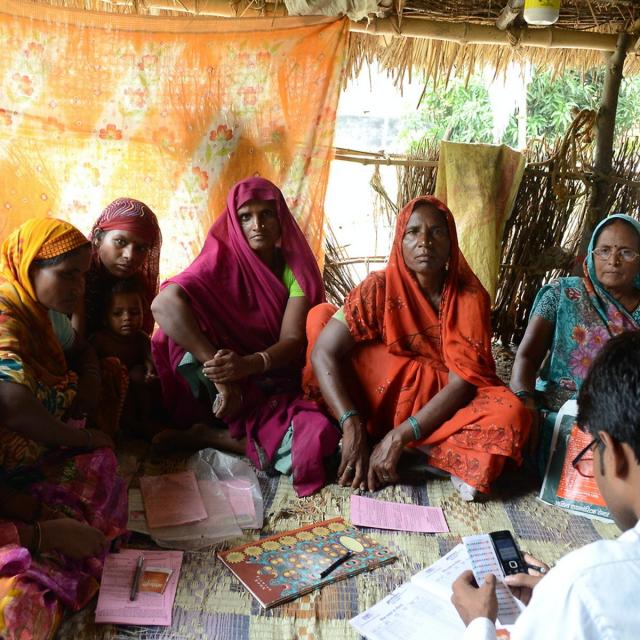
This course is primarily aimed at learners interested in knowing about and running a social business. An ideal learner could be a student, social entrepreneur, social intrapreneur, or a corporate professional interested in social business. In the Module 1 of the course students will learn how different social business leaders - such as Professor Muhammad Yunus, Rajni Bakshi, Corinne Bazina, Lamiya Morshed, Suresh Krishna, and Daniel Nowack - are reimagining capitalism. The subsequent modules of this course crystallize varied learnings of practitioners and theorists at YSB to a set of tools and readings, which a learner may use as building blocks of a social business.

Jun 24th 2026
5-12 Weeks