Introduction to Data Science and scikit-learn in Python (Coursera)

Offered by LearnQuest,
Introduction to Data Science and scikit-learn in Python (Coursera)

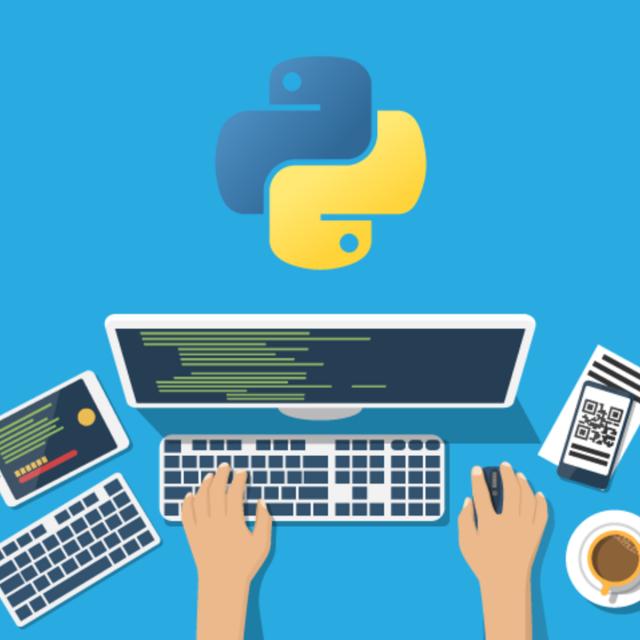
This course will teach you how to leverage the power of Python and artificial intelligence to create and test hypothesis. We'll start for the ground up, learning some basic Python for data science before diving into some of its richer applications to test our created hypothesis. We'll learn some of the most important libraries for exploratory data analysis (EDA) and machine learning such as Numpy, Pandas, and Sci-kit learn.

Class Deals by MOOC List - Click here and see Coursera's Active Discounts, Deals, and Promo Codes.

After learning some of the theory (and math) behind linear regression, we'll go through and full pipeline of reading data, cleaning it, and applying a regression model to estimate the progression of diabetes. By the end of the course, you'll apply a classification model to predict the presence/absence of heart disease from a patient's health data.

What You Will Learn

  • Employ artificial intelligence techniques to test hypothesis in Python
  • Apply a machine learning model combining Numpy, Pandas, and Scikit-Learn

Course 1 of 4 in the AI for Scientific Research Specialization

Syllabus

WEEK 1
Introduction to Python Programming for Hypothesis Testing
In this module, we'll get ourselves started with Programming in Python. After becoming familiar with Python and the Jupyter Notebook interface, we'll dive into some basic coding paradigms such as variables, loops, and functions. We'll also cover data structures in the form of lists and dictionaries. We'll go through one of the most useful things in your Python arsenal - importing and using modules effectively. Finally, we'll introduce scikit-learn and walk through a classification problem to predict the presence/absence of cancer from health data.

WEEK 2
Creating a Hypothesis: Numpy, Pandas, and Scikit-Learn
In this module, we'll become familiar with the two most important packages for data science: Numpy and Pandas. We'll begin by learning the differences between the two packages. Then, we'll get ourselves familiar with np arrays and their functionalities. Adding text turns our arrays into tables, and gives rise to the Pandas module. After a basic introduction, we'll end with a series of important data manipulation tools such as indexing, merging/combining datasets, and reshaping data.

WEEK 3
Scikit-Learn Revisited: ML for Hypothesis Testing
In this module, we'll work from the ground up to build and test our hypothesis. Learning both the theory and the code, we'll learn to test our predictions with different types of machine learning algorithms. We'll start by going through some of the necessary data preprocessing steps to orient ourselves. Getting familiar with using the Scikit-Learn library starts with the documentation. From there, we'll load in a dataset and analyze some of its most basic properties. Finally, we'll import and use models to make a prediction.

WEEK 4
Using Classification to Predict the Presence of Heart Disease
In the final project, we'll try and predict the presence of heart disease using patient data. We'll load in data, create new features, and apply a machine learning algorithm using scikit-learn.
Go to Class
MOOC List is learner-supported. When you buy through links on our site, we may earn an affiliate commission.

Related Courses

Fundamentals of Machine Learning in Finance (Coursera) Coursera
New York University Tandon School of Engineering

Fundamentals of Machine Learning in Finance (Coursera)

The course aims at helping students to be able to solve practical ML-amenable problems that they may encounter in real life that include: (1) understanding where the problem one faces lands on a general landscape of available ML methods, (2) understanding which particular ML approach(es) would be most appropriate for resolving the problem, and (3) ability to successfully implement a solution, and assess its performance.

Sep 14th 2026
4 Weeks
Design Computing: 3D Modeling in Rhinoceros with Python/Rhinoscript (Coursera) Coursera
University of Michigan

Design Computing: 3D Modeling in Rhinoceros with Python/Rhinoscript (Coursera)

Why should a designer learn to code? As our world is increasingly impacted by the use of algorithms, designers must learn how to use and create design computing programs. Designers must go beyond the narrowly focused use of computers in the automation of simple drafting/modeling tasks and instead explore the extraordinary potential digitalization holds for design culture/practice.

Sep 14th 2026
5-12 Weeks
Gen AI for Code Generation for Python (Coursera) Coursera
Edureka

Gen AI for Code Generation for Python (Coursera)

Welcome to the 'Gen AI for Code Generation for Python' course, where you'll embark on a journey to explore and develop your skills in the art of code generation with Generative AI. Throughout this short course, you will delve into various techniques for generating Python code effortlessly, ranging from simple scripts to complete end-to-end projects.

Sep 14th 2026
1 Week
Comparing Genes, Proteins, and Genomes (Bioinformatics III) (Coursera) Coursera
University of California, San Diego

Comparing Genes, Proteins, and Genomes (Bioinformatics III) (Coursera)

Once we have sequenced genomes in the previous course, we would like to compare them to determine how species have evolved and what makes them different. In the first half of the course, we will compare two short biological sequences, such as genes (i.e., short sequences of DNA) or proteins. We will encounter a powerful algorithmic tool called dynamic programming that will help us determine the number of mutations that have separated the two genes/proteins.

Sep 14th 2026
5-12 Weeks
Introduction to Open Source Application Development (Coursera) Coursera
Illinois Tech

Introduction to Open Source Application Development (Coursera)

This course introduces basic concepts of systems programming using a modern open source language. You will learn to apply basic programming concepts toward solving problems, writing pseudocode, working with and effectively using basic data types, abstract data types, control structures, code modularization and arrays. You will learn to detect errors, work with variables and loops, and discover how functions, methods, and operators work with different data types. You will also be introduced to the object paradigm including classes, inheritance, and polymorphism.

Sep 14th 2026
5-12 Weeks
Experimentation for Improvement (Coursera) Coursera
McMaster University

Experimentation for Improvement (Coursera)

We are always using experiments to improve our lives, our community, and our work. Are you doing it efficiently? Or are you (incorrectly) changing one thing at a time and hoping for the best? In this course, you will learn how to plan efficient experiments - testing with many variables. Our goal is to find the best results using only a few experiments. A key part of the course is how to optimize a system.

Sep 14th 2026
5-12 Weeks
Machine Learning Introduction for Everyone (Coursera) Coursera
IBM

Machine Learning Introduction for Everyone (Coursera)

This three-module course introduces machine learning and data science for everyone with a foundational understanding of machine learning models. You’ll learn about the history of machine learning, applications of machine learning, the machine learning model lifecycle, and tools for machine learning. You’ll also learn about supervised versus unsupervised learning, classification, regression, evaluating machine learning models, and more.

Sep 14th 2026
3 Weeks
Encoder-Decoder Architecture (Coursera) Coursera
Google Cloud

Encoder-Decoder Architecture (Coursera)

This course gives you a synopsis of the encoder-decoder architecture, which is a powerful and prevalent machine learning architecture for sequence-to-sequence tasks such as machine translation, text summarization, and question answering. You learn about the main components of the encoder-decoder architecture and how to train and serve these models. In the corresponding lab walkthrough, you’ll code in TensorFlow a simple implementation of the encoder-decoder architecture for poetry generation from the beginning.

Sep 14th 2026
1 Week
Applied Text Mining in Python (Coursera) Coursera
University of Michigan

Applied Text Mining in Python (Coursera)

This course will introduce the learner to text mining and text manipulation basics. The course begins with an understanding of how text is handled by python, the structure of text both to the machine and to humans, and an overview of the nltk framework for manipulating text. The second week focuses on common manipulation needs, including regular expressions (searching for text), cleaning text, and preparing text for use by machine learning processes. The third week will apply basic natural language processing methods to text, and demonstrate how text classification is accomplished. The final week will explore more advanced methods for detecting the topics in documents and grouping them by similarity (topic modelling).

Sep 14th 2026
4 Weeks
Accounting Data Analytics with Python (Coursera) Coursera
University of Illinois at Urbana-Champaign

Accounting Data Analytics with Python (Coursera)

This course focuses on developing Python skills for assembling business data. It will cover some of the same material from Introduction to Accounting Data Analytics and Visualization, but in a more general purpose programming environment (Jupyter Notebook for Python), rather than in Excel and the Visual Basic Editor. These concepts are taught within the context of one or more accounting data domains (e.g., financial statement data from EDGAR, stock data, loan data, point-of-sale data).

Sep 14th 2026
5-12 Weeks
Selenium WebDriver with Python (Coursera) Coursera
Whizlabs

Selenium WebDriver with Python (Coursera)

“Selenium WebDriver with Python” is a foundational course that aims to provide a comprehensive understanding of Selenium and its components. It also helps in understanding how Selenium WebDriver Operates. This course begins by demonstrating an environment setup for Selenium WebDriver with Python. A brief description of locating Web elements and web Interactions is provided in this course. This course covers an overview of testing frameworks with Selenium WebDriver. Some advanced topics such as Handling Popup, Alerts, Multiple Browser Tabs, Mouse and Keyboard interactions are also highlighted in this course.

Sep 14th 2026
3 Weeks