Introduction to Computer Vision (Coursera)

Introduction to Computer Vision (Coursera)

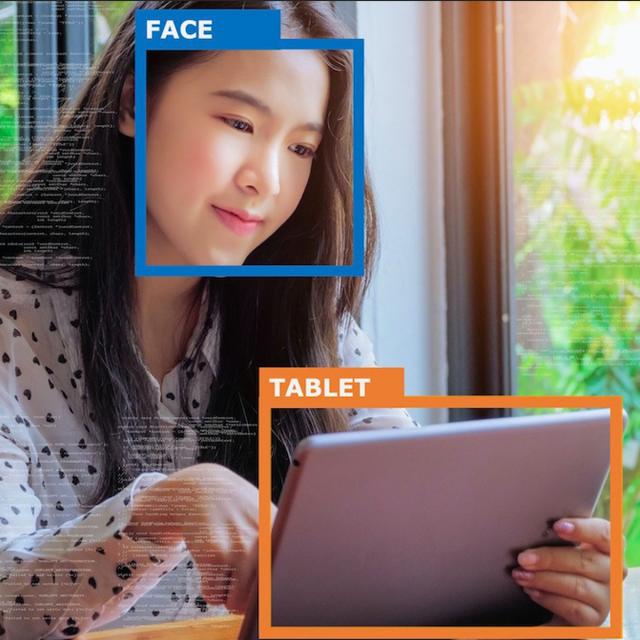
Introduction to Computer Vision guides learners through the essential algorithms and methods to help computers 'see' and interpret visual data. You will first learn the core concepts and techniques that have been traditionally used to analyze images. Then, you will learn modern deep learning methods, such as neural networks and specific models designed for image recognition, and how it can be used to perform more complex tasks like object detection and image segmentation. Additionally, you will learn the creation and impact of AI-generated images and videos, exploring the ethical considerations of such technology.

Class Deals by MOOC List - Click here and see Coursera's Active Discounts, Deals, and Promo Codes.

What you'll learn

  • Understand the fundamental principles and algorithms of classical computer vision.
  • Apply deep learning models to various computer vision tasks.
  • Evaluate and implement computer vision solutions for real-world applications.

Syllabus

Week 1
This module introduces foundational concepts related to common image types and functions. It offers a comprehensive overview of different formats and their unique characteristics. This section establishes the context for understanding how images are represented and processed in various applications. Next, the module delves into image functions, explaining the basic operations that can be performed on images to enhance or manipulate them, such as cropping, resizing, or adjusting brightness. It also covers more advanced operations like filtering and thresholding, illustrating how these functions play a crucial role in image processing. Then the module explores the underlying mathematics of image transformations. It starts with linear transforms, highlighting their application in image scaling, rotation, and translation. The module then introduces homogeneous coordinates, providing a simplified approach to represent complex transformations with additional dimensions. This leads into a deeper exploration of homogeneous transformations, demonstrating how they are used to perform multiple transformations in a single step.

Week 2
This module provides a deep dive into image analysis and similarity assessment techniques. It starts by exploring the basic concept of comparing pixels, highlighting how individual pixel values can be used to gauge similarity. This is followed by a detailed discussion on comparing multiple images by their features, emphasizing the advantages of feature-based analysis over pixel-by-pixel comparison. The module introduces the concept of image moments, revealing how these statistical properties help identify shapes and patterns within images. The module then addresses similarity and distance, offering a quick overview of how these concepts are calculated and applied in image processing. You'll also learn about converting pixels into distributions, an essential technique for more complex analysis. This leads to a comprehensive explanation of cross-entropy, providing insights into its role in measuring the dissimilarity between distributions. You'll explore cross-correlation in 1D, followed by a deeper examination of cross-correlation as matrix multiplication. The module wraps up by exploring cross-correlation in more detail, with a focus on the mathematics behind it.

Week 3
This module delves into multiview geometry, a pivotal concept in computer vision and 3D modeling. It starts with a brief overview of the motivation behind multiview systems, highlighting the advantages of capturing scenes from multiple viewpoints. The module then discusses multiple coordinate systems, exploring how different reference frames can describe points and transformations in 3D space. You'll also learn about multiple viewing planes, which play a crucial role in multiview setups by providing unique perspectives for scene reconstruction. The focus shifts to multiview projection, examining how distinct images from multiple cameras can be used to create a cohesive 3D scene. You'll gain insights into the principles of translation and rotation in 3D, crucial for understanding camera movement and orientation. The module also covers camera translation and camera rotation, offering practical examples to illustrate how camera motion affects the geometry and visual representation of a scene.

Week 4
This module delves into key concepts of camera models and their role in computer vision and photogrammetry. Learn about the Extrinsic Matrix, exploring how it defines the position and orientation of a camera in 3D space. Understand the Pinhole Camera Model, a simplified optical system that forms the basis for many computer vision applications, alongside the Intrinsic Matrix, which captures the internal parameters of the camera. Epipolar geometry is examined, with a focus on its significance in 3D reconstruction and stereo vision. The module covers the motivation behind epipolar geometry, breaking down its basic components, and explaining the Essential Matrix, which encapsulates the geometric relationship between camera views, as well as the Fundamental Matrix, a core component in epipolar geometry that represents the relationship between two cameras in stereo vision.

Go to Class
MOOC List is learner-supported. When you buy through links on our site, we may earn an affiliate commission.

Related Courses

Object Tracking and Motion Detection with Computer Vision (Coursera) Coursera
MathWorks

Object Tracking and Motion Detection with Computer Vision (Coursera)

In the third and final course of the Computer Vision for Engineering and Science specialization, you will learn to track objects and detect motion in videos. Tracking objects and detecting motion are difficult tasks but are required for applications as varied as microbiology and autonomous systems. To track objects, you first need to detect them. You’ll use pre-trained deep neural networks to perform object detection. You’ll also use optical flow to detect motion and use the results to detect moving objects.

Jun 29th 2026
4 Weeks
Camera and Imaging (Coursera) Coursera
Columbia University

Camera and Imaging (Coursera)

This course covers the fundamentals of imaging – the creation of an image that is ready for consumption or processing by a human or a machine. Imaging has a long history, spanning several centuries. But the advances made in the last three decades have revolutionized the camera and dramatically improved the robustness and accuracy of computer vision systems. We describe the fundamentals of imaging, as well as recent innovations in imaging that have had a profound impact on computer vision.

Jun 29th 2026
5-12 Weeks
Deep Learning for Business (Coursera) Coursera
Yonsei University

Deep Learning for Business (Coursera)

Your smartphone, smartwatch, and automobile (if it is a newer model) have AI (Artificial Intelligence) inside serving you every day. In the near future, more advanced “self-learning” capable DL (Deep Learning) and ML (Machine Learning) technology will be used in almost every aspect of your business and industry. So now is the right time to learn what DL and ML is and how to use it in advantage of your company. This course has three parts, where the first part focuses on DL and ML technology based future business strategy including details on new state-of-the-art products/services and open source DL software, which are the future enablers.

Jun 29th 2026
5-12 Weeks
Reinforcement Learning for Trading Strategies (Coursera) Coursera
New York Institute of Finance,Google Cloud

Reinforcement Learning for Trading Strategies (Coursera)

In the final course from the Machine Learning for Trading specialization, you will be introduced to reinforcement learning (RL) and the benefits of using reinforcement learning in trading strategies. You will learn how RL has been integrated with neural networks and review LSTMs and how they can be applied to time series data. By the end of the course, you will be able to build trading strategies using reinforcement learning, differentiate between actor-based policies and value-based policies, and incorporate RL into a momentum trading strategy.

Jun 29th 2026
3 Weeks
Trees, SVM and Unsupervised Learning (Coursera) Coursera
University of Colorado Boulder

Trees, SVM and Unsupervised Learning (Coursera)

"Trees, SVM and Unsupervised Learning" is designed to provide working professionals with a solid foundation in support vector machines, neural networks, decision trees, and XG boost. Through in-depth instruction and practical hands-on experience, you will learn how to build powerful predictive models using these techniques and understand the advantages and disadvantages of each. The course will also cover how and when to apply them to different scenarios, including binary classification and K > 2 classes.

Jun 29th 2026
4 Weeks
Visual Perception (Coursera) Coursera
Columbia University

Visual Perception (Coursera)

The ultimate goal of a computer vision system is to generate a detailed symbolic description of each image shown. This course focuses on the all-important problem of perception. We first describe the problem of tracking objects in complex scenes. We look at two key challenges in this context. The first is the separation of an image into object and background using a technique called change detection.

Jun 29th 2026
5-12 Weeks
Health Data Science Foundation (Coursera) Coursera
University of Illinois at Urbana-Champaign

Health Data Science Foundation (Coursera)

This course is intended for persons involved in machine learning who are interested in medical applications, or vice versa, medical professionals who are interested in the methods modern computer science has to offer to their field. We will cover health data analysis, different types of neural networks, as well as training and application of neural networks applied on real-world medical scenarios.

Jun 29th 2026
4 Weeks
Introduction to AI in the Data Center (Coursera) Coursera
NVIDIA

Introduction to AI in the Data Center (Coursera)

Welcome to the Introduction to AI in the Data Center Course! As you know, Artificial Intelligence, or AI, is transforming society in many ways. From speech recognition to improved supply chain management, AI technology provides enterprises with the compute power, tools, and algorithms their teams need to do their life’s work.

Jun 29th 2026
4 Weeks
Introduction to Trading, Machine Learning & GCP (Coursera) Coursera
New York Institute of Finance,Google Cloud

Introduction to Trading, Machine Learning & GCP (Coursera)

In this course, you’ll learn about the fundamentals of trading, including the concept of trend, returns, stop-loss, and volatility. You will learn how to identify the profit source and structure of basic quantitative trading strategies. This course will help you gauge how well the model generalizes its learning, explain the differences between regression and forecasting, and identify the steps needed to create development and implementation backtesters. By the end of the course, you will be able to use Google Cloud Platform to build basic machine learning models in Jupyter Notebooks.

Jun 29th 2026
4 Weeks
Build Decision Trees, SVMs, and Artificial Neural Networks (Coursera) Coursera
CertNexus

Build Decision Trees, SVMs, and Artificial Neural Networks (Coursera)

There are numerous types of machine learning algorithms, each of which has certain characteristics that might make it more or less suitable for solving a particular problem. Decision trees and support-vector machines (SVMs) are two examples of algorithms that can both solve regression and classification problems, but which have different applications. Likewise, a more advanced approach to machine learning, called deep learning, uses artificial neural networks (ANNs) to solve these types of problems and more. Adding all of these algorithms to your skillset is crucial for selecting the best tool for the job.

Jun 29th 2026
5-12 Weeks
Natural Language Processing with Probabilistic Models (Coursera) Coursera
DeepLearning.AI

Natural Language Processing with Probabilistic Models (Coursera)

In Course 2 of the Natural Language Processing Specialization, offered by deeplearning.ai, you will: a) Create a simple auto-correct algorithm using minimum edit distance and dynamic programming; b) Apply the Viterbi Algorithm for part-of-speech (POS) tagging, which is important for computational linguistics, c) Write a better auto-complete algorithm using an N-gram language model, and d) Write your own Word2Vec model that uses a neural network to compute word embeddings using a continuous bag-of-words model.

Jun 29th 2026
4 Weeks