EdX

Introduction to Banking and Financial Markets - I (edX)

Introduction to Banking and Financial Markets - I (edX)

Gain insights into the complex and dynamic world of Banking and Financial Markets. Banking and financial markets encompass the ‘ecosystem’ that (a) channelizes money from those who have it (i.e., savers/investors) to those who need it (i.e., borrowers) and (b) facilitate cross-border flow of funds through exchange of currencies.

Class Deals by MOOC List - Click here and see EdX's Active Discounts, Deals, and Promo Codes.

That ecosystem of banks and financial markets (including Central Banks) has deepened in size, sophistication and complexity over the years. However, in recent times they have also been the subject of abuse, failures and economic distress in several countries resulting in a ‘contagion’ that has concurrently impacted several countries around the World!

More recently, and perhaps more importantly, thanks to the liberalization of most economies, the world has witnessed an exponential increase in the free flow of capital across countries. Banking institutions and financial markets, being the predominant conduit for such free flow of capital across countries, have therefore become even more ‘globally interconnected’. Such a globally interconnected financial system, combined with regulatory systems that are country-specific and hence varying considerably in rigor and implementation, has further compounded the risks and the consequent contagion, as witnessed in the global financial meltdown that was triggered in 2008.
This course titled “Introduction to Banking and Financial Markets” will be delivered in two parts. The first part will help you demystify the role of banking and financial markets in any country, the products and services they offer and the underlying market mechanisms.
The second part of the course will examine the risks embedded in banking and financial markets, how these risks have been heightened because of a globally interconnected world and the regulatory and governance mechanisms to minimize adverse outcomes in such a complex system.
Part I of this course will help you understand:

  • The theory and concepts underlying banking and financial markets and the ‘symbiotic’ relationship between the two
  • The products and instruments that are offered by banks and financial Markets to meet the financial needs of individuals, businesses and governments
  • How and why are they different from corporations that sell goods and services
  • The underlying market mechanisms and how financial instruments are traded (i.e., bought and sold) in the financial markets.
Go to Class
MOOC List is learner-supported. When you buy through links on our site, we may earn an affiliate commission.

Related Courses

Financial Development and Financial Inclusion (edX) EdX
International Monetary Fund - IMF,IMFx

Financial Development and Financial Inclusion (edX)

Learn how to develop an efficient, inclusive and stable financial sector that is essential for a thriving economy. This course was developed by the IMF in collaboration with the European Investment Bank. Higher rates of financial inclusion and financial market development mean more prosperous societies. But how to make it all happen? This course outlines common ways countries develop robust financial sectors – from banks to equity markets.

Self Paced
Self-Paced
Adaptive Markets: Financial Market Dynamics and Human Behavior (edX) EdX
MIT,MITx

Adaptive Markets: Financial Market Dynamics and Human Behavior (edX)

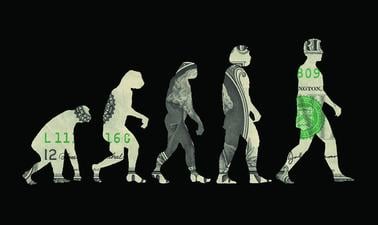
A completely new way of thinking about financial markets, institutions, and innovation that reconciles human behavior with market efficiency using concepts from evolutionary biology, cognitive neuroscience, and artificial intelligence. Half of all Americans have money in the stock market, yet economists can’t agree on whether investors and markets are rational and efficient, as modern financial theory assumes, or irrational and inefficient, as behavioral economists believe—and as financial bubbles, crashes, and crises suggest.

Self Paced
Self-Paced
Contexto de Negocios en LATAM: Factores Políticos, Sociales y Económicos (Coursera) Coursera
Pontificia Universidad Católica de Chile

Contexto de Negocios en LATAM: Factores Políticos, Sociales y Económicos (Coursera)

Latinoamérica resulta ser muy atractiva al momento de decidir realizar nuevos negocios, pero en algunos casos este proceso se considera algo distinto a cómo opera el mercado mundial, por lo que es importante conocer algunos elementos que permitan entender de mejor manera este contexto y así definir estrategias más efectivas cuando se piensa comenzar un negocio en esta región.

Nov 9th 2026
4 Weeks
Introduction to Finance: The Role of Financial Markets (Coursera) Coursera
University of Illinois at Urbana-Champaign

Introduction to Finance: The Role of Financial Markets (Coursera)

In Introduction to Finance: The Role of Financial Markets, you will be introduced to the basic concepts and skills needed for financial managers to make informed decisions. With an overview of the structure and dynamics of financial markets and commonly used financial instruments, you will get crucial skills to make capital investment decisions.

Nov 4th 2026
4 Weeks
Financial Market Analysis (edX) EdX
International Monetary Fund - IMF,IMFx

Financial Market Analysis (edX)

Learn the fundamentals of finance that are essential for both investors and policymakers. In this IMFx course you will learn, from hands-on demonstrations, how to price different types of bonds, how to calculate different measures of bond yields and how to compare them across different types of instruments. You will become familiar with the term structure of interest rates, a key ingredient in establishing benchmark rates used to price securities in the markets and a valuable tool for monetary policy design and diagnosis.

Self Paced
Self-Paced
Macroeconomics for a Sustainable Planet (edX) EdX
SDGAcademyX,SDG Academy

Macroeconomics for a Sustainable Planet (edX)

Is it possible to develop a thriving global economy in an equitable and environmentally-resilient way? Unemployment. Inflation. Protectionism. Trade barriers. Fiscal deficit. These are not just terms in an economics textbook or in newspaper headlines. These real-life challenges carry societal and environmental implications for billions of people around the world.

Self Paced
Self-Paced
Islamic Finance and Banking (edX) EdX
The Islamic Research and Training Institute - IRTI,IRTIx

Islamic Finance and Banking (edX)

Learn about the foundation and key features of the Islamic financial and banking system. This economics and finance course will give you an overview of the Islamic financial system. You will learn the core principles and basic models of Islamic finance and establish a framework for understanding this financial system.

No sessions available
4 Weeks
Global Financial Markets and Instruments (Coursera) Coursera
Rice University

Global Financial Markets and Instruments (Coursera)

Get a running start in the high-stakes world of financial investment! This first course is designed to help you become an informed investor by providing you with the essential concepts for long-term success in managing money. You’ll start by learning the role of financial markets and financial assets in a well-functioning economy. From there, you’ll learn about the wide range of financial instruments available in major asset classes, their features and valuations.

Oct 26th 2026
4 Weeks
Investments II: Lessons and Applications for Investors (Coursera) Coursera
University of Illinois at Urbana-Champaign

Investments II: Lessons and Applications for Investors (Coursera)

In this course, you will start by reviewing the fundamentals of investments, including the trading off of return and risk when forming a portfolio, asset pricing models such as the Capital Asset Pricing Model (CAPM) and the 3-Factor Model, and the efficient market hypothesis. You will be introduced to the two components of stock returns – dividends and capital gains – and will learn how each are taxed and the incentives provided to investors from a realization-based capital gains tax.

Oct 26th 2026
4 Weeks