EdX

Introducción a la visión por computador: desarrollo de aplicaciones con OpenCV (edX)

Introducción a la visión por computador: desarrollo de aplicaciones con OpenCV (edX)

Hasta dónde pueden ver las máquinas? Descubre la visión por computador programando aplicaciones de análisis de imágenes, uno de los campos más innovadores de la inteligencia artificial. Con este curso, el alumnado será capaz de aprender y entender los conceptos básicos de visión por computador, además de implementar de forma práctica algoritmos de análisis de imágenes a través de computadores utilizando la biblioteca de funciones OpenCV.

Class Deals by MOOC List - Click here and see EdX's Active Discounts, Deals, and Promo Codes.

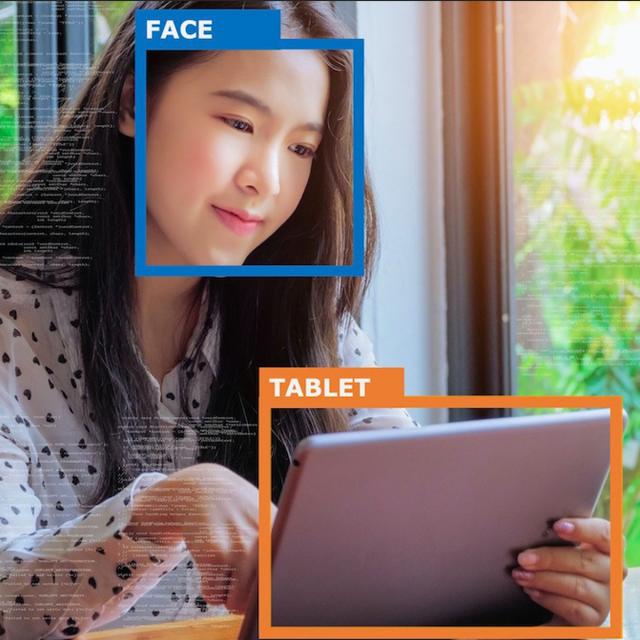
El Análisis de Imágenes o Visión por Computador es la capacidad de los ordenadores de analizar imágenes capturadas por una cámara y obtener la información de los objetos que se hayan presentes en esa escena. En la actualidad, constituye uno de los campos de la Inteligencia Artificial con un mayor ritmo de desarrollo y que más aplicaciones nuevas está presentando.

Hasta hace pocos años las cámaras digitales solo estaban implantadas en el ambiente industrial. Allí se utilizan con dos fines:

  • Lograr una mayor interacción entre los robots industriales y el entorno que los rodea.
  • Conseguir un control de calidad total de los productos fabricados.

Con la aparición de nuevo hardware, cámaras y algoritmos, el mundo de la Visión por Computador ya no se centra exclusivamente en el ambiente industrial sino que se extiende a los smartphones, la industria del videojuego e incluso a los coches.
Otra característica que ha cambiado recientemente es que hasta hace poco tiempo las técnicas de análisis de imágenes eran accesibles solamente a un reducido número de especialistas. Los programas que se utilizaban eran costosos, con poca documentación y que exigían equipos informáticos de gama alta. Esto es ahora muy distinto; en concreto la biblioteca OpenCV, que se verá en el curso, constituyen una solución de altísimo nivel, gratuitas, portables a diversos sistemas operativos y equipos, ordenadores o teléfonos inteligentes y que constituyen de facto un estándar en la comunidad científica.
Para que el alumnado pueda realizar diversas aplicaciones relacionadas con la Visión por Computador, a lo largo del curso se revisan los tipos básicos de elementos y sensores, viéndose las ventajas e inconvenientes de cada uno de ellos, así como las técnicas más usuales de procesar la información que proveen. A partir de dicho procesamiento de la información y de la extracción de características, se presentan diversos métodos para el reconocimiento de patrones.

What you'll learn:

  • Familiarizarse con el análisis de imágenes a través de computadores.
  • Implementar en C++ diversas aplicaciones de Visión por computador utilizando librerías de programación OpenCV, de libre distribución.
  • Conocer los diversos elementos y sensores que se utilizan en la visión por computador
  • Aprender técnicas de procesamiento de imágenes digitales.
  • Descubrir las características principales que pueden definir a un objeto en una imagen digital y aprender a extraerlas.
  • Aplicar los diversos algoritmos de reconocimiento de patrones.

Syllabus

SEMANA 1
Tema 1. Introducción a la Visión por Computador.
Tema 2. Óptica.
Tema 3. Cámaras digitales.
Tema 4. La biblioteca OpenCV.
Tema 5. Herramientas software del curso.
Tema 6. Escribiendo la primera aplicación.

SEMANA 2
Tema 7. Imágenes digitales.
Tema 8. Espacios de color.
Tema 9. Operaciones matemáticas y lógicas.

SEMANA 3
Tema 10. Convolución de imágenes digitales.
Tema 11. Correlación.
Tema 12. Manipulación geométrica de la imagen.

SEMANA 4
Tema 13. Reducción de ruido.
Tema 14. Modificación del contraste.
Tema 15. Realce de bordes.
Tema 16. Detección de bordes.

SEMANA 5
Tema 17. Movimiento.
Tema 18. Segmentación.

SEMANA 6
Tema 19. Transformaciones morfológicas y descriptores.
Tema 20. Reconocimiento de patrones.
Go to Class
MOOC List is learner-supported. When you buy through links on our site, we may earn an affiliate commission.

Related Courses

Copyright for Multimedia (Coursera) Coursera
Duke University,Emory University,University of North Carolina

Copyright for Multimedia (Coursera)

Copyright questions about different formats (data, images, music and video) can be especially difficult. Sometimes the law specifically distinguishes between these different formats, and in most cases there are media-specific considerations that impact a copyright analysis. In this course we will look at four different media, paying special attention to the unique issues for each one and the kinds of information that is important when making copyright decisions for each type of material.

Jun 22nd 2026
4 Weeks
Computer Vision and Image Processing Fundamentals (edX) EdX
IBM

Computer Vision and Image Processing Fundamentals (edX)

Learn about computer vision, one of the most exciting fields in machine learning. artificial intelligence and computer science. Computer Vision is one of the most exciting fields in Machine Learning, computer science and AI. It has applications in many industries such as self-driving cars, robotics, augmented reality, face detection in law enforcement agencies.

Self Paced
Self-Paced
Computer Vision Fundamentals with Watson and OpenCV (edX) EdX
IBM

Computer Vision Fundamentals with Watson and OpenCV (edX)

Learn about computer vision, one of the most exciting fields in machine learning. artificial intelligence and computer science. Computer Vision is one of the most exciting fields in Machine Learning, computer science and AI. It has applications in many industries such as self-driving cars, robotics, augmented reality, face detection in law enforcement agencies.

Self Paced
Self-Paced
Internet of Things: Multimedia Technologies (Coursera) Coursera
University of California, San Diego

Internet of Things: Multimedia Technologies (Coursera)

Content is an eminent example of the features that contributed to the success of wireless Internet. Mobile platforms such as the Snapdragon™ processor have special hardware and software capabilities to make acquisition, processing and rendering of multimedia content efficient and cost-effective.

Jun 22nd 2026
3 Weeks
3D Reconstruction - Multiple Viewpoints (Coursera) Coursera
Columbia University

3D Reconstruction - Multiple Viewpoints (Coursera)

This course focuses on the recovery of the 3D structure of a scene from images taken from different viewpoints. We start by first building a comprehensive geometric model of a camera and then develop a method for finding (calibrating) the internal and external parameters of the camera model. Then, we show how two such calibrated cameras, whose relative positions and orientations are known, can be used to recover the 3D structure of the scene. This is what we refer to as simple binocular stereo.

Jun 15th 2026
5-12 Weeks
Photography Techniques: Light, Content, and Sharing (Coursera) Coursera
Michigan State University

Photography Techniques: Light, Content, and Sharing (Coursera)

Welcome to Course FOUR! In Modules 1-4 you will cover the final elements of the Specialization necessary to round out this introduction to the fundamentals of Photography, and prepare you for creating your own exciting project in the Capstone! You have come a long way since the beginning of this journey from Smartphone Basics to DSLR and Beyond. Just think of all the information you have absorbed and put to use in your assignments and quizzes, and the confidence you have gained that you CAN control the camera to make pictures you are proud to share.

Jun 15th 2026
4 Weeks
Camera and Imaging (Coursera) Coursera
Columbia University

Camera and Imaging (Coursera)

This course covers the fundamentals of imaging – the creation of an image that is ready for consumption or processing by a human or a machine. Imaging has a long history, spanning several centuries. But the advances made in the last three decades have revolutionized the camera and dramatically improved the robustness and accuracy of computer vision systems. We describe the fundamentals of imaging, as well as recent innovations in imaging that have had a profound impact on computer vision.

Jun 15th 2026
5-12 Weeks
Visual Perception (Coursera) Coursera
Columbia University

Visual Perception (Coursera)

The ultimate goal of a computer vision system is to generate a detailed symbolic description of each image shown. This course focuses on the all-important problem of perception. We first describe the problem of tracking objects in complex scenes. We look at two key challenges in this context. The first is the separation of an image into object and background using a technique called change detection.

Jun 15th 2026
5-12 Weeks
Fundamentals of Digital Image and Video Processing (Coursera) Coursera
Northwestern University

Fundamentals of Digital Image and Video Processing (Coursera)

In this class you will learn the basic principles and tools used to process images and videos, and how to apply them in solving practical problems of commercial and scientific interests. Digital images and videos are everywhere these days – in thousands of scientific (e.g., astronomical, bio-medical), consumer, industrial, and artistic applications. Moreover they come in a wide range of the electromagnetic spectrum - from visible light and infrared to gamma rays and beyond.

Jun 15th 2026
5-12 Weeks
Computer Vision Basics (Coursera) Coursera
University at Buffalo,The State University of New York

Computer Vision Basics (Coursera)

By the end of this course, learners will understand what computer vision is, as well as its mission of making computers see and interpret the world as humans do, by learning core concepts of the field and receiving an introduction to human vision capabilities. They are equipped to identify some key application areas of computer vision and understand the digital imaging process. The course covers crucial elements that enable computer vision: digital signal processing, neuroscience and artificial intelligence.

Jun 15th 2026
4 Weeks