Internetworking Edition 2023 (openHPI)

Internetworking Edition 2023 (openHPI)

Die Zahl der Internetnutzer:innen weltweit ist kontinuierlich gestiegen und lag 2021 bei rund 4,9 Milliarden Menschen. In Deutschland sind ca. 94% der Bevölkerung online unterwegs. Das Netz der Netze hat unser Leben und Arbeiten radikal verändert. In diesem Kurs erfahren Sie, welche technischen Prinzipien dem Internet zugrunde liegen. Darüber hinaus wollen wir den Fokus auf relevante Aspekte wie Sicherheit im Internet und seine Rolle für Wirtschaft, Gesellschaft und Politik lenken.

Mehr als die Hälfte der Erdbevölkerung ist durch das Internet vernetzt. Der Einzug des Internets kann von seiner gewaltigen Auswirkung auf die Gesellschaft verglichen werden mit der industriellen Revolution. Die große anfängliche Hoffnung auf eine Demokratisierung der Gesellschaft ist inzwischen verpufft. Im Gegenteil: mit Sorge beobachten wir, wie autoritäre Staaten Webseiten blocken und Online-Inhalte zensieren.
In diesem Kurs wollen wir Ihnen die technischen Grundlagen des Internets vermitteln. Sie erfahren

  • wie das technische Konstruktionsprinzip des Internets in seinen Grundzügen aussieht
  • wie Daten mit Signalen von einem Computer zum anderen übertragen werden
  • wie Datenpakete ihren Weg durch die miteinander verknüpften Einzelnetze des Internets finden
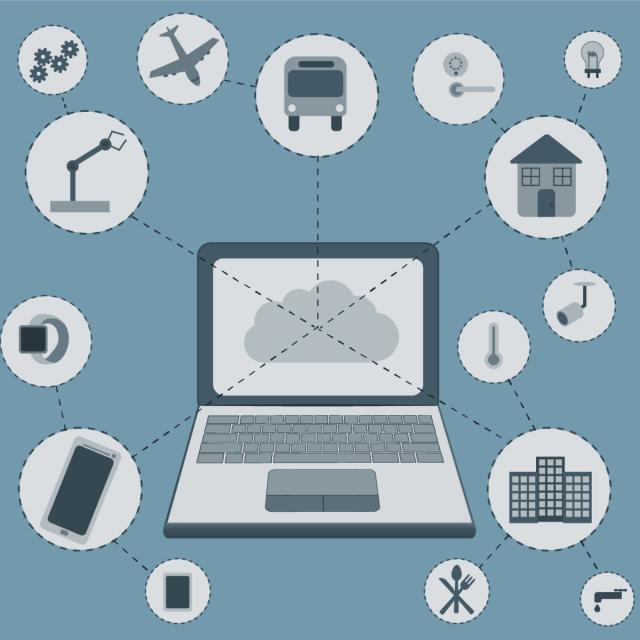
  • wie auch mobile Geräte, Sensoren und Maschinen miteinander über das Internet kommunizieren
  • welche Anwendungen dafür sorgen, dass Sie im World Wide Web surfen und E-Mails oder Filme versenden bzw. empfangen können
  • dass die Sicherheit im Internet – da sie kein von Anfang an mit bedachtes Konstruktionsmerkmal ist – gegen mögliche Angriffe geschützt werden muss.

Sie werden aber auch bewerten können,
-was die entscheidenden Meilensteine in der bisherigen Entwicklung des Internets waren

  • welche Entwicklungen geschichtlich betrachtet zum Erfolg oder Misserfolg wurden
  • welche wichtige Rolle das Internet in Wirtschaft, Gesellschaft und Politik eingenommen hat
  • wie das Internet für kriminelle Zwecke missbraucht wird und wie man sich davor schützen kann
  • welche Entwicklung das Internet in Zukunft nehmen dürfte.

Wir freuen uns auf den Austausch mit Ihnen! Melden Sie sich jetzt an!

Go to Class
MOOC List is learner-supported. When you buy through links on our site, we may earn an affiliate commission.

Related Courses

Social Network Analysis (Coursera) Coursera
University of California, Davis

Social Network Analysis (Coursera)

This course is designed to quite literally ‘make a science’ out of something at the heart of society: social networks. Humans are natural network scientists, as we compute new network configurations all the time, almost unaware, when thinking about friends and family (which are particular forms of social networks), about colleagues and organizational relations (other, overlapping network structures), and about how to navigate delicate or opportunistic network configurations to save guard or advance in our social standing (with society being one big social network itself).

Sep 14th 2026
5-12 Weeks
Competencias digitales. Conceptos y herramientas básicas (Coursera) Coursera
Universitat Autònoma de Barcelona

Competencias digitales. Conceptos y herramientas básicas (Coursera)

Los continuos cambios tecnológicos, sobre todo en aquellos aspectos vinculados a las tecnologías de la información y la comunicación (TIC) hacen que las personas tengan la necesidad de actualizarse de forma continua para que sus conocimientos no queden obsoletos. En este contexto, para las empresas se convierte en algo imprescindible disponer de profesionales que tengan las competencias necesarias para ejercer con éxito las actividades que requieren en su lugar de trabajo.

Sep 28th 2026
4 Weeks
Wegweisende Anwendungen im Web (openHPI) OpenHPI
Hasso-Plattner-Institut

Wegweisende Anwendungen im Web (openHPI)

Das World Wide Web (kurz WWW) hat unser Zusammenleben revolutioniert. Viele Menschen nutzen den Begriff, der die wohl wichtigste Anwendung im Internet beschreibt, sogar synonym für Internet – so fest ist es in unserem Sprachgebrauch inzwischen verankert. Im dritten Teil unserer Kursreihe werfen wir einen Blick auf wegweisende Anwendungen im Web. Viele von uns nutzen regelmäßig die Google Suchmaschine, kaufen online ein oder lernen im Web, z.B. auf openHPI. Wie diese Anwendungen im Einzelnen funktionieren und welches Geschäftsmodell sie verfolgen, erfahren Sie in diesem Kurs.

Self Paced
Self-Paced
Web Technologies - Edition 2023 (openHPI) OpenHPI
Hasso-Plattner-Institut

Web Technologies - Edition 2023 (openHPI)

WWW, the world wide web or shortly the web - really nothing more than an information service on the Internet – has changed our world by creating a whole new digital world that is closely intertwined with our real world, making reality what was previously unimaginable: communication across the world in seconds, watching movies on a smartphone, playing games or looking at photos with remote partners in distant continents, shopping or banking from your couch … In our MOOC on web technologies you will learn how it all works.

Oct 25th 2023
5-12 Weeks
Social and Economic Networks: Models and Analysis (Coursera) Coursera
Stanford University

Social and Economic Networks: Models and Analysis (Coursera)

Learn how to model social and economic networks and their impact on human behavior. How do networks form, why do they exhibit certain patterns, and how does their structure impact diffusion, learning, and other behaviors? We will bring together models and techniques from economics, sociology, math, physics, statistics and computer science to answer these questions.

Sep 28th 2026
5-12 Weeks
International Cyber Conflicts (Coursera) Coursera
The State University of New York

International Cyber Conflicts (Coursera)

By nature, cyber conflicts are an international issue that span across nation-state borders. By the end of the course, you will be able to apply the knowledge gained for analysis and management of international cyber incidents and conflicts including for activities such as development of policy related to cybercrime and cyberwarfare. Management of cyber incidents and conflicts requires an interdisciplinary perspective including an understanding of: 1) characteristics of the cyber threats and conflicts themselves, 2) international efforts to reduce and improve cyber security, and 3) psychological and sociopolitical factors.

Sep 28th 2026
5-12 Weeks
Asymmetric Cryptography and Key Management (Coursera) Coursera
University of Colorado System

Asymmetric Cryptography and Key Management (Coursera)

In asymmetric cryptography or public-key cryptography, the sender and the receiver use a pair of public-private keys, as opposed to the same symmetric key, and therefore their cryptographic operations are asymmetric. This course will first review the principles of asymmetric cryptography and describe how the use of the pair of keys can provide different security properties. Then, we will study the popular asymmetric schemes in the RSA cipher algorithm and the Diffie-Hellman Key Exchange protocol and learn how and why they work to secure communications/access.

Sep 14th 2026
4 Weeks
Computational Neuroscience (Coursera) Coursera
University of Washington

Computational Neuroscience (Coursera)

This course provides an introduction to basic computational methods for understanding what nervous systems do and for determining how they function. We will explore the computational principles governing various aspects of vision, sensory-motor control, learning, and memory. Specific topics that will be covered include representation of information by spiking neurons, processing of information in neural networks, and algorithms for adaptation and learning.

Sep 14th 2026
5-12 Weeks
Introduction to TCP/IP (Coursera) Coursera
Yonsei University

Introduction to TCP/IP (Coursera)

You use the Internet through your PC (Personal Computer), laptop, tablet, smartpad, and smartphone every day in everything you do. Through your own PC/laptop, you can easily learn everything about the Internet, and that is what this course is focused on. In this course ‘Introduction to TCP/IP,’ you will learn the operational functions of Internet technologies (which include IPv4, IPv6, TCP, UDP, addressing, routing, domain names, etc.) and your PC/laptop's security and gateway Internet setup and basic principles.

Sep 14th 2026
5-12 Weeks
Internet History, Technology, and Security (Coursera) Coursera
University of Michigan

Internet History, Technology, and Security (Coursera)

The impact of technology and networks on our lives, culture, and society continues to increase. The very fact that you can take this course from anywhere in the world requires a technological infrastructure that was designed, engineered, and built over the past sixty years. To function in an information-centric world, we need to understand the workings of network technology. This course will open up the Internet and show you how it was created, who created it and how it works. Along the way we will meet many of the innovators who developed the Internet and Web technologies that we use today.

Sep 21st 2026
5-12 Weeks
5G Network Fundamentals (Coursera) Coursera
Institut Mines-Telecom

5G Network Fundamentals (Coursera)

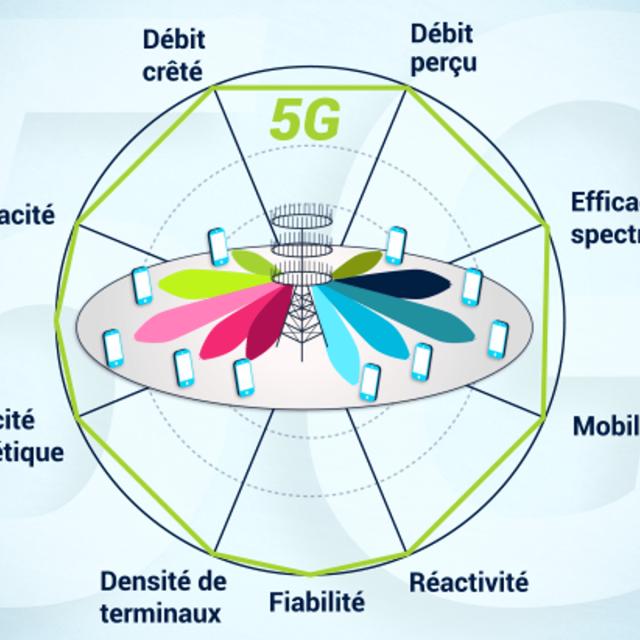
This MOOC presents the services and the architecture of 5G networks, the main principles of the new radio interface (NR), data flow management, security and the new Service-Based Architecture (SBA). In recent years, operators have been deploying 5G technology on commercial mobile networks. The latter is announced as a major technological breakthrough with speeds beyond Gbit/s, very low latencies and above all a distribution in many sectors of activity (industry, transport, medicine, etc.).

Sep 28th 2026
5-12 Weeks