EdX

Innovative Environmental Management Models: Case Studies and Applications (edX)

Innovative Environmental Management Models: Case Studies and Applications (edX)

Utilizing extensive case studies of various ecosystems, you will learn how to effectively utilize science-based management to mitigate anthropogenic impacts and ensure resiliency and sustainability in your community. Case studies are the best means to analyze real world problems and assess viability of proposed solutions. We will explore a variety of ecosystems and determine how effectively they are managed given the specific challenges of each locale.

Class Deals by MOOC List - Click here and see EdX's Active Discounts, Deals, and Promo Codes.

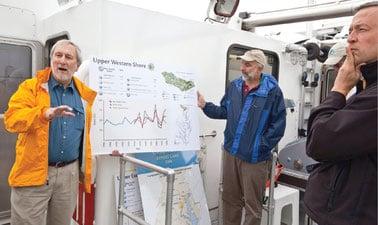
We will be analyzing how monitoring, modeling, research and resource management approaches are scaled across multiple dimensions such as size, population, complexity, and maturity gradients. For instance, Chesapeake Bay, located in the United States largely within the states of Maryland and Virginia, is the best-studied estuary in the world. Since European settlement, contravening forces (land use, eutrophication via phosphorus and nitrogen point and nonpoint sources, sediment runoff, and wetland degradation to name a few) have impacted the entire watershed of this highly productive ecosystem which falls under the jurisdiction of six different state governments and the local government of Washington DC. A comprehensive management approach involving the Environmental Protection Agency and other federal agencies working under the umbrella of the Chesapeake Bay Program headquartered in Annapolis, MD, has resulted in measurable improvements in water quality. Lessons learned from the restoration efforts of the Bay have applications well beyond fisheries, agriculture, and conservation. Other large complex systems that we will be discussing are the Great Barrier Reef in Australia, the implications of the 2010 Oil Spill in the Gulf of Mexico, and the transnational management of the Baltic Sea.

We will also explore innovative stakeholder-driven approaches, such as COAST Card (Coastal Ocean Assessment for Sustainability and Transformation) that integrates socio-environmental report cards, social network analysis, and system dynamic models. Its development in iconic locations (Chesapeake Bay (US), Manila Bay (Philippines), Tokyo Bay and Ishigaki Island (Japan) and the Goa Coast of India) present both shared and unique challenges for managing coupled human and natural systems. Addressing these linkages between human health and environmental quality and the required trade-offs a management team must make is a key component of best management practice for our natural resources.
Finally, we will discuss the implications of climate change science and how it can influence socio-environmental management. Each case study will present unique solutions to address ecosystem stress. Scalability of management approaches across a variety of ecosystems including those of differing population densities, areas, complexities, and maturities will be discussed.
Upon completion, you will have the practical tools to develop effective management solutions for a variety of ecosystem and sustainability challenges.
This course is part of the Environmental Management for Sustainability Professional Certificate.

What you'll learn

  • How to assess the scientific issues and management approaches of ecosystems varying in size, population, maturity and complexity.
  • How to determine the most effective use of science to impact management approaches across a range of environmental challenges.
  • Create a suite of practical approaches for managing diverse sustainability and resiliency issues.
Go to Class
MOOC List is learner-supported. When you buy through links on our site, we may earn an affiliate commission.

Related Courses

Vernacular Architecture of Asia: Tradition, Modernity and Cultural Sustainability (edX) EdX
University of Hong Kong,HKUx

Vernacular Architecture of Asia: Tradition, Modernity and Cultural Sustainability (edX)

Learn about built environments in Asia and how we can better conserve and sustain vernacular architecture in the future. How do we deal with the challenges and threats to vernacular architecture and make sure that it is sustained in this modern urbanized world? This is the key question we will try to answer in this course.

No sessions available
5-12 Weeks
Co-Creating Sustainable Cities (edX) EdX
Wageningen University,Delft University of Technology,DelftX,WageningenX

Co-Creating Sustainable Cities (edX)

Learn how citizen’s co-creation is key in making cities worldwide more sustainable. Around the world, major challenges of our time such as population growth and climate change are being addressed in cities. Here, citizens play an important role amidst governments, companies, NGOs and researchers in creating social, technological and political innovations for achieving sustainability.

Self Paced
Self-Paced
Sustainable Urban Development (edX) EdX
Wageningen University,Delft University of Technology,DelftX,WageningenX

Sustainable Urban Development (edX)

Learn why cities are key in resolving global urbanization and sustainability challenges and how you can engineer tomorrow’s cities today. Did you know that cities take up less than 3% of the earth’s land surface, but more than 50% of the world’s population live in them? And, cities generate more than 70% of the global emissions? Large cities and their hinterlands (jointly called metropolitan regions) greatly contribute to global urbanization and sustainability challenges, yet are also key to resolving these same challenges.

Self Paced
Self-Paced
Environmental Protection and Sustainability (edX) EdX
IsraelX

Environmental Protection and Sustainability (edX)

Uncover better solutions to help manage a wide range of environmental problems and challenges facing our world today. Do you want to understand more about the environmental problems we currently face? Do you want to learn ways we can reduce the negative effects of these problems, and keep our environment more sustainable? If so, this course is for you.

Self Paced
Self-Paced
Managing Building Adaptation: A Sustainable Approach (edX) EdX
Delft University of Technology,DelftX

Managing Building Adaptation: A Sustainable Approach (edX)

Learn how to adapt buildings sustainably by applying management tools to real-life cases in the built environment. Do you have a passion for buildings and want to contribute to a sustainable environment? Then this is your chance to make a difference! The biggest sustainability challenge for cities worldwide is adapting existing obsolescent buildings and making them future-proof. In this course, you will learn about adapting buildings for sustainability.

Self Paced
Self-Paced
Industrias sostenibles y competitivas (edX) EdX
The Pontificia Universidad Javeriana,JaverianaX

Industrias sostenibles y competitivas (edX)

Introducir el concepto de Sostenibilidad y analizar la relación entre la responsabilidad ambiental de las compañías y su competitividad. Una compañía que pretenda ser sostenible debe pensar en generar un valor económico, social y medioambiental, en el corto y largo plazo, a fin de contribuir al aumento del bienestar y el progreso de las generaciones presentes y futuras.

No session available
4 Weeks
Ressources naturelles et developpement durable (edX) EdX
LouvainX,Université Catholique de Louvain - UCL

Ressources naturelles et developpement durable (edX)

Analyse des defis de developpement durable lies a la ruee sur les ressources naturelles (terre, eau, ressources minieres, forets...). Quel lien existe-t-il entre l’exploitation des ressources naturelles (terre, eau, ressources minières, forêts, ...) et le développement durable ? Ce cours vous permettra de comprendre les opportunités mais aussi les défis que la présence de ressources naturelles offre, tant au niveau local que global.

No sessions available
5-12 Weeks
Sustainable Urban Environments (edX) EdX
Trinity College, Hartford,TrinityX

Sustainable Urban Environments (edX)

Learn how integrated systems and individual actions can shape sustainable cities, generating higher quality of life for the future. How can we strengthen sustainability? By empowering individuals and communities to transform and balance dynamic natural resources, economic prosperity, and healthy populations. In this course, you’ll explore productive and disruptive social, ecological, and economic intersections – the “triple bottom line.”

No sessions available
5-12 Weeks
A Resilient Future: Science and Technology for Disaster Risk Reduction (edX) EdX
École Polytechnique Fédérale de Lausanne

A Resilient Future: Science and Technology for Disaster Risk Reduction (edX)

Discover how science and technology help us reduce disaster risk and increase resilience. This course aims to introduce participants to existing and emerging technologies suitable for disaster risk reduction while promoting the overall aim of sustainable development. The course focuses on three main natural hazards- floods, landslides and earthquakes. It also discusses the challenges and limits of adapting and adopting technologies depending on context (Global North and Global South) with examples from Switzerland, Nepal, Colombia, Philippines and other countries.

Self Paced
Self-Paced
Sustainability in Everyday Life (edX) EdX
Chalmers University of Technology,ChalmersX

Sustainability in Everyday Life (edX)

This course will arm you with the information and skills required to make more sustainable choices everyday! Daily headlines warn of new chemical dangers, species on the edge of extinction, global warming-- framing our planet as “at risk.” Some people stop listening, others get alarmed, while some others want to learn more in hopes of making a difference in the world.

No sessions available
5-12 Weeks