Improving Antimicrobial Stewardship Programs using Multidisciplinary Teams (FutureLearn)

Improving Antimicrobial Stewardship Programs using Multidisciplinary Teams (FutureLearn)

Learn how multidisciplinary teams (MDTs) can help Antimicrobial Stewardship (AMS) programs deliver positive patient outcomes.

Class Deals by MOOC List - Click here and see FutureLearn's Active Discounts, Deals, and Promo Codes.

Examine the impact of multidisciplinary teams in AMS programs
Antimicrobial resistance (AMR) is a global threat that impacts healthcare costs, causing prolonged hospital stays and increased mortality.
On this three-week course from BSAC, you’ll learn how multidisciplinary teams (MDTs), as part of an Antimicrobial Stewardship (AMS) program, help prevent the spread of AMR and also reduce costs.

Explore the role of a multidisciplinary team in healthcare facilities
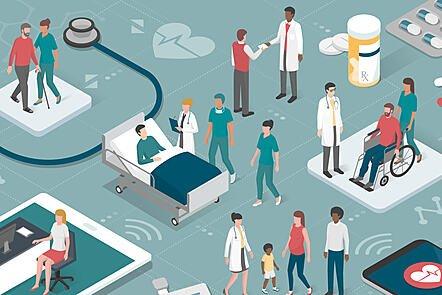
MDTs are composed of professionals including nurses, pharmacists, and microbiologists, all sharing a common goal of reducing AMR in their healthcare facility.
You’ll explore individual MDT roles and how, when brought together, they can improve patient outcomes. You’ll examine contributing factors of successful MDTs and compare carer and patient experiences without the support of MDTs.

Develop a multidisciplinary team within your organisation
By identifying key members of MDTs and alternate MDT structures for different settings, you’ll learn the most appropriate implementation for your healthcare facility.
Exploring perspectives of MDT practitioners, you’ll gain a deeper understanding of good practice and the steps needed to integrate an MDT into your current care framework.
You’ll be able to evaluate the impact of MDTs within your own setting and take steps to implement this structure within your organisation.

Investigate the effect of a successful MDT on patient care
Using a range of case studies, you’ll explore how different roles within the MDT deliver positive impacts on patient attitudes, outcomes, and overall care.
You’ll assess the examples and be able to discuss the benefits and challenges of collective approaches to AMS.
By the end of this course, you’ll understand the role of MDTs within AMS programs, and their impact on reducing AMR across healthcare facilities.

Syllabus

Week 1: Linking multidisciplinary teams and antimicrobial stewardship
Week 2: Developing a multidisciplinary team in your healthcare facility
Week 3: Impact of multidisciplinary teams on patient care

What will you achieve?
By the end of the course, you‘ll be able to...

  • Describe the principles and significance of an MDT, particularly in relation to AMS practices.
  • Identify the key members of a functional and successful MDT in your facility.
  • Calculate and model the steps that should be followed when setting up an MDT.
  • Evaluate the case studies presented – highlighting the benefits and drawbacks of the individual vs collective approach to AMS.

Who is the course for?
This course is designed for healthcare professionals involved in or interested in developing an Antimicrobial Stewardship program using a multidisciplinary team.
This course is particularly suited to clinicians, nurses, pharmacists, and people working in healthcare facility management.

Go to Class
MOOC List is learner-supported. When you buy through links on our site, we may earn an affiliate commission.

Related Courses

Antimicrobial Stewardship: Managing Antibiotic Resistance (FutureLearn) FutureLearn
University of Dundee,British Society for Antimicrobial Chemotherapy - BSAC

Antimicrobial Stewardship: Managing Antibiotic Resistance (FutureLearn)

Understand antibiotic resistance, and how antimicrobial stewardship can slow down or reduce it, with this free online course. Antimicrobial stewardship is a fast-growing field that aims to address this issue by managing our use of antibiotics to slow down or reduce the occurrence of antimicrobial resistance. Designed for healthcare professionals, this six-week course will inform you about - and empower you to provide - safe, high-quality antibiotic use.

Available now
5-12 Weeks
Bacterial Genomes: Disease Outbreaks and Antimicrobial Resistance (FutureLearn) FutureLearn
Wellcome Genome Campus Advanced Courses and Scientific Conferences

Bacterial Genomes: Disease Outbreaks and Antimicrobial Resistance (FutureLearn)

Explore the genomes of bacteria and the use of genome sequencing to track harmful disease and AMR. The increase in resistance of harmful bacteria to antibiotics is a major global threat to health. Here we explore bacterial genomes and the use of genome sequencing to identify and track these drug resistant bacteria.

Jan 4th 2021
3 Weeks
Global Health at the Human-Animal-Ecosystem Interface (Coursera) Coursera
University of Geneva

Global Health at the Human-Animal-Ecosystem Interface (Coursera)

The University of Geneva, Institute Pasteur, University of Montreal and Centre Virchow-Villermé/University Paris Descartes welcome you to this new MOOC on "Global Health at the Human-Animal-Ecosystem Interface"! Over the next 5 weeks, you will explore and learn about some of the major and current Global Health Challenges at the Human-Animal-Ecosystem Interface: zoonotic emerging infections (e.g. Ebola, Nipah, MERS, Avian Influenza), antimicrobial resistance, neglected tropical diseases (e.g. rabies, leishmaniasis, zoonotic TB), snakebite and other human-animal conflicts etc.

Jun 1st 2026
5-12 Weeks
Metagenomics applied to surveillance of pathogens and antimicrobial resistance (Coursera) Coursera
Technical University of Denmark - DTU

Metagenomics applied to surveillance of pathogens and antimicrobial resistance (Coursera)

The field of metagenomics and whole community sequencing is a promising area to unravel the content of microbial communities and their relationship to disease and antimicrobial resistance in the human population. Bioinformatic tools are extremely important for making sense out of metagenomics data, by estimating the presence of pathogens and antimicrobial resistance determinants in complex samples. Combined with relevant explanatory data, metagenomics is a powerful tool for surveillance.

Jun 24th 2024
3 Weeks
Procalcitonin: PCT as a Biomarker for Antimicrobial Stewardship (FutureLearn) FutureLearn
British Society for Antimicrobial Chemotherapy - BSAC

Procalcitonin: PCT as a Biomarker for Antimicrobial Stewardship (FutureLearn)

Learn about the clinical properties of procalcitonin, and discover its benefits in diagnostics and antimicrobial stewardship. Explore the various uses and benefits of PCT within the medical field. Procalcitonin (PCT) is a crucial biomarker in clinical diagnostics. Its wide usage in diagnosing infections and sepsis saves lives every day. Discover its various usage, benefits, and even its limitations on this course, that connects procalcitonin to antimicrobial stewardship.

Feb 8th 2021
3 Weeks
Antimicrobial Resistance in the Food Chain (FutureLearn) FutureLearn
The University of Nottingham

Antimicrobial Resistance in the Food Chain (FutureLearn)

Explore how antibiotic use in farming is creating resistant bacteria within our food chain. What can we do to tackle the issue? Learn what antibiotics are, how they work, and how bacteria become resistant to their effects. Hear how antibiotics are used from the perspective of healthcare and veterinary professionals.

Available now
3 Weeks
Challenges in Antibiotic Resistance: Point Prevalence Surveys (FutureLearn) FutureLearn
British Society for Antimicrobial Chemotherapy - BSAC

Challenges in Antibiotic Resistance: Point Prevalence Surveys (FutureLearn)

Learn how to use Point Prevalence Surveys (PPS) to measure antibiotic consumption and fight antimicrobial resistance. Point Prevalence Surveys (PPS) are an important tool for healthcare professionals to use to assess and improve antibiotic prescribing locally, nationally and globally. This online course - led by experts from the British Society for Antimicrobial Chemotherapy (BSAC) - looks at their use. You’ll discover the importance of measuring antibiotic consumption and how PPS can help.

May 24th 2021
2 Weeks
Infant Nutrition: from Breastfeeding to Baby's First Solids (FutureLearn) FutureLearn
Deakin University

Infant Nutrition: from Breastfeeding to Baby's First Solids (FutureLearn)

Learn what good infant nutrition looks like, how and what to feed a baby, and how to start weaning. Explore the principles of good nutrition in the first 12 months of a baby’s life. In this insightful course led by nutritional experts from Deakin University, you’ll trace the milestones in a baby’s first year of life to learn about the principles of good infant nutrition and how you can apply them. You’ll explore the nutritional requirements of young children, as well as why healthy food for babies is so essential.

Mar 16th 2026
2 Weeks
Introducción a la microbiología práctica (FutureLearn) FutureLearn
British Society for Antimicrobial Chemotherapy - BSAC

Introducción a la microbiología práctica (FutureLearn)

Conoce lo básico de la microbiología y los principios para optimizar el uso de antimicrobianos desde un punto de vista práctico. Asienta las bases de las prácticas en la microbiología. Este curso te enseña todos los conceptos básicos de la microbiología. Desarrolla una base sólida para futuros estudios y prácticas en el campo de la microbiología aprendiendo a definir los microbios, los antimicrobianos y los antibióticos. Adéntrate con confianza en todos los temas, nombres, principios y procesos básicos de la microbiología.

Available now
4 Weeks
Bioinformatics for Biologists: Analysing and Interpreting Genomics Datasets (FutureLearn) FutureLearn
Wellcome Connecting Science

Bioinformatics for Biologists: Analysing and Interpreting Genomics Datasets (FutureLearn)

Boost your career by gaining the skills to install and modify the elements of a bioinformatics workflow to suit your needs. Gain practical data science skills. Bioinformatics is crucial in helping to understand large and complex sets of biological data. On this three-week course, you’ll develop your knowledge of bioinformatics and gain practical experience in scaling up analysis and working with large and complex datasets effectively.

Apr 6th 2026
3 Weeks
Antibiotic Stewardship (Coursera) Coursera
Stanford University

Antibiotic Stewardship (Coursera)

Antibiotics are among the most frequently prescribed classes of drugs and it is estimated that approximately 50% of antibiotic use, in both the outpatient and inpatient settings, is inappropriate. At the same time, in contrast to any other class of drugs, every antibiotic use has a potential public health consequence – inappropriate use may not harm only the individual patient, but contributes to societal harm by exerting an unnecessary selective pressure that may lead to antibiotic resistance among bacteria. This video based course will introduce learners to the basic principles of appropriate antibiotic use, demonstrate how to apply these principles to the management of common infections, and outline how to develop and maintain an antimicrobial stewardship program.

Jun 22nd 2026
4 Weeks