Image Segmentation, Filtering, and Region Analysis (Coursera)

Offered by MathWorks,
Image Segmentation, Filtering, and Region Analysis (Coursera)

In this course, you will build on the skills learned in Introduction to Image Processing to work through common complications such as noise. You’ll use spatial filters to deal with different types of artifacts. You’ll learn new approaches to segmentation such as edge detection and clustering. You’ll also analyze regions of interest and calculate properties such as size, orientation, and location.

Class Deals by MOOC List - Click here and see Coursera's Active Discounts, Deals, and Promo Codes.

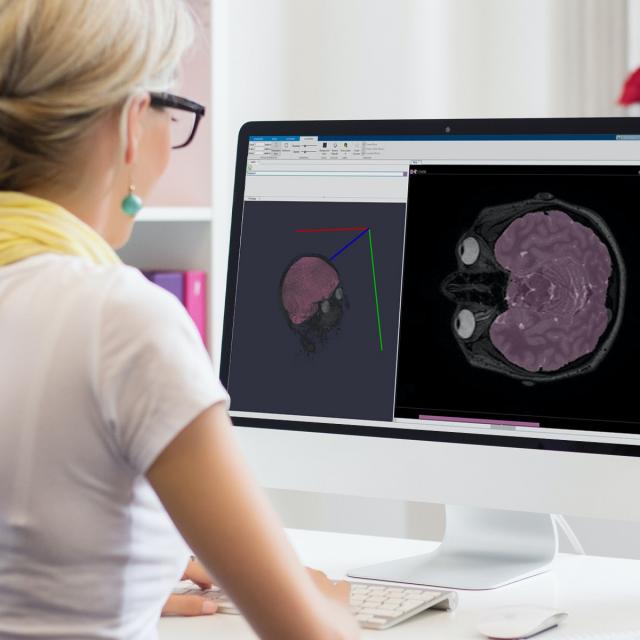
By the end of this course, you’ll be able to separate and analyze regions in your own images. You’ll apply your skills to segment an MRI image of a brain to separate different tissues.
You will use MATLAB throughout this course. MATLAB is the go-to choice for millions of people working in engineering and science, and provides the capabilities you need to accomplish your image processing tasks. You will be provided with free access to MATLAB for the duration of the course to complete your work.
To be successful in this course you should have a background in basic math and some exposure to MATLAB. If you want to familiarize yourself with MATLAB check out the free, two-hour MATLAB Onramp. Experience with image processing is not required.
Course 2 of 3 in the Image Processing for Engineering and Science Specialization.

Syllabus

WEEK 1: Spatial Filtering and Edge Detection
WEEK 2: Improving Segmentation
WEEK 3: Advanced Segmentation Approaches
WEEK 4: Calculating Region Properties

Go to Class
MOOC List is learner-supported. When you buy through links on our site, we may earn an affiliate commission.

Related Courses

Image Analysis Methods for Biologists (FutureLearn) FutureLearn
The University of Nottingham

Image Analysis Methods for Biologists (FutureLearn)

Get an introduction to image acquisition and analysis for biologists – from basic techniques to the future of image analysis. Improve your image analysis knowledge and ability to analyse your images. The use of automatic image analysis in the biological sciences has increased significantly in recent years, especially with automated image capture and the rise of phenotyping.

Available now
4 Weeks
Introduction to Image Processing (Coursera) Coursera
MathWorks

Introduction to Image Processing (Coursera)

In this introduction to image processing, you'll take your first steps in accessing and adjusting digital images for analysis and processing. You will load, save, and adjust image size and orientation while also understanding how digital images are recognized. You will then perform basic segmentation and quantitative analysis. Lastly, you will enhance the contrast of images to make objects of interest easier to identify.

Jun 8th 2026
4 Weeks
Robotic Vision: Processing Images (FutureLearn) FutureLearn
Queensland University of Technology

Robotic Vision: Processing Images (FutureLearn)

How do computers process images? Learn about image processing and image features, and how robots can be programmed to see. Programming a robot to see requires knowing the principles of vision, mathematical knowledge and programming skills. We explore how computers process images, learning the operations required to process an image using MATLAB.

No sessions available
4 Weeks
Computer Vision and Image Processing Fundamentals (edX) EdX
IBM

Computer Vision and Image Processing Fundamentals (edX)

Learn about computer vision, one of the most exciting fields in machine learning. artificial intelligence and computer science. Computer Vision is one of the most exciting fields in Machine Learning, computer science and AI. It has applications in many industries such as self-driving cars, robotics, augmented reality, face detection in law enforcement agencies.

Self Paced
Self-Paced
Sparse Representations in Image Processing: From Theory to Practice (edX) EdX
IsraelX

Sparse Representations in Image Processing: From Theory to Practice (edX)

Learn about the deployment of the sparse representation model to signal and image processing. This course is a follow-up to the first introductory course of sparse representations. Whereas the first course puts emphasis on the theory and algorithms in this field, this course shows how these apply to actual signal and image processing needs.

Self Paced
Self-Paced
Intro to Artificial Intelligence (Udacity) Udacity
Udacity

Intro to Artificial Intelligence (Udacity)

This course will introduce you to the basics of AI. Topics include machine learning, probabilistic reasoning, robotics, computer vision, and natural language processing. Artificial Intelligence (AI) is a field that has a long history but is still constantly and actively growing and changing. In this course, you’ll learn the basics of modern AI as well as some of the representative applications of AI.

Self Paced
Self-Paced
Nearest Neighbor Collaborative Filtering (Coursera) Coursera
University of Minnesota

Nearest Neighbor Collaborative Filtering (Coursera)

In this course, you will learn the fundamental techniques for making personalized recommendations through nearest-neighbor techniques. First you will learn user-user collaborative filtering, an algorithm that identifies other people with similar tastes to a target user and combines their ratings to make recommendations for that user.

Jun 1st 2026
4 Weeks
Introduction to Data Analysis Using Excel (Coursera) Coursera
Rice University

Introduction to Data Analysis Using Excel (Coursera)

The use of Excel is widespread in the industry. It is a very powerful data analysis tool and almost all big and small businesses use Excel in their day to day functioning. This course is designed to give you a working knowledge of Excel with the aim of getting to use it for more advance topics in Business Statistics. The course is designed keeping in mind two kinds of learners - those who have very little functional knowledge of Excel and those who use Excel regularly but at a peripheral level and wish to enhance their skills.

Jun 8th 2026
4 Weeks
Camera and Imaging (Coursera) Coursera
Columbia University

Camera and Imaging (Coursera)

This course covers the fundamentals of imaging – the creation of an image that is ready for consumption or processing by a human or a machine. Imaging has a long history, spanning several centuries. But the advances made in the last three decades have revolutionized the camera and dramatically improved the robustness and accuracy of computer vision systems. We describe the fundamentals of imaging, as well as recent innovations in imaging that have had a profound impact on computer vision.

Jun 1st 2026
5-12 Weeks
Digital Signal Processing 2: Filtering (Coursera) Coursera
École Polytechnique Fédérale de Lausanne

Digital Signal Processing 2: Filtering (Coursera)

Digital Signal Processing is the branch of engineering that, in the space of just a few decades, has enabled unprecedented levels of interpersonal communication and of on-demand entertainment. By reworking the principles of electronics, telecommunication and computer science into a unifying paradigm, DSP is a the heart of the digital revolution that brought us CDs, DVDs, MP3 players, mobile phones and countless other devices.

May 25th 2026
3 Weeks
Introduction to Recommender Systems: Non-Personalized and Content-Based (Coursera) Coursera
University of Minnesota

Introduction to Recommender Systems: Non-Personalized and Content-Based (Coursera)

This course, which is designed to serve as the first course in the Recommender Systems specialization, introduces the concept of recommender systems, reviews several examples in detail, and leads you through non-personalized recommendation using summary statistics and product associations, basic stereotype-based or demographic recommendations, and content-based filtering recommendations.

Jun 8th 2026
4 Weeks