EdX

Hypersonics - from Shock Waves to Scramjets (edX)

Hypersonics - from Shock Waves to Scramjets (edX)

Understand flight at speeds greater than Mach 5 and discover how to analyse the performance of a scramjet. A flow is called hypersonic if the Mach number is greater than 5. This means that the flow speed is more than five times the speed of sound. In air at room temperature, the speed of sound is around 340 m/s, so a Mach 5 flow would have a flow speed of 1.7 km/s or just over 6,000 km/h. When a rocket launches a satellite into earth orbit, when a probe enters the atmosphere of another planet or when an aircraft is propelled by a supersonic combustion ramjet engine (a scramjet), hypersonic flows are encountered.

Class Deals by MOOC List - Click here and see EdX's Active Discounts, Deals, and Promo Codes.

Hypersonics – from Shock Waves to Scramjets introduces the basic concepts associated with flight at speeds greater than Mach 5 and takes students to the stage where they can analyse the performance of a scramjet engine that might be used in a future access-to-space system.

What you'll learn:

  • When compressible flow occurs, how it behaves and when a flow becomes hypersonic
  • How to model 1D compressible flows
  • The nature of shock waves
  • The effects on a flow when the flow is hypersonic
  • How scramjet propulsion fits within context of aerospace propulsion
  • How to model the performance of a simple 2D scramjet engine

Course Syllabus

Section 1. What is Hypersonics?
This section provides an introduction to the course. What we mean by “hypersonic speeds” is discussed and examples of vehicles that travel at such speeds are given. Shock waves and scramjets are also introduced. The rocket equation is introduced to show why staging of launch vehicles is used. The scramjet engine arrangement used throughout the course is outlined.

Section 2. Isentropic Flow
The times when a flow can be considered to be “isentropic” are introduced. This leads on to the fundamentals of compressible flow and steady adiabatic flows. We use the flow in a scramjet nozzle to demonstrate the principles.

Section 3. Shock Waves
Normal and oblique shock waves form when objects travel at close to, or in excess of, the speed of sound. In this section, methods for modelling the flow across shock waves are presented and discussed. Results from experiments are used to show the influence of flow deflection angle on the shock wave formed at hypersonic speeds. We use the flow in a scramjet intake to demonstrate the principles.

Section 4. Combustors in Scramjets
Flows with friction, heat addition and stoichiometry are important considerations for scramjet combustors. In this section example problems are worked through to show the importance of friction and heat addition to fluid flow at different Mach numbers. Stoichiometric concepts are developed so that the use of different fuels can be modelled.

Section 5. Hypersonics
This section looks at hypersonic flight, flight corridors and vehicle design. Hypersonics facilities, such as reflected shock tunnels and expansion tubes, are described since these are used to test scientific hypotheses related to hypersonic flight.

Section 6. Scramjets
This section describes the state of scramjet technology as it exists today, examines the history of scramjets and then looks at future possibilities of scramjet technology. The overall thrust of an air breathing engine is calculated.

Section 7. Project
In the final section, students are required to analyse the flow through an engine and determine the Specific Impulse for their own scramjet design.

Prerequisites
This is an open course and anyone can choose to participate and learn about hypersonics. If, however, you want to delve into the field deeply, it is recommended that you have a good understanding of introductory concepts in Calculus, Fluid Mechanics and Thermodynamics. These will enable you to fully participate in the course, particularly the assessment tasks. The following online courses could be useful for you to access before you start to get yourself up to speed:

  • Differential Equations (MIT Opencourse): Unit 1: Basic DE’s, Linear ODE’s, Integrating Factors
  • Calculus with Applications (MIT Opencourse): Any calculus related math required for our course
  • Thermodynamics and Kinetics (MIT Opencourse): Look up lecture notes to cover basic introductory thermodynamics
Go to Class
MOOC List is learner-supported. When you buy through links on our site, we may earn an affiliate commission.

Related Courses

Wave-Based NDT Methods (edX) EdX
Purdue University,PurdueX

Wave-Based NDT Methods (edX)

Learn how to use wave-based NDT techniques, ultrasonic testing, acoustic emission, etc, to inspect the structural integrity of civil engineering structures, including highways, bridges, dams, and buildings. Wave-based NDT methods allow for reliable and rapid evaluation of civil engineering infrastructure. These methods are particularly useful in long-range inspection; for example, in pipelines, where the wave-based NDT can provide data on hundreds of meters of piping in a matter of seconds.

Feb 14th 2022
5-12 Weeks
Fundamentals of Transistors (edX) EdX
Purdue University,PurdueX

Fundamentals of Transistors (edX)

This course develops a simple framework for understanding the essential physics of transistors, including modern nanoscale transistors. Important technology considerations and circuit applications are also discussed. The transistor has been called the greatest invention of the 20th century - it enabled the electronics systems that have shaped the world we live in. Today's nanotransistors are a high volume, high impact success of the nanotechnology revolution.

Feb 13th 2023
5-12 Weeks
Fundamentos de Mecánica para Ingeniería (edX) EdX
Universitat Politècnica de València,UPValenciaX

Fundamentos de Mecánica para Ingeniería (edX)

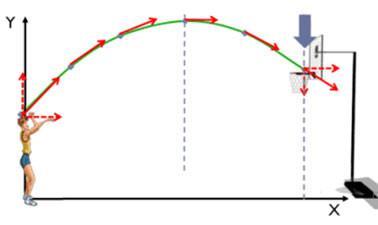
Estudiaremos la cinemática y la dinámica del punto, los conceptos de trabajo y potencia y la energía mecánica. Se aborda el estudio del universo físico analizando objetos en movimiento. Se definen y analizan todas las magnitudes y leyes físicas que permiten describir geométrica y causalmente el movimiento de cuerpos representados por un punto.

Self Paced
Self-Paced
Nanophotonic Modeling (edX) EdX
Purdue University,PurdueX

Nanophotonic Modeling (edX)

Learn a comprehensive set of simulation techniques to predict the performance of photonic nanostructures. This engineering course is an introduction to photonic materials and devices structured on the wavelength scale. Generally, these systems will be characterized as having critical dimensions at the nanometer scale. These can include nanophotonic, plasmonic, and metamaterial components and systems.

Feb 12th 2024
5-12 Weeks
Global Warming Science (edX) EdX
MIT,MITx

Global Warming Science (edX)

Learn about the physics, chemistry, biology, and geology of the earth’s climate system. Global Warming Science teaches you about the risks and uncertainties of future climate change by examining the science behind the earth’s climate. You will be able to answer such questions as, “What is the Greenhouse Effect?” and “How and why has earth’s climate changed through geologic history?”

No sessions available
13-24 Weeks
Management in Engineering: Strategy and Leadership (edX) EdX
MIT,MITx

Management in Engineering: Strategy and Leadership (edX)

Analyze challenging real-life business cases that engineering managers face on a variety of topics. Apply management tools and relevant skills to manage innovation. This course was formerly known as Management in Engineering II. As part of the Principles of Manufacturing MicroMasters program, this course aims to provide exposure to key principles and practices used in engineering management.

Jan 9th 2024
5-12 Weeks
Solid State Devices 1 (edX) EdX
Purdue University,PurdueX

Solid State Devices 1 (edX)

Semiconductor are everywhere in human activities, from your credit card to space exploration. This graduate-level introduction brings aspects of physics, chemistry, and engineering together to understand, analyze, and design transistors and solar cells. This course provides the graduate-level introduction to understand, analyze, characterize and design the operation of semiconductor devices such as transistors, diodes, solar cells, light-emitting devices, and more.

Jan 9th 2023
13-24 Weeks
Quantum Detectors (edX) EdX
Purdue University,PurdueX

Quantum Detectors (edX)

Learn about quantum sensors and devices that extract maximal information from the world around us. Classical detectors and sensors are ubiquitous around us from heat sensors in cars to light detectors in a camera cell phone. Leveraging advances in the theory of noise and measurement, an important paradigm of quantum metrology has emerged. Here, ultra-precision measurement devices collect maximal information from the world around us at the quantum limit.

Feb 12th 2024
5-12 Weeks