Hydro, Wind & Solar power: Resources, Variability & Forecast (Coursera)

Offered by École Polytechnique,
Hydro, Wind & Solar power: Resources, Variability & Forecast (Coursera)

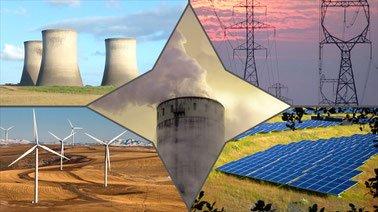
The development of hydro, wind and solar power is growing strongly with as one objective to limit and reduce greenhouse gas emissions. All these renewable energies are intermittent with more or less strong variability. This course provides the basis for estimating the resource of these different modes of production and understanding the physical causes of intermittency and seasonal variability. The different modes of electricity production are detailed as well as the sensitivity induced by meteorological variations.

Class Deals by MOOC List - Click here and see Coursera's Active Discounts, Deals, and Promo Codes.

Short and medium term forecast becomes a fundamental issue in the development of these renewable energies and in their integration to the electricity network. We therefore present the methods and tools used for a reliable forecast of the electricity production of hydro, wind and solar power plants.
This MOOC has been supported by Ecole Polytechnique and was developed in the frame of the Energy4Climate Interdisciplinary Center of Institut Polytechnique de Paris in collaboration with Ecole des Ponts

Syllabus

WEEK 1: Basics on climate, energy and meteorology. This module provides some basic knowledge on energy and meteorology.
WEEK 2: Hydro and fluvial power
WEEK 3: Wind power
WEEK 4: Solar Power
WEEK 5: Renewable energy integration and forecasting

Go to Class
MOOC List is learner-supported. When you buy through links on our site, we may earn an affiliate commission.

Related Courses

Solar Energy Basics (Coursera) Coursera
The State University of New York

Solar Energy Basics (Coursera)

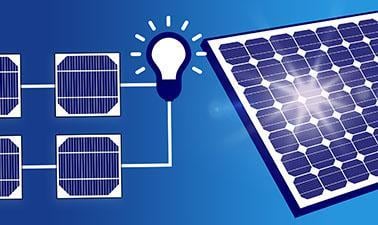
This course gives you an introduction to the fundamentals of solar power as it applies to solar panel system installations. You will learn to compare solar energy to other energy resources and explain how solar panels, or photovoltaics (PV for short), convert sunlight to electricity. You will be able to identify the key components needed in a basic photovoltaic (solar panel) system, such as is found on a house or building, and explain the function of each component in the system.

Aug 31st 2026
5-12 Weeks
Our Energy Future (Coursera) Coursera
University of California, San Diego

Our Energy Future (Coursera)

This course is designed to introduce students to the issues of energy in the 21st century – including food and fuels – which are inseparably linked – and will discuss energy production and utilization from the biology, engineering, economics, climate science, and social science perspectives. This course will cover the current production and utilization of energy, as well as the consequences of this use, examining finite fossil energy reserves, how food and energy are linked, impacts on the environment and climate, and the social and economic impacts of our present energy and food production and use.

Aug 24th 2026
5-12 Weeks
Solar Energy: Photovoltaic (PV) Technologies (edX) EdX
Delft University of Technology,DelftX

Solar Energy: Photovoltaic (PV) Technologies (edX)

Explore the main PV technologies in the current market. Get in-depth knowledge on the design and processing methods of solar cells. The technologies used to produce solar cells and photovoltaic modules are advancing to deliver highly efficient and flexible solar panels. In this course you will explore the main PV technologies in the current market.

Self Paced
5-12 Weeks
Energy Within Environmental Constraints (edX) EdX
HarvardX,Harvard University

Energy Within Environmental Constraints (edX)

A quantitative introduction to the energy system and its environmental impacts. Humanity faces an immense challenge: providing abundant energy to everyone without wrecking the planet. If we want a high-energy future while protecting the natural world for our children, we must consider the environmental consequences of energy production and use. But money matters too: energy solutions that ignore economic costs are not realistic, particularly in a world where billions of people currently can’t afford access to basic energy services. How can we proceed?

Self Paced
Self-Paced
New Energy Technologies: Energy Transition and Sustainable Development (FutureLearn) FutureLearn
Grenoble Ecole de Management

New Energy Technologies: Energy Transition and Sustainable Development (FutureLearn)

Explore the development of new energy technologies and discover key energy challenges with this online course. In a world facing pressing energy challenges, the need for alternative energy and new energy technologies has never been more pressing. This course explores the new and upcoming technologies that may help solve some of the world’s biggest energy challenges - examining them from both a business and technological perspective.

Self Paced
4 Weeks
Energy, Environment, and Everyday Life (Coursera) Coursera
University of Illinois at Urbana-Champaign

Energy, Environment, and Everyday Life (Coursera)

This course teaches you everything you need to know about energy, the environment, and at least a number of things in everyday life. It starts by talking about energy itself and where it comes from. This includes how much we have, who has it, who uses it, and what that all means. The video clips are produced in a fast-paced multimedia format during which Professor Ruzic throws in fun and demonstrations. There are multiple-choice questions to check your understanding and some more in-depth exercises to guide you deeper into the subject.

Aug 31st 2026
5-12 Weeks
Renewable Energy: Resources and Technologies (Coursera) Coursera
Peter the Great St. Petersburg Polytechnic University

Renewable Energy: Resources and Technologies (Coursera)

In our course, you will become familiar with the basic concepts of renewable energy. Get an idea about the basics of determining the potential of renewable energy resources, including its territorial, temporal and climatic variability. We paid great attention to the study of modern technologies for converting solar, wind and hydropower, as well as to operating modes of power plants based on renewables in power supply systems for autonomous and grid consumers.

Aug 1st 2022
5-12 Weeks
Applied Sustainability Engineering (Coursera) Coursera
University of Colorado Boulder,Siemens

Applied Sustainability Engineering (Coursera)

Applied Sustainability Engineering, the second course in the "Applied Sustainability for Technical Managers" specialization discusses the techniques used by engineers and scientists to develop and assess the environmental impact of products and processes required to make those products. It begins with a discussion of different renewable energy technologies and their economics – highlighting how continued reductions in cost have made wind and solar power the least expensive way to generate electricity. It then addresses carbon footprints and how they are determined, applying a practical example where you determine your residential and transportation carbon footprints.

Aug 22nd 2026
5-12 Weeks
Electric Power Systems (Coursera) Coursera
University at Buffalo,The State University of New York

Electric Power Systems (Coursera)

This course familiarizes you with standards and policies of the electric utility industry, and provides you with basic vocabulary used in the business. It introduces the electric power system, from generation of the electricity all the way to the wall plug. You will learn about the segments of the system, and common components like power cables and transformers.

Aug 24th 2026
4 Weeks
Sustainability and the Circular Economy (Coursera) Coursera
University of Colorado Boulder,Siemens

Sustainability and the Circular Economy (Coursera)

As the world’s population continues to rise toward an expected 10 billion citizens by 2050, it is imperative that business practices change to ensure a high quality of life is possible for all of us, both human and non-human. Today’s learners are very aware of this. Moreover, they are highly motivated and have the extraordinary capacity to create a future that provides both economic success and a more enduring, resilient, and sustainable planet. If you are one of these learners, then Sustainability and the Circular Economy is a course for you.

Aug 24th 2026
5-12 Weeks
Net-Zero Building Fundamentals (Coursera) Coursera
Indian Institute for Human Settlements

Net-Zero Building Fundamentals (Coursera)

Interested in decarbonisation, high performance, and climate resilient buildings? Then this course is for you. Our future is low-carbon, net-zero buildings that are super-efficient and self-sufficient in terms of their energy and water use. Decarbonisation, digitisation, and deglobalisation are driving the infrastructure revolution over the next 20 years. This course, offered jointly by the Alliance for an Energy Efficient Economy (AEEE) and the Indian Institute for Human Settlements (IIHS), will enable you to reap the benefits of this revolution and work on climate change.

Aug 31st 2026
5-12 Weeks