Healthy House Plants: A Complete Guide to Gardening Indoors (FutureLearn)

Healthy House Plants: A Complete Guide to Gardening Indoors (FutureLearn)

Learn how to care for house plants, with home gardening tips from BBC Gardeners’ World Magazine.
Discover how to make any room beautiful with these indoor gardening tips. House plants can help make any indoor space more beautiful. Growing and taking care of house plants can also offer mood-boosting benefits.

Class Deals by MOOC List - Click here and see FutureLearn's Active Discounts, Deals, and Promo Codes.

This course from BBC Gardeners’ World Magazine will provide you with tips and advice on how to grow plants indoors. You’ll learn how to make the most of space, repeat outdoor growing triumphs inside, and travel the world through exploring exotic plants.
Indoor gardening tips for every type of houseplant
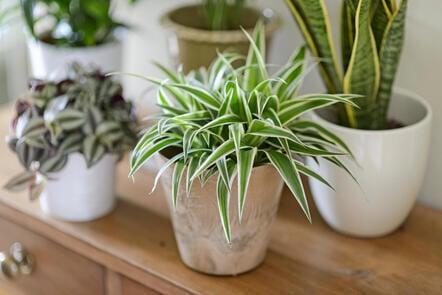
This indoor gardening course covers different types of house plants and their differing needs. These might include cacti, orchids, palms, bulbs, and more.
You’ll learn what sorts of indoor plants can thrive in different environments maximising available light and space. You’ll discover how to care for house plants, including watering and nutrition, and how to look out for pests and disease.
Explore the origins of house plants to improve the quality and health of your plants
As well as learning how to care for your indoor plants, you’ll explore from where different house plants originate. This will help you understand how to care for them, by building a healthy, familiar environment. You’ll also learn about the history of house plants, and the role they’ve played in society.
Finally, you’ll explore the all-important question of what to do when you go on holiday – and how to give your house plants one, too.

Syllabus

Week 1: What will you grow?
Week 2: Growing conditions and the indoor environment
Week 3: Caring for your house plants
Week 4: Making more plants and problem solving

Learning on this course
You can take this self-guided course and learn at your own pace. On every step of the course you can meet other learners, share your ideas and join in with active discussions in the comments.

What will you achieve?
By the end of the course, you‘ll be able to...

  • Identify different types of house plants from their appearance
  • Consider the origins of plants when making an informed selection of what to grow in a particular rooms indoors
  • Assess the indoor environment of particular rooms according to aspect, light and moisture levels and temperature to use appropriate methods of houseplant care
  • Understand how growing conditions change and adapt your care regimes through the seasons
  • Apply suitable watering techniques and assess the moisture requirements of plants
  • Regularly monitor your plants to assess plant health and growth, diagnosing symptoms that may indicate poor techniques, or the presence of pests and disease
  • Apply your newly acquired knowledge and skills to grow more unusual plants or transfer your techniques to outdoor growing

Who is the course for?
Anyone who wants to learn how to care for houseplants can benefit from this course. Perhaps you want to enliven an indoor space. You may have downsized to a home without a garden. Or maybe you just want more plants in your life.

Go to Class
MOOC List is learner-supported. When you buy through links on our site, we may earn an affiliate commission.

Related Courses

Tackling Environmental Challenges for a Sustainable Future (FutureLearn) FutureLearn
University of York

Tackling Environmental Challenges for a Sustainable Future (FutureLearn)

Discover how environmental research can inform how we respond to and solve the major global environmental issues of today. Explore sustainable solutions to environmental issues like changing glaciers. Our energy use is unsustainable, we’re producing waste plastic that’s endangering oceans, and large parts of the natural world are disappearing. We know our planet is facing huge environmental challenges, but what are we doing to solve them?

Self Paced
4 Weeks
Santé des plantes : de l’observation au diagnostic (FUN) FUN
Agrocampus Ouest

Santé des plantes : de l’observation au diagnostic (FUN)

La suppression prochaine des produits phytosanitaires de synthèse pour les Jardins, Espaces Végétalisés et Infrastructures (JEVI) dont font partie les jardins amateurs, impose un accompagnement des utilisateurs. Ces produits peuvent être remplacés par des techniques dites « alternatives ». Ces techniques sont propres à chaque bioagresseur pour une période donnée. Il est donc primordial de savoir reconnaitre les bioagresseurs et autres causes de désordre affectant la santé et le développement des plantes pour viser au plus juste. Ce MOOC donne toutes les clefs pour passer d’une simple observation au diagnostic, afin d’identifier précisément les causes de désordre affectant la santé des plantes : comprendre le fonctionnement des plantes, connaitre et identifier les principaux ravageurs et maladies des plantes.

No session available
5-12 Weeks
Microbiomes & Sustainability (edX) EdX
National University of Singapore,NUS

Microbiomes & Sustainability (edX)

The course is an introduction to microbiomes and sustainability. It argues that global microbiomes are fundamentally relevant to sustainability. Topics include principles of sustainability, sustainable development, microbiomes in humans and the environment, bioremediation, and bioretention. For more than 3.5 billion years microbes and their communities (microbiomes) have shaped the Earth and its inhabitants.

This course is archived
4 Weeks
Religious Symbols of the World (edX) EdX
Seoul National University,SNUx

Religious Symbols of the World (edX)

This course is the third and final course in the series following “Understanding Religious Symbolism” and “Myths, Rituals, and Cosmos.” Through the theories and patterns that you learned in these three courses, I hope that you will be able to interpret the various religious phenomena in different cultures, and through this gain a better understanding of culture and human beings.

Self Paced
Self-Paced
Understanding Plants - Part I: What a Plant Knows (Coursera) Coursera
Tel Aviv University

Understanding Plants - Part I: What a Plant Knows (Coursera)

For centuries we have collectively marveled at plant diversity and form—from Charles Darwin’s early fascination with stems and flowers to Seymour Krelborn’s distorted doting in Little Shop of Horrors. This course intends to present an intriguing and scientifically valid look at how plants themselves experience the world—from the colors they see to the sensations they feel. Highlighting the latest research in genetics and more, we will delve into the inner lives of plants and draw parallels with the human senses to reveal that we have much more in common with sunflowers and oak trees than we may realize.

Aug 3rd 2026
5-12 Weeks
Happy Houseplants: Caring For Your Plants | Learn with The Sill (Skillshare) Skillshare
Skillshare

Happy Houseplants: Caring For Your Plants | Learn with The Sill (Skillshare)

Plants heighten our creativity, happiness, and even oxygen levels — and this class will give you everything you need to pot and care for your plants so they live long, healthy, and prosperous lives! Taught by The Sill's Botanist Christopher Satch, you'll learn about how to pot and re-pot your houseplants, how to care and troubleshoot for your plants, and the best ways to ensure your plants grow and thrive.

Self Paced
Self-Paced
Environmental Challenges: Rights and Values in Ecosystem Services (FutureLearn) FutureLearn
University of Leeds

Environmental Challenges: Rights and Values in Ecosystem Services (FutureLearn)

Differences in values can create conflict. How can we learn to manage our natural resources with integrity? Humans are very innovative, but we’ve also created many ecological problems. We’ve changed the face of the planet, fished the oceans, and we’re causing climate change through emissions. Designing institutional arrangements that recognise ecosystem services in the values we place upon natural systems will be an important way to help governing the planet, for both present and future generations.

Self Paced
2 Weeks
IUCN Red List of Ecosystems: The Global Standard for Assessing Risks to Ecosystems (FutureLearn) FutureLearn
Deakin University

IUCN Red List of Ecosystems: The Global Standard for Assessing Risks to Ecosystems (FutureLearn)

This course introduces the IUCN Red List of Ecosystems and its successful use and policy impact through real-world case studies. Learn how the Red List of Ecosystems is helping to sustain global biodiversity. Nature is under threat around the world. Understanding where ecosystems are at greatest risk allows us to act to sustain species and ecosystems.

Self Paced
2 Weeks
Ethical Cities: Shaping the Future of Your City (FutureLearn) FutureLearn
RMIT University

Ethical Cities: Shaping the Future of Your City (FutureLearn)

Understand the problems cities face and learn how they can be resolved with ethical solutions. On our urbanizing planet, we need inclusive city economies that work for all. Who runs your city? What makes your city liveable? Using stories from cities around the world, this course will introduce you to the importance of ethics in civic leadership, planning, and business, and citizen engagement.

Self Paced
5-12 Weeks