Health Systems Development: Introduction to Health Systems (Coursera)

Health Systems Development: Introduction to Health Systems (Coursera)

This specialization is intended for people interested in health systems and how they function. Participants will learn about the global health systems landscape and the challenges and opportunities to achieve better health outcomes. This specialisation is divided into three courses which are offered as massive online open access courses (Courses 1-3), and a fourth course which is offered as part of the Online MPH degree (capstone). The Health Systems Development specialisation is geared toward learners who have no prior knowledge of health systems or those who are starting to explore this area of study.

Class Deals by MOOC List - Click here and see Coursera's Active Discounts, Deals, and Promo Codes.

Overall, sessions in this specialisation span 16 week with approximately 96 hours of viewing learning materials per week. Formative assessments in the form of quizzes and activities are incorporated throughout the weeks to help learners gauge their level of depth of understanding and to prepare them for their summative assessments.
Participants will have the opportunity to explore a range of areas within health systems. The first course will introduce the main building blocks of health systems and shed some light on key components of well-functioning health systems including how health system performance is assessed. In course two, students will learn how to conduct a health impact assessment and how to assess the impacts of policies, plans and projects, as well as how that support decision-makers make choices regarding alternatives and improvements to prevent disease or injury and to actively promote health. The third course explores human resources for health and service delivery. In this course, students will learn about and analyse country experiences in transforming health services delivery, and interventions and to address human resources for health challenges at a global level.
By the end of this specialisation, learners should be able to identify key components of, and critically compare, different health systems; analyse country experiences in transforming services; and apply theoretical framework for assessing the health impacts of policies, plans and projects.

What You Will Learn
Critically compare different health system models in order to identify opportunities and challenges for health systems around the world.

Course 1 of 3 in the Health Systems Development Specialization.

Syllabus

WEEK 1
Introduction to Health Systems
This week you will learn about what is meant by health systems through Identifying key components of well-functioning health systems, and the importance of the interplay between the six building blocks listed in the WHO Building Blocks framework . You will also learn about the differences between health system functions, how to distinguish between various health financing models, and the impact of health system organisation on health seeking behaviour.

WEEK 2
Health Systems Governance
This week you will learn about health system governance and priority setting. You will also learn how health priorities are determined in various health systems around the world, and get a chance to appreciate the challenges facing good health system governance.

WEEK 3
Health Systems Performance Assessment
This week you will learn about health system performance assessment. You will learn how to evaluate the extent to which a health system meets its key objectives through learning how to Identify components of health system performance assessment and applying health system performance assessment tools.

WEEK 4
Universal Health Coverage
This week you learn what is meant by universal health coverage (UHC), and how taking steps towards UHC means steps towards equity, development priorities, and social inclusion and cohesion. You will also learn about examples from across the globe whereby countries are implementing reforms to advance universal health coverage.

Go to Class
MOOC List is learner-supported. When you buy through links on our site, we may earn an affiliate commission.

Related Courses

Feeding the World (Coursera) Coursera
University of Pennsylvania

Feeding the World (Coursera)

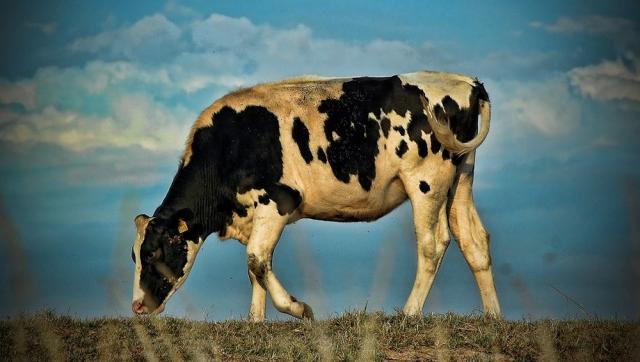
This course will explore the concepts driving current food production science (population growth, urbanization, emerging affluence, resource constraints, and underlying biological limits) with the main focus on livestock production. Each of the major food animal species (dairy, swine, beef, and poultry) will be covered in terms of their universal life cycles, constraints to production and emerging societal issues.

Aug 17th 2026
5-12 Weeks
Preventing Chronic Pain: A Human Systems Approach (Coursera) Coursera
University of Minnesota

Preventing Chronic Pain: A Human Systems Approach (Coursera)

Chronic pain is at epidemic levels and has become the highest-cost condition in health care. This course uses both creative and experiential learning to better understand chronic pain conditions and how they can be prevented through self-management in our cognitive, behavioral, physical, emotional, spiritual, social, and environmental realms.

Aug 17th 2026
5-12 Weeks
Medical Neuroscience (Coursera) Coursera
Duke University

Medical Neuroscience (Coursera)

Medical Neuroscience explores the functional organization and neurophysiology of the human central nervous system, while providing a neurobiological framework for understanding human behavior. In this course, you will discover the organization of the neural systems in the brain and spinal cord that mediate sensation, motivate bodily action, and integrate sensorimotor signals with memory, emotion and related faculties of cognition. The overall goal of this course is to provide the foundation for understanding the impairments of sensation, action and cognition that accompany injury, disease or dysfunction in the central nervous system. The course will build upon knowledge acquired through prior studies of cell and molecular biology, general physiology and human anatomy, as we focus primarily on the central nervous system.

Aug 17th 2026
13-24 Weeks
Training and Learning Programs for Volunteer Community Health Workers (Coursera) Coursera
Johns Hopkins University

Training and Learning Programs for Volunteer Community Health Workers (Coursera)

Volunteer community health workers (CHWs) are a major strategy for increasing access to and coverage of basic health interventions. Our village health worker training course reviews the process of training and continuing education of CHWs as an important component of involving communities in their own health service delivery. Participants will be guided through the steps of planning training and continuing education activities for village volunteers. The course draws on real-life examples from community-directed onchocerciasis control, village health worker programs, community case management efforts, peer educators programs and patent medicine vendor training programs, to name a few.

Aug 17th 2026
5-12 Weeks
Clinical Kidney, Pancreas and Islet Transplantation (Coursera) Coursera
Leiden University,Leiden University Medical Center

Clinical Kidney, Pancreas and Islet Transplantation (Coursera)

Kidney transplantation is a major advance of modern medicine which provides high-quality of life for patients with end-stage renal disease. What used to be an experimental, risky, and very limited treatment option more than 50 years ago is now routinely performed in many countries worldwide. The number of renal transplants is expected to rise sharply in the next decade since the proportion of patients with end stage renal disease is increasing.

Aug 17th 2026
4 Weeks
A Life of Happiness and Fulfillment (Coursera) Coursera
Indian School of Business - ISB

A Life of Happiness and Fulfillment (Coursera)

What are the determinants of a happy and fulfilling life? This is surely one of life’s biggest questions, and a question that has interested many of our ancestors. Buddha famously gave up his kingdom in search of happiness. Several Greek philosophers (from Aristotle to Epicurus and Plato to Socrates) had their own views on what it takes to be happy. And of course, we all have our own theories about happiness too.

Aug 17th 2026
5-12 Weeks
Biochemical Principles of Energy Metabolism (Coursera) Coursera
Korea Advanced Institute of Science and Technology - KAIST

Biochemical Principles of Energy Metabolism (Coursera)

Everyone knows that energy is essential for sustaining life. How can you define energy in life? Have ever thought about ways of how carbohydrates like glucose from your diet can be used for extracting energy? A scientific field that focuses on energy production and flow though living cells and organisms is called bioenergetics. Energy metabolism covers various biochemical ways of energy transformation and regulatory mechanisms of over thousands chemical reactions. Without fine control of those metabolic processes, cells and organisms cannot maintain activities linked to life.

Aug 17th 2026
5-12 Weeks
Epidemics (Coursera) Coursera
University of Hong Kong

Epidemics (Coursera)

“If history is our guide, we can assume that the battle between the intellect and will of the human species and the extraordinary adaptability of microbes will be never-ending.” Despite all the remarkable technological breakthroughs that we have made over the past few decades, the threat from infectious diseases has significantly accelerated. In this course, we will learn why this is the case by looking at the fundamental scientific principles underlying epidemics and the public health actions behind their prevention and control in the 21st century.

Aug 17th 2026
5-12 Weeks
Weight Management: Beyond Balancing Calories (Coursera) Coursera
Emory University

Weight Management: Beyond Balancing Calories (Coursera)

Across the globe, more people are suffering from obesity than at any other time in our history. Why has obesity become so common and so challenging? In this course, we will look at the root cause of obesity, as explained by the latest science. We will see how our food environment has evolved over the last half-century, and how it is altering our biology to over-consume calories and resist sustained weight loss.

Aug 17th 2026
5-12 Weeks
Everyday Chinese Medicine (Coursera) Coursera
The Chinese University of Hong Kong

Everyday Chinese Medicine (Coursera)

This course aims to serve as an education platform on Chinese medicine (CM) for the general public. Our primary goal is to empower healthcare choices by promoting awareness and practical application on CM diagnostic and therapeutic approaches, as well as regulation on CM services and herbal products using international examples.

Aug 17th 2026
5-12 Weeks
Case Studies in Personalized Medicine (Coursera) Coursera
Vanderbilt University

Case Studies in Personalized Medicine (Coursera)

Learn how advances in biomedicine hold the potential to revolutionize drug development, drug treatments, and disease prevention: where are we now, and what does the future hold? This course will present short primers in genetics and mechanisms underlying variability in drug responses. A series of case studies will be used to illustrate principles of how genetics are being brought to bear on refining diagnoses and on personalizing treatment in rare and common diseases. The ethical and operational issues around how to implement large scale genomic sequencing in clinical practice will be addressed.

Aug 17th 2026
5-12 Weeks