Hands-on with AWS: Software Development Practices (Coursera)

Offered by AWS,
Hands-on with AWS: Software Development Practices (Coursera)

Let’s get you working efficiently in a software development team and shorten the time it takes to get high quality applications to your customers. We start with the theory and benefits of building software with Continuous Integration and Continuous Delivery. Continuous Integration starts with source control. We get you working with AWS CodeCommit, a managed source control service that makes it easier for teams to collaborate on code and with Git repository you learn branching strategies and get hands-on committing bug fixes and writing unit tests.

Class Deals by MOOC List - Click here and see Coursera's Active Discounts, Deals, and Promo Codes.

Your commits initiate an AWS CodePipeline pipeline where we can run automated tests for fast code quality feedback. We then use AWS CodeBuild to run tests and package code for deployment. Finally, we use AWS CodeDeploy to automate code deployment. Let’s use your coding skills to automate the process of getting quality code to production infrastructure.
This course will provide a combination of video-based lectures, demonstrations and hands-on lab exercises to get you hands-on committing code that flows through a full Continuous Integration and Continuous Delivery pipeline.
Course 3 of 3 in the Building Serverless Applications on AWS Specialization.

Syllabus

WEEK 1
Week 1: From Code to Application Delivery
This week, you learn how to work on software as a team. You start by learning about best practices for continuous integration and continuous delivery (CI/CD). Next, you explore what it means to take a DevOps approach, where most of the delivery and operations of applications are automated. Finally, working in a team also means contributing to source code in a repository. You learn the basics of using Git for source control, and some best practices for branching and managing code.

WEEK 2
Week 2: Testing and Deployment Pipelines
This week, you get hands-on with some engineering responsibilities. First, you learn about testing code. When you write code, the quality of the code is important. By automating testing as you build, you can increase your confidence that you’re creating quality software. Next, you work through the process of getting a bug fix from code and updating tests. Finally, you see how the code is automatically deployed to production.

Go to Class
MOOC List is learner-supported. When you buy through links on our site, we may earn an affiliate commission.

Related Courses

Software Architecture for the Internet of Things (Coursera) Coursera
EIT Digital

Software Architecture for the Internet of Things (Coursera)

This course will teach you how to design futureproof systems that meet the requirements of IoT systems: systems that are secure, interoperable, modifiable and scalable. Moreover, you'll learn to apply best-in-class software architecture methods to help you design complex IoT and other applications. Lastly, you'll come to understand the business impact of the technical decisions that you make as an IoT system architect.

Sep 28th 2026
5-12 Weeks
AWS DynamoDB Fundamentals (Coursera) Coursera
Whizlabs

AWS DynamoDB Fundamentals (Coursera)

Amazon DynamoDB Fundamentals is a skill enhancement course designed for candidates aiming to enhance their knowledge as Database professionals. This course will help learners understand working with NoSQL databases. Furthermore, fluency in basic concepts of AWS DynamoDB brings long-term opportunities with a specialization in database designing on the cloud.

Sep 28th 2026
5-12 Weeks
Agile Planning for Software Products (Coursera) Coursera
University of Alberta

Agile Planning for Software Products (Coursera)

This course covers the techniques required to break down and map requirements into plans that will ultimately drive software production. Upon successful completion of this course, you will be able to: create effective plans for software development; map user requirements to developer tasks; assess and plan for project risks; apply velocity-driven planning techniques; generate work estimates for software products.

Sep 28th 2026
4 Weeks
AWS Database Specialty Certification (Coursera) Coursera
EDUCBA

AWS Database Specialty Certification (Coursera)

This course offers a comprehensive journey through the world of databases and their management on the AWS cloud platform. From understanding the core concepts of databases to mastering advanced topics like migration, automation, and security, participants will gain a solid foundation in database design, deployment, and management using AWS services.

Sep 28th 2026
5-12 Weeks
Amazon EC2 Basics (Coursera) Coursera
AWS

Amazon EC2 Basics (Coursera)

Compute services are the backbone that power most web-based applications. Amazon Elastic Compute Cloud (Amazon EC2) is the foundation that many other Amazon Web Services (AWS) offerings are built upon. This course provides you with the opportunity to explore the different families of EC2 instances and identify the target workloads for each of these families. You will learn about the different instance types and how to select the best instance types to maximize price and performance.

Oct 5th 2026
1 Week
Client Needs and Software Requirements (Coursera) Coursera
University of Alberta

Client Needs and Software Requirements (Coursera)

This course covers practical techniques to elicit and express software requirements from client interactions. Upon successful completion of this course, you will be able to: Create clear requirements to drive effective software development; visualize client needs using low-fidelity prototypes; maximize the effectiveness of client interactions - adapt to changing product requirements.

Sep 28th 2026
4 Weeks
Principles of Computing (Part 2) (Coursera) Coursera
Rice University

Principles of Computing (Part 2) (Coursera)

This two-part course introduces the basic mathematical and programming principles that underlie much of Computer Science. Understanding these principles is crucial to the process of creating efficient and well-structured solutions for computational problems. To get hands-on experience working with these concepts, we will use the Python programming language. The main focus of the class will be weekly mini-projects that build upon the mathematical and programming principles that are taught in the class.

Oct 5th 2026
4 Weeks
Quantitative Model Checking (Coursera) Coursera
EIT Digital

Quantitative Model Checking (Coursera)

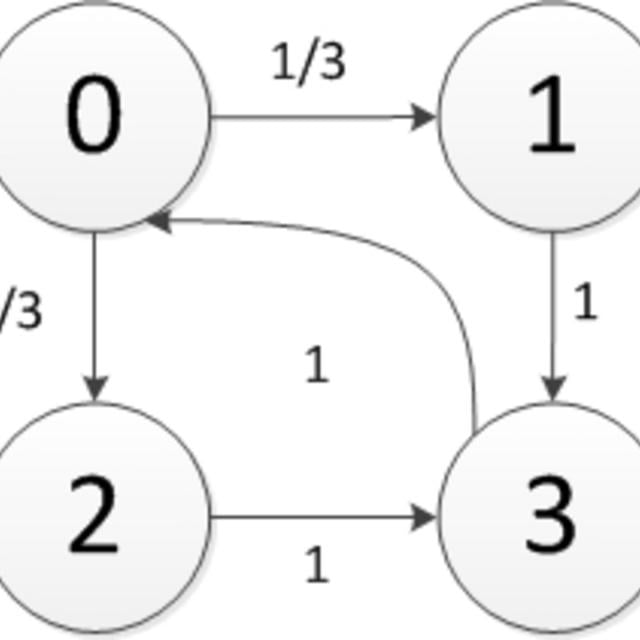
The integration of ICT (information and communications technology) in different applications is rapidly increasing in e.g. Embedded and Cyber physical systems, Communication protocols and Transportation systems. Hence, their reliability and dependability increasingly depends on software. Defects can be fatal and extremely costly (with regards to mass-production of products and safety-critical systems).

Oct 5th 2026
5-12 Weeks
Amazon Bedrock - Getting Started (Coursera) Coursera
AWS

Amazon Bedrock - Getting Started (Coursera)

Amazon Bedrock is a fully managed service that makes foundation models (FMs) from Amazon and leading artificial intelligence (AI) startups available through an API. In this course, you will learn the benefits of Amazon Bedrock. You will learn how to start using the service through a demonstration in the Amazon Bedrock console. You will also learn about the AI concepts of Amazon Bedrock and how you can use the service to accelerate development of generative AI applications.

Sep 28th 2026
1 Week