EdX

Handling Children In A Healthcare Setting (edX)

Handling Children In A Healthcare Setting (edX)

Learn the fundamentals and skills required to manage children in a healthcare setting. The management of patients is an important soft-skill which every clinician must learn and be good at. This process is made more challenging when the patient is a child and communication has to also include the parent/guardian. It is as much an art as it is a science.

Class Deals by MOOC List - Click here and see EdX's Active Discounts, Deals, and Promo Codes.

This course will include didactic teaching on normal child development and key concepts of behaviour management in paediatric patients. Additionally, experiential teaching will be provided via observation of children in medical and dental settings, as well as with the use of virtual reality.

What you'll learn
At the end of the course, students will be able to:

  • Recall the different stages of child development and recognise the challenges of communicating with a child patient;
  • Execute basic behavioural management techniques to achieve a successful and pleasant appointment for a child-patient in a dental setting;
  • Demonstrate confidence in managing the child patient in the dental setting and deliver appropriate care to the child;
  • Empathise to the difficulties a child may face during a dental visit and appreciate measures to help the child overcome these difficulties.

Syllabus

Week 1
Section 1: Importance of behaviour management
We will be looking at examples of situations in healthcare where behaviour management is important.
Section 2: Normal child development
We will learn the emotional, cognitive, social and physical development of a normal child from infancy to adolescence. This will give you an overall idea on how a normal paediatric patient is expected to react in a healthcare setting. The recognition of age-inappropriate behaviours can also improve diagnosis and possible early intervention.

Week 2
Section 3: Concepts of behaviour management
We will look at the use of non-pharmacological domains to manage a child patient in a healthcare setting. Additionally, we will look at the common routes of drug administration and types of drugs used in sedation. Sedation monitoring requirements and common adverse events will also be discussed.

Week 3
Section 4: Interactions with a normal child in a healthcare setting
We present an interaction with a child in a Teddy bear hospital (TBH) setting. The TBH simulates on a small scale medical environments and clinical situations children may encounter in a friendly manner (using teddy bears as patients), and it aims to reduce childhood anxiety around medical environments, procedures and professionals. One effective way to learn behaviour management is through the observation of experienced clinicians at work. In this positive scenario, a trained behaviour therapist engages a child in the explanation of several medical scenarios using the TBH concept.
Section 5: Understanding the point of view of a child in a healthcare setting
We will look at examples of positive and negative interactions and provide tips on how to manage child patients undergoing various clinical procedures. You will also be exposed to the perspective of a young child at a healthcare setting using virtual reality technology. This will encourage empathy from you by understanding the situation and fear that can stem from an unfamiliar and distressing situation for a young patient.

Week 4
Section 6: Managing special situations in a healthcare setting
We will look at specific clinical scenarios that you may encounter and tips on how to manage them. You will also be exposed to various special needs patient so that you can recognize and manage them appropriately.


Go to Class
MOOC List is learner-supported. When you buy through links on our site, we may earn an affiliate commission.

Related Courses

Diversity, Equity and Inclusion: Disparities in Healthcare (edX) EdX
StanfordOnline

Diversity, Equity and Inclusion: Disparities in Healthcare (edX)

Discover how various healthcare inequities present across diverse social identities, and how historical factors have institutionalized often-invisible medical racism. This course explores the social determinants of health, and how societal conditions affect health equity by examining the history of racism in US healthcare and identifying ways to mitigate the effects of institutionalized medical racism.

Self Paced
Self-Paced
Data Analytics in Health - From Basics to Business (edX) EdX
KU Leuven University

Data Analytics in Health - From Basics to Business (edX)

Improve diagnostics, care and curing by effectively applying data analytics in healthcare and spot entrepreneurial opportunities. Many people talk about the promise of “big data” to health care. But how can the application of data analytics to big data actually improve health and health care? We will show that novel data analytics based solutions can result in better diagnosis, better care and better curing. This provides fertile ground for entrepreneurship and the development of new businesses.

No session available
4 Weeks
Identificación de dispositivos médicos (UDI) (edX) EdX
LOGYCAX

Identificación de dispositivos médicos (UDI) (edX)

Dentro de los servicios de salud, existe todo un gran proceso de logística, con el fin que lleguen los insumos a manos del paciente en el momento correcto, en perfecto estado y con la confianza de poder utilizarlo. Para lograrlo, hemos desarrollado un proceso de estandarización que permita generar la trazabilidad de los dispositivos médicos e identificarlos para evitar cualquier falsificación o manejo inadecuado del mismo.

Self Paced
Self-Paced
Trustworthy AI for Healthcare Management (Coursera) EdX
Politecnico di Milano

Trustworthy AI for Healthcare Management (Coursera)

This MOOC gives an introduction to trustworthy artificial intelligence and its application in healthcare. This includes modules on basics of artificial intelligence and an introduction to trustworthy and ethical applications of artificial intelligence. A dedicated lesson will present the Z-Inspection® process for assessing trustworthy AI, and real-world case studies will illustrate how to apply the knowledge.

Jun 15th 2026
3 Weeks
The Best Start in Life: Early Childhood Development for Sustainable Development (edX) EdX
SDGAcademyX,SDG Academy

The Best Start in Life: Early Childhood Development for Sustainable Development (edX)

Children are our future – so how do we give them the best beginning for a happy and healthy life? What does a successful early childhood care program look like? How has a child’s brain developed at the age of 3? How does nutrition impact the future well-being of a child into adulthood?

Self Paced
Self-Paced
Foundations of Client Care 2: Workplace Safety, Emergency Care, and Infection Control (edX) EdX
Osmosis,OsmosisFromElsevier

Foundations of Client Care 2: Workplace Safety, Emergency Care, and Infection Control (edX)

A review of the principles of workplace safety, emergency care, and infection control within a healthcare setting. This is the second course in the Foundations of Client Care program offered by Osmosis from Elsevier. The Workplace Safety, Emergency Care, and Infection Control course reviewes with learners the basic principles of workplace safety, emergency care, and infection control within a healthcare setting and the role of nursing assistants in ensuring their facilities are operated in as safe a manner as possible.

Self Paced
Self-Paced
Telehealth Optimization: Practice Considerations, Workflow Planning, and Healthcare Accessibility (edX) EdX
StanfordOnline

Telehealth Optimization: Practice Considerations, Workflow Planning, and Healthcare Accessibility (edX)

Learn how to plan a telehealth care journey to improve the patient experience, with guidance from Stanford Medicine faculty. Discover how telehealth can be used to make healthcare more accessible. A truly impactful telehealth program places the patient at the center of the experience and makes healthcare more accessible for all. This course from the Stanford Center for Health Education (SCHE) unpacks practical considerations for implementing and optimizing telehealth in your context.

Self Paced
Self-Paced
Ethics in Life Sciences and Healthcare: Exploring Bioethics through Manga (edX) EdX
Kyoto University,KyotoUx

Ethics in Life Sciences and Healthcare: Exploring Bioethics through Manga (edX)

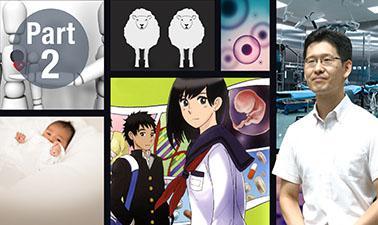
Learn about the ethical decisions surrounding critical health and life science issues through Manga. Is it okay to take pills to help you ace exams? Should you be able to choose the sex of your child? Is abortion murder? These controversial questions will be explored through Manga in this bioethics course. Bioethics is an interdisciplinary field of study that looks into ethical, legal, and social implications of life sciences and health care.

This course is archived
5-12 Weeks
Early Childhood Development: Global Strategies for Implementation (edX) EdX
HarvardX,Harvard University

Early Childhood Development: Global Strategies for Implementation (edX)

Examine best practices in child and family policies, advocacy, financing, and pathways to scale—learning how to generate innovative, scalable intervention strategies that supports early childhood development. Together, Harvard University and UNICEF bring global experience from communities to policy makers, evidence and experts from around the world.

Self Paced
Self-Paced
Managing Addiction: A Framework for Successful Treatment (edX) EdX
University of Adelaide,AdelaideX

Managing Addiction: A Framework for Successful Treatment (edX)

Understand how to manage addiction in practice and respond effectively to clients with drug and alcohol problems. Addiction is such a common problem today that clients experiencing alcohol, nicotine or other drug problems present in many different healthcare settings. The challenge of identifying effective ways to help people experiencing addiction is a serious one, and much depends on the quality of the clinical decisions we make. This course is intended to help you meet this challenge by increasing your understanding of the biology of addiction and the available treatment options in the different stages of the recovery journey.

Self Paced
Self-Paced