Governance and Policy Advice: How political decisions come to life (iversity)

Governance and Policy Advice: How political decisions come to life (iversity)

What happens ‘behind the scenes’ of political decisions? Who advises politicians, and how big is their influence? Sign up and learn more about policy advice, political consulting and their impact on governance.

Political decisions are of course made by governments and/or parliaments. But who provides these bodies with the information they need and shows them the strategic options they have? Who frames political action before the wider public even takes notice of the issue? How does political agenda setting work and what do certain policy outcomes tell us about the future of the issue at stake?
This course is designed to outline key features of policy advice and political consulting and their impact on governance.

We will observe the key players on the spot as well as those behind the scenes and we will analyze their patterns of interaction. Moreover, we will provide insights regarding essential questions to which there are no single right answers: What role does policy advice play in different democracies? What is good policy advice? What makes an expert? In sum: Whom do (and should) politicians and society listen to, and what do (and should) they make of the advice they receive?
By the end of the course, students will know the key concepts of policy advice as well as the main actors in the field and their patterns of interaction. They will understand how and by whom a certain political decision is framed, shaped and implemented. And they will be able to apply this knowledge to a given political event which may affect their own professional or personal life. So, first and foremost, they will be able to ask the right questions.
Go to Class
MOOC List is learner-supported. When you buy through links on our site, we may earn an affiliate commission.

Related Courses

Social Norms, Social Change I (Coursera) Coursera
University of Pennsylvania

Social Norms, Social Change I (Coursera)

This is a course on social norms, the rules that glue societies together. It teaches how to diagnose social norms, and how to distinguish them from other social constructs, like customs or conventions. These distinctions are crucial for effective policy interventions aimed to create new, beneficial norms or eliminate harmful ones. The course teaches how to measure social norms and the expectations that support them, and how to decide whether they cause specific behaviors.

Sep 28th 2026
4 Weeks
AI for Legal Professionals (I): Law and Policy (FutureLearn) FutureLearn
National Yang Ming Chiao Tung University (NYCU)

AI for Legal Professionals (I): Law and Policy (FutureLearn)

Law

Explore the legal and policy issues surrounding the development and application of artificial intelligence. Discover the legal challenges posed by new AI technologies alongside top experts. From self-driving cars to virtual voice assistants, the use of artificial intelligence (AI) has greatly increased in recent years. AI is making us question the way we think about society itself – and poses crucial legal, regulatory, ethical, and human rights challenges for lawyers and citizens alike.

Self Paced
4 Weeks
American Contract Law II (Coursera) Coursera
Yale University

American Contract Law II (Coursera)

Contracts I & II provides a comprehensive overview of contract law in the United States. The course covers most of the key concepts found in a first year law school class. Each lecture is based on one or more common-law cases, integrating legal doctrines with policy discussions. The course also covers key sections from the Uniform Commercial Code (UCC), which governs the sale of goods.

Sep 21st 2026
5-12 Weeks
La povertà nella società contemporanea (edX) EdX
University of Naples Federico II,FedericaX

La povertà nella società contemporanea (edX)

Un'analisi sociologica della povertà per individuare le strategie per contrastarla in diversi contesti sociali. La povertà è una condizione sociale che interessa tutte le società, anche quelle industrializzate dove si fonda su confronti intertemporali tra differenti gruppi sociali. Questo corso analizza sia l'atteggiamento della società nei confronti dei poveri, e come questi hanno influenzato le politiche di contrasto alla povertà, sia i metodi di analisi di questo fenomeno.

Self Paced
Self-Paced
Ideas for a Better World: Leading Change Through Policymaking (FutureLearn) FutureLearn
British Council

Ideas for a Better World: Leading Change Through Policymaking (FutureLearn)

Learn about policymaking and leadership from experts and inspirational leaders, and create your own policy action plan. Become a leader and start making a difference in the world through policymaking Policy change can affect billions of lives. What if you could create policies to enhance societies, transform lives and change the impact we have on the world?

Nov 8th 2021
4 Weeks
Introduction to Politics (saylor.org) Saylor Academy
Saylor.org

Introduction to Politics (saylor.org)

This is a survey course, and as such it can either be used by students who are looking to take just one general overview course, or for students who want to go on to more advanced study in any of the subfields that comprise the political science discipline, such as American politics, comparative politics, international politics, or political theory.

Self Paced
Self-Paced
Le droit, est-ce pour moi ? (FUN) FUN
Université Panthéon-Assas Paris II

Le droit, est-ce pour moi ? (FUN)

Le Droit vous passionne depuis toujours. C’est cette voie que vous voulez choisir. Mais êtes-vous sûr de ne pas vous tromper ? Comment savoir si les études de vos rêves ne vont pas virer au cauchemar ? Plongez tout de suite au cœur de cet univers fascinant pour les uns, hermétique pour les autres. Venez découvrir le secret des cours, de la vie étudiante et des métiers du droit avec l’Université Panthéon-Assas. Et ne restez pas sans réponse face à cette cruciale question : « Le droit, est-ce vraiment pour moi ?

Oct 19th 2021
5-12 Weeks
Transitology – Pathways to and from Democracy (GCHumanRights) Global Campus of Human Rights
Global Campus of Human Rights

Transitology – Pathways to and from Democracy (GCHumanRights)

In this MOOC, academic lecturers in the field of Regime/System Transformation, Quality of Democracy, Elections, and Comparative Politics have been invited to teach, as well as practitioners, data analysts, and policymakers from countries that are currently struggling with the backsliding of democratic institutions and/or are in demanding political regime change in their countries. **Registration deadline: 12 March 2023**

Feb 20th 2023
5-12 Weeks
Come ci si governa nel mondo (e in Italia) (Federica Web Learning) Federica Web Learning
University of Naples Federico II

Come ci si governa nel mondo (e in Italia) (Federica Web Learning)

Com’è organizzato il potere politico nelle nostre democrazie? Chi comanda e perché? Su quali basi giuridiche? Secondo quali soluzioni organizzative, o 'modelli', appunto? Sviluppatisi sulla base di quali criteri e principi? Adottati seguendo quali tradizioni culturali? Con quali vantaggi e quali svantaggi? Perseguendo quali obiettivi e nel rispetto di quali valori? E come si comportano quei diversi 'modelli' nella loro dinamica? Questo, è un corso giuridico, anche se, come vedremo subito, si avvale di altre discipline fino al punto che lo si potrebbe considerare – in realtà – multidisciplinare.

May 11th 2017
No Information
Inequality and Democracy (Coursera) Coursera
Universiteit Utrecht

Inequality and Democracy (Coursera)

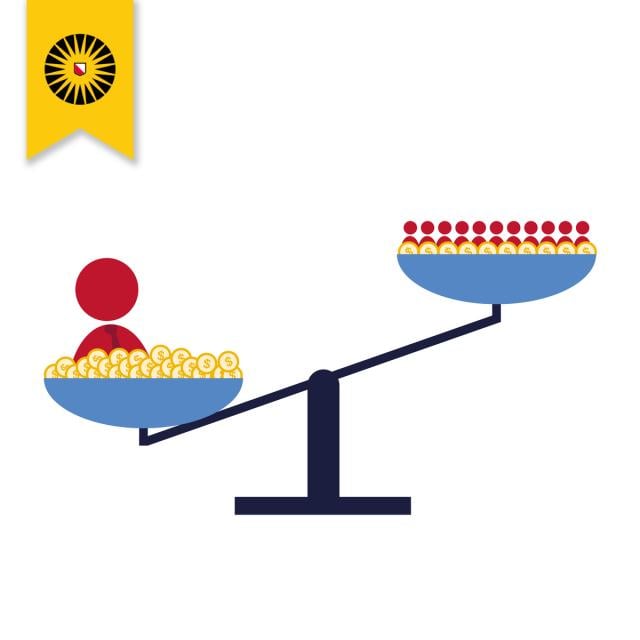
Most countries are getting more and more unequal. But the core of democracy is political equality: that everyone should have an equal say in how their country is run. Can we really expect these things to go together? Can people have equal political power while economic inequality grows and grows? Take this course and decide for yourself.

Sep 14th 2026
5-12 Weeks
Understanding Political Concepts (Coursera) Coursera
University of Naples Federico II

Understanding Political Concepts (Coursera)

Political science discourse brings us face to face with many important concepts like authority, democracy, and power. However, all of them are used differently in different contexts, and their specific meaning depends on the theory they relate to. There is no way around such puzzling diversity. Students of political science simply have to accept this challenge. Yet, the diversity of political science concepts can be used as a powerful resource for learning, through intellectual techniques for stirring personal creativity.

Sep 28th 2026
4 Weeks