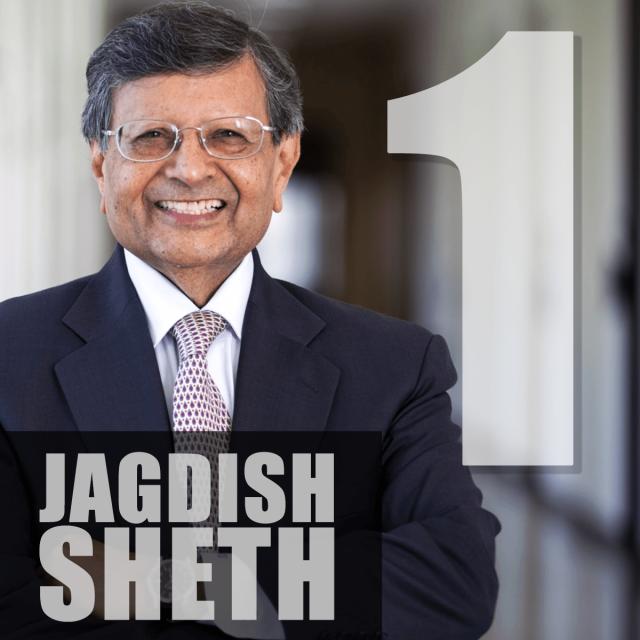
Global Impact: Cultural Psychology (Coursera)

Global Impact: Cultural Psychology (Coursera)

Globalization has brought dramatic changes to the marketplace. A proliferation of global brands brings diverse cultures to a consumer population that is also growing culturally diverse. This course enables students to understand how globalization changes consumers at a psychological level, and provides tools for imbuing brands with cultural meanings—creating iconic brands—that can resonate with global consumers.

Class Deals by MOOC List - Click here and see Coursera's Active Discounts, Deals, and Promo Codes.

The focus is on understanding that culture exists in the mind (e.g., values and beliefs) as well as in the environment (e.g., objects, brands, and institutions), and that globalization creates multi-cultural spaces in contemporary societies.
Consumers can use the cultural meaning of a brand to build their identities (i.e., assimilate the brand cultural symbolism) or reject the brand’s cultural meaning(s) (i.e., exclusionary reactions).
The course will help students identify when assimilation vs. exclusionary reactions are more likely to occur, as well as devise strategies for imbuing brands with cultural meanings that can elevate them to the status of cultural icons.
Upon successful completion of this course, you will be able to:
• Understand how globalization impacts the psychological responses of consumers in global markets
• Understand what culture is and how it manifests itself
• Understand how brands acquire cultural meanings
• Predict consumers’ responses to the cultural meanings in brands
• Identify strategies to win-over multi-cultural consumers in globalized markets
• Learn how to build an iconic brand
Course 5 of 7 in the Global Challenges in Business Specialization.

Syllabus

WEEK 1
Globalization, Culture & Brands
Globalization has brought dramatic changes to the marketplace. A proliferation of global brands brings diverse cultures to a consumer population that is also growing culturally diverse. This module discusses what globalization is, and how it is connected to four forces: growing multiculturalism, cultural mixing, global competition, and connectivity/co-creation. We will analyze what culture is, how it manifests itself, and how culture varies around the world. We will close this module by acknowledging that brands can be tangible representations of culture that embody the values and ideals of a cultural group.

WEEK 2
Cultural Mindsets and Assimilation to a Cultural Framework
This module discusses how culture can be brought to the fore of the mind to guide our judgments and behaviors. We will learn that culture is represented in our heads as a network of elements linked to a central concept. When this network is activated in our minds, we exhibit a tendency to assimilate our behavior to what our culture prescribes.

WEEK 3
Culture Mixing and Its Consequences
This module reviews how people respond to the juxtaposition of cultures at the same time in the same object, a phenomenon we label culture mixing. We will learn that culture mixing has both cognitive and attitudinal consequences. People can respond favorably or unfavorably to culture-mixed stimuli depending on a variety of personal and contextual factors. We will examine these factors in order to predict when people will respond positively or negatively to culture mixing.

WEEK 4
Focusing on Culture to Build Iconic Brands
This module discusses the marketing process to build cultural equity into a brand, or to turn a brand into a cultural icon. The process consists of three stages. The first stage is acquiring a deep cultural understanding of the brand and its market, which is referred to as conducting a cultural audit. The second stage is to develop a cultural positioning, or to articulate a statement about how the brand distinctively embodies the culture. Finally, the last stage is the identification of marketing programs (promotion, product, distribution, and price) to communicate the cultural positioning.
Go to Class
MOOC List is learner-supported. When you buy through links on our site, we may earn an affiliate commission.

Related Courses

Fundamentos de Vendas e Marketing com o 10,000 Women da Goldman Sachs (Coursera) Coursera
Goldman Sachs

Fundamentos de Vendas e Marketing com o 10,000 Women da Goldman Sachs (Coursera)

Este curso online gratuito é um dos 10 cursos disponíveis na coleção 10,000 Women da Goldman Sachs, projetado para empreendedoras prontas para levar seus negócios para o próximo nível. Este curso lhe ajudará a desenvolver sua estratégia de marketing e construir sua marca à medida que sua empresa cresce. Você irá explorar uma variedade de ferramentas de marketing úteis e aprenderá como realizar análises para medir seu sucesso no contexto do crescimento do seu próprio negócio.

Jul 27th 2026
1 Week
The Economics of Agro-Food Value Chains (Coursera) Coursera
Technische Universität München - TUM

The Economics of Agro-Food Value Chains (Coursera)

In this course, you learn how the agro-food value chain approaches the challenge of constantly improving its competitiveness by producing high quality food and products and also aiming to attain greater sustainability. Some of the topics of this course are: the notion of quality for food and agricultural products and consumer value; how to conduct market research in this field; labelling, branding and pricing strategies, as-well as innovation in the agro-food sector; how sustainability can be used as a competitive advantage through corporate social responsibility: the role and different types of industrial standards; the different forms of coordination in the chain, in particular with regard to the retailing and distribution sector.

Jul 22nd 2026
5-12 Weeks
Shaping Your Professional Brand (Coursera) Coursera
University of Illinois at Urbana-Champaign

Shaping Your Professional Brand (Coursera)

You've thought about who you are and how you want your career to be. You have some skills to deal with situations that could cause problems. What about the team around you? How do you build functional and constructive professional relationships? How can you add value? What do employers look for when they are promoting?

Aug 3rd 2026
4 Weeks
Migrations internationales : un enjeu mondial (Coursera) Coursera
Sciences Po

Migrations internationales : un enjeu mondial (Coursera)

Le monde bouge, mais les opinions et les gouvernements ne sont pas tous prêts à accepter cette réalité mal connue. La question affecte à la fois les Etats, mais aussi la planète, dans un processus de mondialisation et de régionalisation des migrations, et pose de nouvelles questions aux relations internationales, en y incluant le sud. Ce cours cherche à la fois à parfaire la connaissance sur le sujet, à traiter les thèmes essentiels induits par les migrations internationales et à dresser les tendances de demain.

Jul 27th 2026
5-12 Weeks
Brand Management: Aligning Business, Brand and Behaviour (Coursera) Coursera
University of London,London Business School

Brand Management: Aligning Business, Brand and Behaviour (Coursera)

Professor Nader Tavassoli of London Business School contrasts traditional approaches to branding - where brands are a visual identity and a promise to customers - to brands as a customer experience delivered by the entire organisation. The course offers a brand workout for your own brands, as well as guest videos from leading branding professionals.

Jul 27th 2026
5-12 Weeks
Sustainable Innovation for Subsistence Marketplaces (Coursera) Coursera
University of Illinois at Urbana-Champaign

Sustainable Innovation for Subsistence Marketplaces (Coursera)

This course focuses on understanding subsistence marketplaces and designing business solutions for the billions of people living in poverty in the global marketplace. To develop understanding of subsistence marketplaces, we use exercises to enable participants to view the world from the eyes of subsistence consumers and entrepreneurs, facilitate bottom‐up understanding generated by participants, and provide insights from extensive research. More broadly, the course uses the context of extreme resource constrained contexts to learn about the bottom-up approach pioneered through the Subsistence Marketplaces Initiative, and apply it in any context.

Jul 27th 2026
4 Weeks
Political Economy of Institutions and Development (Coursera) Coursera
Leiden University

Political Economy of Institutions and Development (Coursera)

This course is part of the SDG initiative addressing the UN Sustainable Development Goals, specifically for the following SDGs [1, 8, 10 and 16]. We hope you will join in our efforts to reach the SDG’s in small but measurable and actionable ways, cooperating with Development Done Differently. Expand your impact. You can create a better world. In today’s world, politics and economics are interconnected, but what is the nature of this connectivity?

Aug 10th 2026
5-12 Weeks
China’s Economic Transformation Part 1: Economic Reform and Growth in China (Coursera) Coursera
The Hong Kong University of Science and Technology - HKUST

China’s Economic Transformation Part 1: Economic Reform and Growth in China (Coursera)

In 1978, after nearly 30 years of socialist planning under Mao Zedong, China was one of the world’s poorest countries, saddled with an inefficient, inward-looking economy. Today, China is an upper-middle income country and the world’s largest trading nation, contributing more to global economic growth than any other nation. How could such a remarkable transformation take place? This course will examine in detail the reforms that have contributed to China’s economic development and the current challenges facing the Chinese economy.

Jul 27th 2026
5-12 Weeks
Global Systemic Risk (Coursera) Coursera
Princeton University

Global Systemic Risk (Coursera)

What is globalization and how does it work? How can we understand the process as a whole? How are the parts of the world linked? What are the risks of living in a world where “no one is in charge”? This course introduces students to systems thinking, network theory, and risk analysis and uses these tools to better understand the process of globalization. Focusing on trade, finance, and epidemiology, it analyzes potential challenges to the current global order.

Aug 3rd 2026
5-12 Weeks