Global Blindness: Planning and Managing Eye Care Services (FutureLearn)

Global Blindness: Planning and Managing Eye Care Services (FutureLearn)

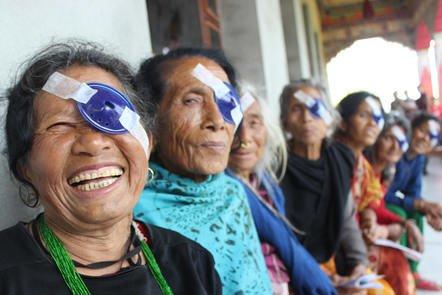
Understand global blindness and how to plan effective eye care with this online course for health professionals. Find out how to plan and manage eye care, to avoid blindness. Around the world, 285 million people are blind or visually impaired. 75% of this is avoidable and 90% is in low- and middle-income countries. In this online course we highlight the key facts about avoidable blindness and global initiatives to address it.

Class Deals by MOOC List - Click here and see FutureLearn's Active Discounts, Deals, and Promo Codes.

What topics will you cover?

  • Epidemiological data on the causes and prevalence of blindness and visual impairment
  • VISION 2020: The Right to Sight
  • The Global Action Plan 2014-2019
  • Key public health strategies for cataract and refractive error
  • Health systems strengthening
  • The essentials of the planning process for eye care programmes
  • The principles of monitoring and evaluation

What will you achieve?
By the end of the course, you'll be able to...

  • Describe the magnitude and causes of blindness and visual impairment, both globally and locally.
  • Evaluate the key public health control strategies to strengthen service provision for cataract and refractive error in your local setting.
  • Apply the essentials of the planning process for implementation in your setting.
  • Assess the relevance of the Vision 2020: the right to sight initiative and the applicability of Global action plan 2014-2019 to your local setting.
  • Interpret the relevance of monitoring and evaluation for effective management of an eye care service.
Go to Class
MOOC List is learner-supported. When you buy through links on our site, we may earn an affiliate commission.

Related Courses

Quality Improvement in Healthcare: the Case for Change (FutureLearn) FutureLearn
University of Bath

Quality Improvement in Healthcare: the Case for Change (FutureLearn)

Explore new and better ways of organising health and social care services, to improve quality, with this free online course. Why is quality improvement in health and social care systems so difficult? Why is it so challenging to bring in new and better ways of organising health and social care services? Many reasons have been put forward: lack of money; lack of knowledge about either the actual quality of care delivered, or resistance to making changes to long-established ways of working; excessive and sometimes misunderstood regulations; and professional opinions and interests that are hard to influence when systems are working at or beyond capacity.

Self Paced
5-12 Weeks
Exercise Prescription for the Prevention and Treatment of Disease (FutureLearn) FutureLearn
Trinity College Dublin

Exercise Prescription for the Prevention and Treatment of Disease (FutureLearn)

Learn how physical exercise can help patients including those with cardiovascular disease, mental health problems and cancer. In the last few decades physical exercise has become well established as a tool to prevent and treat disease. Perceptions within the healthcare sector of exercise and its prescription as a treatment have changed dramatically in recent years.

Self Paced
2 Weeks
Discovering Science: Medicinal Chemistry (FutureLearn) FutureLearn
University of Leeds

Discovering Science: Medicinal Chemistry (FutureLearn)

What role does chemistry play in healthcare and our ability to diagnose and treat patients? Discover how chemotherapy has evolved, and some of the breakthroughs and developments chemists have made in the fight against cancer over the last 10 years. Diagnostic imaging examines how scientists learn about, and treat, the inside of the body without invasive surgery. You’ll explore how modern imaging techniques diagnose problems quickly and safely, and how diseases which may not previously have been picked up are identified.

Self Paced
2 Weeks
Using Infection Control to Combat Antimicrobial Resistance (FutureLearn) FutureLearn
University of East Anglia

Using Infection Control to Combat Antimicrobial Resistance (FutureLearn)

Find out how effective infection control in health and social care can tackle the global risk of antimicrobial resistance. Get practical guidance on infection control in health and social care settings. This online course will explore the growing problem of antimicrobial-resistant infections in health and social care settings. You’ll find out how infectious diseases are acquired and spread, and how this contributes to the global risk of antimicrobial resistance.

Self Paced
3 Weeks
Challenges in Antibiotic Resistance: Gram Negative Bacteria (FutureLearn) FutureLearn
British Society for Antimicrobial Chemotherapy - BSAC

Challenges in Antibiotic Resistance: Gram Negative Bacteria (FutureLearn)

This course by BSAC is for healthcare professionals managing infections. You will learn about Gram Negative Bacteria. Identify, diagnose and treat gram negative bacterial infections. Gram negative bacteria (GNB) are a group of bacteria that can cause infection and toxic reaction in patients, yet are difficult to differentiate and treat with antibiotics due to their structure.

Self Paced
3 Weeks
Why Do We Age? The Molecular Mechanisms of Ageing (FutureLearn) FutureLearn
University of Groningen,University Medical Center Groningen - UMCG

Why Do We Age? The Molecular Mechanisms of Ageing (FutureLearn)

Why do we age? Is there a limit to human lifespan? Can we prolong our lives? Find out with this free online course. Discover the science behind the ageing process. The “why” and “how” of ageing has puzzled mankind ever since it questioned its place in the universe.

Self Paced
5-12 Weeks
Medical Humanity: Engaging Patients and Communities in Healthcare (FutureLearn) FutureLearn
Taipei Medical University

Medical Humanity: Engaging Patients and Communities in Healthcare (FutureLearn)

Find out how and why you should engage patients and communities in the development of new healthcare technology and treatments. The development of healthcare treatments has given people hope to fight diseases. However, humans are born to be afraid of advanced technologies. As such, it is critical that medical professionals have the skills to explain the benefits of treatments to patients and, ideally, involve them in the development of new treatments in the first place.

Self Paced
3 Weeks
Understanding Insulin (FutureLearn) FutureLearn
University of Southampton

Understanding Insulin (FutureLearn)

Learn more about all things insulin: from how it works, to insulin types, to side effects and guidance on how to prescribe safely. The current spend on diabetes care by the NHS is estimated to be £1.6 million pounds per hour. 80% of this is spent on managing diabetes complications, the risk of which can be significantly reduced through effective blood glucose control using insulin.

Self Paced
4 Weeks
Biochemistry: the Molecules of Life (FutureLearn) FutureLearn
University of East Anglia

Biochemistry: the Molecules of Life (FutureLearn)

Explore the impact of biochemistry on bioenergy and health, discovering why graduates are in demand; with the Biochemical Society. Biochemistry brings together all of the sciences to study the chemical and physical processes that occur in living organisms. It truly is the science of life. As a scientific discipline in its own right, biochemistry has a major impact on all areas of the life sciences and biochemists are in high demand among employers.

Self Paced
3 Weeks
Clinical Bioinformatics: Unlocking Genomics in Healthcare (FutureLearn) FutureLearn
University of Manchester

Clinical Bioinformatics: Unlocking Genomics in Healthcare (FutureLearn)

Learn about the role of clinical bioinformaticians in healthcare and how their work is helping to realise the genomics revolution. This free online course aims to raise awareness amongst healthcare professionals of the role of Clinical Bioinformatics and Genomics in healthcare today.

Self Paced
5-12 Weeks
Dysphagia: Swallowing Difficulties and Medicines (FutureLearn) FutureLearn
University of East Anglia

Dysphagia: Swallowing Difficulties and Medicines (FutureLearn)

This course will enhance the knowledge of any person involved in the administration of medicines to patients with dysphagia. The course offers an opportunity to network with other learners and with the creators of the course through discussions, graphs and social networking features and to share knowledge with other learners and professionals.

Self Paced
5-12 Weeks
Health and Wellbeing in the Ancient World (FutureLearn) FutureLearn
The Open University

Health and Wellbeing in the Ancient World (FutureLearn)

Use literary and archaeological evidence to see how ancient Greeks and Romans approached health, well-being and societal issues. What did being healthy in ancient Rome or Greece look like? How can we tell what well-being meant in ancient times? This online course will help you investigate these questions, using both literary and archaeological evidence, to uncover details of real life in ancient societies.

Self Paced
5-12 Weeks