Global Adolescent Health (Coursera)

Global Adolescent Health (Coursera)

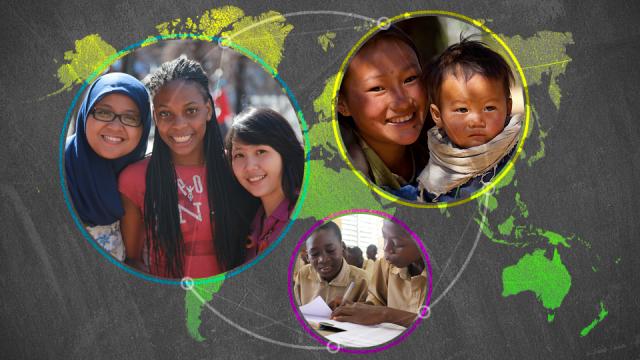
This course will explore the dynamic factors affecting the health and wellbeing of young people around the world, and how important it is for individuals, communities and nations that we improve the health and life chances of this important population group.

Class Deals by MOOC List - Click here and see Coursera's Active Discounts, Deals, and Promo Codes.

With over 25% of the world’s population aged between 10 and 24 years, today’s generation of young people is the largest in human history. As the future leaders and drivers of growth, productivity and innovation, young people are our greatest assets, and investment in their health and wellbeing has social, economic and other benefits that continue across the lifespan and into the next generation.
In this course we will adopt a life-course framework to take a holistic view of youth health and wellbeing. We will explore changing patterns of adolescent health and development, including why adolescence is starting earlier and ending later; how puberty and adolescent brain development may shape future health; and how what happens in adolescence can affect the start to life for the next generation. We’ll also look at the major health and social issues affecting young people and ways of addressing these through policy, practice and programming.

Syllabus

WEEK 1
Introduction to adolescent health: developmental and ecological perspectives (Part I)
Welcome! Before getting started on this week’s content, be sure to review the materials under the ‘Introduction’ section below to help you get the most out of this course, whatever your learning goals may be. This week we set the scene for adolescent health as a critical area of human health and development. We introduce the conceptual framework used throughout the course, which will assist greatly in building your learning across each week of material. We discuss different definitions of adolescence and young adulthood, and explore how the biological and social transitions associated with this period of life- and our understanding of them- have changed over time.

WEEK 2
Introduction to adolescent health: developmental and ecological perspectives (Part II)
This week we return to our conceptual framework and unpack the key concepts of social determinants of health and risk and protective factors. We explore what these terms mean and how they influence and shape adolescent health and development. We also begin to apply this knowledge at a practical level in terms of the interventions and actions we can take to improve or maintain health and wellbeing during the adolescent and young adult years, or prevent problems from happening in the first place.

WEEK 3
Major health problems of adolescents (Part I)
This week we explore our conceptual framework for adolescent health as it relates to health-related behaviours and states and health outcomes. By that we mean, how do the biological, social, economic and other influences that we have discussed so far play out in terms of adolescent health outcomes (e.g. death and disability) and behaviours (e.g. those relating to sexual activity or substance use)? What are the major health issues affecting young people around the world today, and how does this differ by region, gender and other variables? We will explore the latter question over the course of this week and next, with the focus this week predominantly on sexual and reproductive health and mental health.

WEEK 4
Major health problems of adolescents (Part II)
This week continues last week's focus on the 'health-related behaviours and states' and 'health outcomes' components of our conceptual framework. We will discuss some of the other major health topics and issues affecting adolescents and young adults around the world today, including infectious diseases, chronic illness and disability, nutrition, physical activity and obesity. We will also highlight injury as a leading cause of death and major cause of disability in young people, and build on last week's discussion of sexual, reproductive and mental health.

WEEK 5
Adolescent health policy, programming and intervention (Part I)
This week we set the scene for understanding the policy and practice context of adolescent health and development through reviewing the functions of family and family policy, the value of education as a resource for health, and the wider influences of peers, advertising and marketing, taxation, legislation and social media in shaping adolescent behaviours.

WEEK 6
Adolescent health policy, programming and intervention (Part II)
This week we continue our exploration of the policy and practice context of adolescent health and development by focusing on the role of health services in responding to the burden of disease experienced by young people. We discuss the elements of quality healthcare for young people and what adolescent-friendly health care means at an individual practitioner and service level. We also highlight the challenge of monitoring and communicating the health status of adolescents at a national and global level, why nations need to be held to account for investing in appropriate actions that promote the health of their young people, and how to promote positive and meaningful youth participation. As this marks the final week of learning material for this course (Weeks 7 and 8 are devoted to the completion and evaluation of Assignment 2 for those interested), we also discuss learning and networking opportunities beyond GAH for those of you who would like to continue this journey.

WEEK 7
(no new content)
Weeks 7 and 8 do not feature any new course material and are for the development, submission and peer marking of the second written assignment for those wishing to do so. Please be sure to review the intro video below for some important information before getting started. We would also greatly appreciate your feedback on this course via the end of course survey below if you have not already done so- it is so critical for us in our efforts to ensure we are providing our students with the best experience possible. Thank you!


Go to Class
MOOC List is learner-supported. When you buy through links on our site, we may earn an affiliate commission.

Related Courses

Preventing Chronic Pain: A Human Systems Approach (Coursera) Coursera
University of Minnesota

Preventing Chronic Pain: A Human Systems Approach (Coursera)

Chronic pain is at epidemic levels and has become the highest-cost condition in health care. This course uses both creative and experiential learning to better understand chronic pain conditions and how they can be prevented through self-management in our cognitive, behavioral, physical, emotional, spiritual, social, and environmental realms.

Aug 17th 2026
5-12 Weeks
Evidence-based Toxicology (Coursera) Coursera
Johns Hopkins University

Evidence-based Toxicology (Coursera)

Welcome to the Evidence-based Toxicology (EBT) course. In medicine and healthcare, evidence-based medicine has revolutionized the way that information is evaluated transparently and objectively. Over the past ten years, a movement in North America and Europe has attempted to translate this revolution to the field of toxicology.

Aug 17th 2026
5-12 Weeks
Psychology of Popularity (Coursera) Coursera
University of North Carolina

Psychology of Popularity (Coursera)

The level of popularity you experienced in childhood and adolescence is still affecting you today in ways that you may not even realize. Learn about how psychologists study popularity and how these same concepts can be used in adulthood to be more successful at work, become better parents, and have a happier life.

Aug 17th 2026
5-12 Weeks
Drugs, drug use, drug policy and health (Coursera) Coursera
University of Geneva

Drugs, drug use, drug policy and health (Coursera)

This MOOC is the first of its kind, since it addresses critical issues related to drugs from a multidisciplinary, health and human rights-based approach. Throughout the course you will cover a range of questions including what are drugs and why they controlled? What are the benefits and harms of taking drugs? How public health policies can address drug use?

Aug 17th 2026
5-12 Weeks
Impacting the Opioid Crisis: Prevention, Education, and Practice for Non-Prescribing Providers (Coursera) Coursera
University of Michigan

Impacting the Opioid Crisis: Prevention, Education, and Practice for Non-Prescribing Providers (Coursera)

This course will empower non-prescribing providers to directly impact the ongoing opioid crisis in the United States through increased knowledge and tools that will transform practice and policies. The course will inform you about the opioid epidemic and provide information and research about evidence-based strategies that are focused on prevention, intervention, education, or policy.

Aug 17th 2026
5-12 Weeks
Clinical Kidney, Pancreas and Islet Transplantation (Coursera) Coursera
Leiden University,Leiden University Medical Center

Clinical Kidney, Pancreas and Islet Transplantation (Coursera)

Kidney transplantation is a major advance of modern medicine which provides high-quality of life for patients with end-stage renal disease. What used to be an experimental, risky, and very limited treatment option more than 50 years ago is now routinely performed in many countries worldwide. The number of renal transplants is expected to rise sharply in the next decade since the proportion of patients with end stage renal disease is increasing.

Aug 17th 2026
4 Weeks
Population Health: Syndemics (Coursera) Coursera
Leiden University

Population Health: Syndemics (Coursera)

Do you wish to contribute to breaking cycles of ill-health in disadvantaged populations? And explore co-occurrence of diseases, such as substance abuse, infectious and chronic disease, and the relation with social factors (disparities)? Are you disappointed in the poor effectiveness of interventions for combined social and medical problems? Then this syndemics course might provide you with some answers.

Aug 17th 2026
4 Weeks
Medical Cannabis for Pain Control (Coursera) Coursera
Technion - Israel Institute of Technology

Medical Cannabis for Pain Control (Coursera)

Cannabis is a group of flowering plants that has been long used for industrial, recreational and medical purposes. When relating to its medical use, the terms "Medical Cannabis" or "Medical marijuana" has become prevalent. In this course we will use the term "Medical Cannabis". Nowadays, Medical Cannabis involves multiple medical disciplines such as neuroscience, pain, pharmacology, oncology, psychiatry and more. Moreover, it has cultural, agricultural and social, legal and political implications.

Aug 17th 2026
5-12 Weeks
Dopage : Sports, Organisations et Sciences (Coursera) Coursera
University of Lausanne

Dopage : Sports, Organisations et Sciences (Coursera)

L'objectif du cours est de permettre une compréhension distanciée du dopage. C’est pour atteindre cet objectif que le cours s’appuie sur une approche pluridisciplinaire qui constitue une opportunité d'observer comment diverses disciplines abordent un même objet, selon différents angles et de manière complémentaire. Il s'agit également de donner des repères permettant d'appréhender le dopage dans sa complexité.

Aug 17th 2026
4 Weeks
Case Studies in Personalized Medicine (Coursera) Coursera
Vanderbilt University

Case Studies in Personalized Medicine (Coursera)

Learn how advances in biomedicine hold the potential to revolutionize drug development, drug treatments, and disease prevention: where are we now, and what does the future hold? This course will present short primers in genetics and mechanisms underlying variability in drug responses. A series of case studies will be used to illustrate principles of how genetics are being brought to bear on refining diagnoses and on personalizing treatment in rare and common diseases. The ethical and operational issues around how to implement large scale genomic sequencing in clinical practice will be addressed.

Aug 17th 2026
5-12 Weeks
Diabetes - a Global Challenge (Coursera) Coursera
University of Copenhagen

Diabetes - a Global Challenge (Coursera)

Diabetes and obesity are growing health problems in rich and poor countries alike. With this course you will get updated on cutting-edge diabetes and obesity research including biological, genetic and clinical aspects as well as prevention and epidemiology of diabetes and obesity. All lectures are provided by high-profile scientists from one the world's leading universities in diabetes research.

Aug 17th 2026
5-12 Weeks