Getting Started With Music Theory (Coursera)

Getting Started With Music Theory (Coursera)

This course is a brief introduction to the elements of music theory for those with little or no music theory experience. We will explore pitch, rhythm, meter, notation, scales, keys, key signatures, meter signatures, triads, seventh chords, and basic harmony. If you listen to music or play music by ear, and you want to know more about how music is organized and notated, this course is for you.

Class Deals by MOOC List - Click here and see Coursera's Active Discounts, Deals, and Promo Codes.

By the end of the course, you should know all major and minor keys, how to read and write in treble and bass clef using standard meters and rhythmic values, and how to notate and harmonize a simple melody. This course can serve as a stand-alone basic music theory course, or it can be a springboard to more advanced theory and composition courses.
Your instructor is Bruce Taggart, Associate Professor of Music Theory at Michigan State University, in the College of Music, where he has taught undergraduate and graduate music theory since 1996.

Syllabus

WEEK 1
Basic Materials: Overview, Tonality, Notation
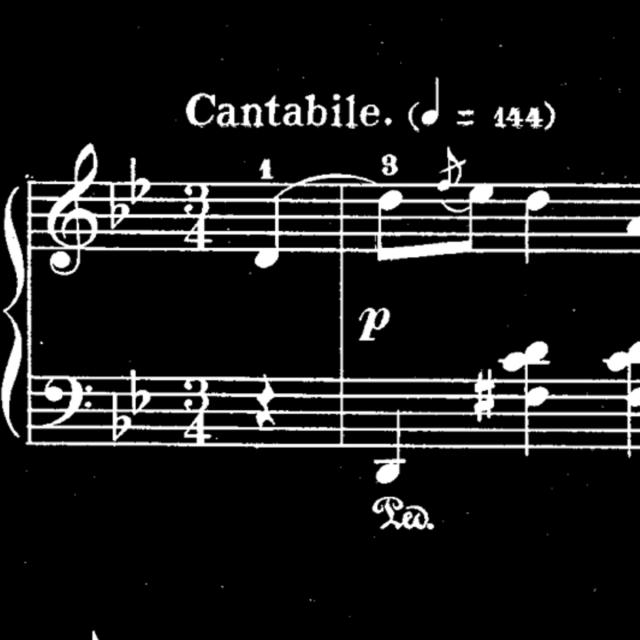
Learning Outcomes: By the end of this module, you should be able to: (1) discuss the elements of music, (2) explain the difference between tonal and atonal music, (3) sing the tonic in tonal music, (4) identify the fundamental and partials of a note, (5) explain the difference between chord and harmony, (6) explain the five-line staff, (7) read and write notes using treble and bass clefs, and (8) identify rhythmic values in notation. You should be able to (9) distinguish between pitch and pitch class, (10) describe octaves and how to label pitches based on octave placement, (11) identify and write accidentals and find them on the piano keyboard, (12) and define equal temperament (the artificial scale used on the modern piano) and tell how it differs from other tuning systems.

WEEK 2
Scales, Keys, and Intervals
Learning Outcomes: By the end of this module, you should be able to (1) describe the diatonic set and understand how it is used to create major and minor scales, (2) sing major and minor using solfeggio (solfege) syllables, (3) explain the difference between natural, harmonic, and melodic minor, (4) spell major and minor scales starting on any note using accidentals in treble and bass clef, and (5) spell parallel and relative major and minor scales. You should also be able to (6) identify and spell by size and quality diatonic intervals (within a key) and chromatic intervals (outside a key).

WEEK 3
Rhythm and Meter
Learning Outcomes: By the end of this module, you should be able to (1) read and write all possible rhythmic values, including dotted notes and ties, (2) understand how many notes fit within a measure in various meters, (3) determine meter signatures based on note grouping, and note grouping based on meter signatures, (4) define the types of musical accent and how they create a sense of meter, (5) distinguish between duple and triple meters in notation and by sound, and (6) describe and identify metrical syncopation. You should be able to (7) write melodies on the treble, bass, and grand staves using correct meter signatures, note values, rhythmic grouping, stem direction and beaming, and key signatures and accidentals,

WEEK 4
Chords, Triads, and Harmony
Learning Outcomes: By the end of this module, you should be able to (1) identify and spell major, minor, diminished, and augmented triads in root position and inversions, and (2) identify and spell major, minor, dominant, half-diminished, and fully diminished seventh chords in root position and inversions. You should also be able to (3) use Roman numeral labels to identify diatonic triads within a key, (4) write triads within a key when given Roman numerals, and (5) spell chords when given pop/jazz chord symbols.

Go to Class
MOOC List is learner-supported. When you buy through links on our site, we may earn an affiliate commission.

Related Courses

Understanding the Music Business: What is Music Worth? (Coursera) Coursera
Vanderbilt University

Understanding the Music Business: What is Music Worth? (Coursera)

This course will examine the music industry in the United States, with the unique perspective gained by Vanderbilt University’s location in Nashville, TN. Nashville is a major center of music in the United States, and the music created here has a global reach, particularly in the country, rock, pop, singer-songwriter, and Americana genres. However, students will learn that the basic principles of recording, marketing, copyright, licensing, and live performance are the same, regardless of musical style or genre.

Jun 22nd 2026
5-12 Weeks
Building Your Career as a Professional Singer (Coursera) Coursera
Berklee College of Music

Building Your Career as a Professional Singer (Coursera)

Are you looking to earn money on your singing ability? Have you been wondering how to lead a band, secure a gig, or identify the skills you need to stand out onstage? Becoming a professional singer today requires a variety of skills: from basic musicianship skills, arranging songs to best fit your style, recording demos, and even knowing how to manage your finances and book gigs. This course is designed to give singers insight on the tools you’ll need to start building a career as a professional singer.

Jun 22nd 2026
4 Weeks
Specialty Topics: Biology Across Disciplines (Coursera) Coursera
University of Colorado Boulder

Specialty Topics: Biology Across Disciplines (Coursera)

In this course, we will explore the applicability and relationship of biology to the arts, business, and psychology. First, we’ll discuss art as a foundational practice to biology and how biology as a science can explain how we interact with the arts, in particular, our experiences making and listening to music. Next, we will discuss the business of biology and how research is funded and the process of clinical trials and human subjects research.

Jun 22nd 2026
5-12 Weeks
Composición de canciones (Coursera) Coursera
Berklee College of Music,Inter-American Development Bank - IDB

Composición de canciones (Coursera)

Aprende un proceso eficiente y efectivo para escribir canciones que expresen tus ideas y emociones, incluyendo una gama de herramientas que giren alrededor del concepto de prosodia; la adecuación de letra y música para apoyar tu mensaje subyacente.

Jun 22nd 2026
5-12 Weeks
Pro Tools Basics (Coursera) Coursera
Berklee College of Music

Pro Tools Basics (Coursera)

Producing music is an incredibly creative process, and knowing the tools of the trade is essential in order to transmit the musical ideas in your head into the DAW in a creative and uninhibited way. Whether you have used a computer to create music before, or you have been curious about production for years, this 4-week course will give you an introductory look into the world of Avid Pro Tools and Pro Tools First.

Jun 22nd 2026
4 Weeks
The Piano Sonata: Origins to Mozart (Coursera) Coursera
University of Michigan

The Piano Sonata: Origins to Mozart (Coursera)

In this course, you’ll be introduced to sonata form; how it works, where it came from, and how sonatas are put together as multi-movement compositions. We will analyze the early history of the piano sonata and discover the important early masters of this style (Scarlatti, CPE Bach, Haydn, and Mozart). You’ll then investigate the relationship between the keyboard instruments of the time and the musical style, and be able to differentiate between Baroque, Galant, and Classical styles.

Jun 22nd 2026
4 Weeks
The Art of Vocal Production (Coursera) Coursera
Berklee College of Music

The Art of Vocal Production (Coursera)

This course addresses recorded vocal performances and the technologies used to highlight and support them in modern record production and mixes. Most of us know that vocals serve as the focal point of modern recordings but many do not know the tools used or when the tools are used best in modern record production. The course begins with simple vocal placement in a mix, where you will also learn the fundamentals of compression and equalization. You’ll further study delays and reverbs before moving to advanced concepts in audio editing, synthetic processing, automatic & graphic pitch correction, time compression, time expansion, flex and elastic audio.

Jun 22nd 2026
4 Weeks
Exploring Beethoven's Piano Sonatas Part 4 (Coursera) Coursera
Curtis Institute of Music

Exploring Beethoven's Piano Sonatas Part 4 (Coursera)

Please join us for Part 4 of Exploring Beethoven's Piano Sonatas course, taught by Curtis faculty member and extraordinary concert artist, Jonathan Biss. This course is new and contains separate sets of lectures and sonatas that we not previously discussed. Specifically, in Part 4, we will cover Beethoven's Piano Sonatas Op. 2, No. 2, Op. 10, No. 3, Op. 28 and Op. 110.

Jun 19th 2026
5-12 Weeks
The Piano Sonata: Russian and 20th-21st Century Composers (Coursera) Coursera
University of Michigan

The Piano Sonata: Russian and 20th-21st Century Composers (Coursera)

In this course, you’ll review sonata form and learn how the piano sonata was revitalized in the 20th century, with a particular attention to composers from Russia, where the sonata was an especially popular and successful genre. You’ll study some of the most influential piano sonatas of the 20th century, in both Neo-Classical and avant-garde styles. This course will also expose you to a variety of lesser-known and more recent compositions, showing how the piano sonata genre continues to expand and to thrive.

Jun 22nd 2026
4 Weeks
The Music of American English Pronunciation (Coursera) Coursera
University of California, Irvine

The Music of American English Pronunciation (Coursera)

In this third course of The Pronunciation of American English specialization, you will learn and practice the "music" of American English, the features of pronunciation such as stress, rhythm, and intonation that will help improve your listening comprehension as well as your ability to communicate more clearly. Each week you will receive practical advice from successful English learners and practice an effective technique called shadowing to improve your pronunciation of the musical features of English.

Jun 22nd 2026
4 Weeks
Building Your Artistic Brand (Coursera) Coursera
University of Colorado Boulder

Building Your Artistic Brand (Coursera)

In a world where musical content of all kinds can be found anywhere and everywhere, developing a distinctive artistic brand is critical to any musician's professional success. Whether you're an emerging professional musician or a seasoned pro looking to up your game, you will gain knowledge of basic marketing principles as applied to the performing arts. These principles include using visual and design elements to define your artistic identity, strategies for effective marketing through a variety of media and channels, and developing a social media strategy for their professional brand.

Jun 22nd 2026
4 Weeks