Gestire il conflitto (POK)

Offered by Politecnico di Milano,
Gestire il conflitto (POK)

Come riconoscere un conflitto? Come gestirlo al meglio? Che ruolo ha la tua personalità? In questo corso potrai trovare alcune risposte a questi interrogativi.
How can we recognize a conflict? How can we manage it the best possible way? What is the role of your personality? In this course you will be able to find a few answers to these questions.

In qualsiasi contesto sociale, i conflitti, oltre ad essere inevitabili, sono anche indispensabili per cogliere le potenzialità della diversità e per crescere come persona. Imparare ad affrontarli in modo costruttivo è fondamentale. Nella realtà però connotiamo la parola ‘conflitto’ negativamente e spesso ciò ci fa reagire in modo disfunzionale.

Nel privato spesso ci viene più facile esprimere il nostro dissenso in una discussione o parlare dei nostri bisogni e sentimenti feriti.
Però più ci sentiamo intimi con la controparte (ad es. partner, familiare o amico), più abbiamo la sensazione che lui/lei potrà capire, e perdonare, se ci lasciamo andare emotivamente.
Nel mondo professionale quando ci troviamo in mezzo ad un conflitto ci sentiamo più frenati ad esprimere i nostri bisogni o sentimenti apertamente, siamo più inclini a nascondere le difficoltà, finché il conflitto esplode in modo del tutto inaspettato per la controparte. Avere completo controllo emotivo spesso viene visto come un approccio professionale ideale; ‘controllo emotivo’ però non deve implicare una negazione del mondo emotivo.
I conflitti nel mondo privato e nel mondo professionale hanno le stesse caratteristiche generali. Ciò che cambia è la nostra modalità nell'affrontarli, in funzione del contesto, delle situazioni e degli interlocutori.
Inside any social contest, conflicts, other than being inevitable, are also indispensable to collect the potentiality of diversity and to grow as a person. It is fundamental to learn how to face conflicts in a constructive way. In reality the connotation of the word “conflict” is negative and often we react in a disfunctional way.
The course is divided into 4 weeks, subdivided into modules. The modules include various lessons, made up by textual parts, video, quizzes and individual exercises and personal reflection. We suggest you to follow the learning path in a linear way, but you can move freely within the content, if you value it to be useful for the purposes of your learning.
New editions will be released periodically.


Go to Class
MOOC List is learner-supported. When you buy through links on our site, we may earn an affiliate commission.

Related Courses

Conflict Transformation (Coursera) Coursera
Emory University

Conflict Transformation (Coursera)

This course introduces you to the concept of conflict transformation and how it differs from conflict resolution, management, and prevention. We’ll see how conflict offers opportunities for constructive change, and we'll explore different tools and methods for engaging conflict constructively.

Oct 12th 2026
5-12 Weeks
Managing Conflicts (POK) Polimi OPEN KNOWLEDGE
Politecnico di Milano

Managing Conflicts (POK)

How to recognise a conflict? How to best manage it? What role does your personality play? You will find some answers to these questions in this course. In any social context, conflicts, as well as being inevitable, are also essential for grasping the potential of diversity and for growing as a person. Learning to deal with conflicts in a constructive way is essential. In reality, however, we give the word ‘conflict’ negative connotations and this is often what makes us react in a dysfunctional manner.

Available
5-12 Weeks
Environmental Challenges: Scarcity and Conflict in the Natural Environment (FutureLearn) FutureLearn
University of Leeds

Environmental Challenges: Scarcity and Conflict in the Natural Environment (FutureLearn)

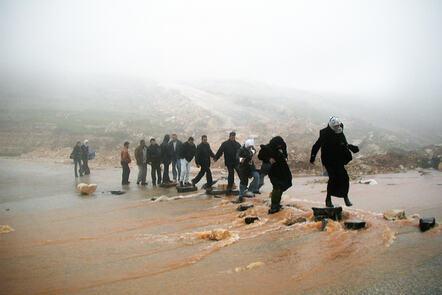
War and conflict can severely disrupt the governance of the environment. What is the impact on both people and the environment? This course explores three aspects of conflict and resource scarcity, and applies these to explore decision making and negotiation skills. Human conflict has both short and long term effects on the natural world.

Self Paced
2 Weeks
Stakeholder Collaboration: Organizing for Environmental Justice and Equitable Solutions (edX) EdX
University of Maryland, College Park,University System of Maryland - USM,USMx,UMD,University of Maryland Center for Environmental Science - UMCES,UMCES

Stakeholder Collaboration: Organizing for Environmental Justice and Equitable Solutions (edX)

Co-produce outcomes on your environmental projects by effectively engaging and motivating diverse communities to work towards shared environmental goals. In this course you’ll learn about the power of leveraging transdisciplinary (TD) approaches to plan, implement, and govern the co-design of solutions to complex environmental problems impacting environmental justice and public health.

Self Paced
Self-Paced
Project Management beyond planning and control (POK) Polimi OPEN KNOWLEDGE
Politecnico di Milano

Project Management beyond planning and control (POK)

Learn how to manage projects matching the technical and the organizational dimensions of projects. Project Management is a fundamental theme to understand and work in any business environments. Projects are the organizational way to make innovation happen and to realize any kind of custom solution or to change how an organization work. Project Management is the set of capabilities, skills and tools to properly work on projects.

Available
2 Weeks
Qualitative Research Methods for Mental Health in War and Conflict (FutureLearn) FutureLearn
King's College London,Birzeit University

Qualitative Research Methods for Mental Health in War and Conflict (FutureLearn)

Understand the importance of mental health research in areas of war and conflict and strengthen your qualitative research skills. Learn about the effects of conflict on people’s mental health. There is a prevalence of ill mental health due to conflict and war-affected populations worldwide. Yet, we lack locally relevant and reliable mental health information as research capacity and resources are insufficient. This four-week course will expose you to various research methodologies, skills and resources.

Self Paced
4 Weeks
Introduction to Conflict Management (edX) EdX
LouvainX,Université Catholique de Louvain - UCL

Introduction to Conflict Management (edX)

Learn the fundamentals about the psychological aspects of conflicts, get acquainted to conflict management strategies and identify your own conflict style. Conflict management is an essential skill. Any individual who masters it will not only become more efficient in their private and professional life but will also be able to help others with their own difficulties.

Self Paced
Self-Paced
Building High-Performing Teams (Coursera) Coursera
University of Pennsylvania

Building High-Performing Teams (Coursera)

Teams are essential to the modern organization, but most never reach their potential. Co-workers miscommunicate, and groups struggle to adapt to changes in the market or their organizations. When teams lack self-awareness about these challenges, performance suffers. Based on years of team culture research and consulting experience, this course helps you understand the problems that hurt productivity, and gives you tools for creating positive change. This course also guides you through creating the ground rules and structure needed to set your team up for success.

Oct 19th 2026
5-12 Weeks