Genius. Talent. Golden Mediocrity (Coursera)

Genius. Talent. Golden Mediocrity (Coursera)

This course is of an applied nature and is oriented to studies in the field of creative life intensification psychology, help with the experience of crises, human potential realization and care. It may be useful for professional psychologists, for specialists whose activity involves empathy, inspiration, understanding and creating of daily life, and for all who are interested in the topic.

Class Deals by MOOC List - Click here and see Coursera's Active Discounts, Deals, and Promo Codes.

The main idea of the course
Genius, talent and golden mediocrity are different (perpendicularly oriented) dimensions of human existence. They should be studied coherently with their manifestations. All together they construct a space for creative life, but each taken separately provokes traumatic, devastating and exhausting forms of anxieties. Our course shows how these three dimensions manifest themselves in life and how you can fulfill your genius, abilities, talents more fully and completely.
Our Method
We critically examine the manifestations of the studied "dimensions" (phenomena), in order that by putting off all "the supposed" we could find specific and inherent meaning. The phenomenological method is to understand and express in simple terms the fundamental structure of creative activity, to express everything that was, that is and that will be important in the psychology of creative life.
Course objective
Our main objective is a phenomenological description of genius, talent and golden mediocrity as specific dimensions of human life, correction of errors and misapprehensions of common sense regarding these phenomena.
What you gain
After taking this course you will know what it is to be genius. You will see the phenomena of mediocrity and talent in a new light. You will understand these phenomena better based on our various examples. You will also be able to practice various aspects of these dimensions of creativity in your daily life.

Syllabus

WEEK 1
Welcome to the course
Welcome to Genius. Talent. Golden Mediocrity!
Genius
This week explores on the first dimension of creative life : Genius. The topic is discussed in three chapters: 1. Am I genius? (intonational stress on the word “GENIUS”), 2. I, a genius? (intonational stress on the word “I”), 3. I am a genius! (inspiring statement) We will study phenomenology of genius, doubts about genius, and misbeliefs. We will explore on the concept of genius not only around us, in the world, but of our own genius, the genius we fulfil in ourselves. You will find the answer to the question: “Could it be true that I am a genius?” The third chapter “I am a genius!” concludes the formal examination of genius as a mode of intensive creative life and invites you to focus on confidence in genius, on its assertion rather than on doubts, as we suggest in first two chapters. Knowing all that you will be ready to start practicing genius in your daily life.

WEEK 2
Talent
This week explores on the second dimension of creative life : Talent. The topic is discussed in three chapters: 1. Am I talented? (intonational stress on the word “Talented”), 2. I, talented? (intonational stress on the word “I”), 3. I am talented! (inspiring statement). In the first chapter, we will discuss doubts about talent. The second chapter in this module is devoted to the way a person experiences talent, talent in life and reveals a surprise - “Could it be true that I am talented?” The chapter “I am talented!” accomplishes two cycles of topics about intensive creative life that concern individuality, uniqueness, initiative and primacy. We hope now you pay less attention to other people’s opinions, and the fact that they do not accept you as well as you want does not make you sad. He who has talent and genius in his life is rich. We hope you are becoming richer.

WEEK 3
Golden mediocrity
This week explores on the third dimension of creative life : Mediocrity. The topic is also discussed in three chapters: 1. Am I mediocrity? (intonational stress on the word “Mediocrity”), 2. I, mediocrity? (intonational stress on the word “I”), 3. I am mediocrity! (inspiring statement).We hope by this time you have formed your own opinion about two aspects of creative life that concern individuality, originality, uniqueness and distinctiveness. We proceed to the study of golden mediocrity, to universal, typical, normal and identical. Sometimes this aspect emotionally irritates those people who are not confident in their individuality. However, it is mediocrity that guarantees the majority of things that make our life predictable and comfortable. In the chapter “I, mediocrity?” we discuss doubts about our own mediocrity. What can we say about the last chapter this week? It is about the use and the danger of mediocrity. We spend most of our time doing mediocre work and thinking mediocre thoughts. It is not bad or shameful to be a mediocrity. However, it is a shame to compare mediocrities. Mediocrity is good for inner use. It is good to hide behind mediocrity. It is convenient to trade in mediocrity. It is important not to confuse it with other dimensions; it should be harmonized with them. This chapter is also the last chapter of our course.

WEEK 4
Final module
We have finally reached the final module. However, as we have already said in the beginning, the course is a door rather than a palace. The end of the course will not eliminate your questions about creative life. Perhaps, quite the opposite, the course will help you to hear new questions that are now within your means and forces. We hope your creative life will go on. We hope now you pay less attention to other people’s opinions (including our opinions), but that you are more responsible as regards your own opinions.This week you are to perform your peer-review assignment. Choose one assignment you like the best out of four and have fun working on it.

Go to Class
MOOC List is learner-supported. When you buy through links on our site, we may earn an affiliate commission.

Related Courses

Observational Methods and Qualitative Data Analysis (Coursera) Coursera
American Psychological Association

Observational Methods and Qualitative Data Analysis (Coursera)

This is primarily aimed at first- and second-year undergraduates interested in psychology, data analysis, and qualitative research methods along with high school students and professionals with similar interests. This course delves into the qualitative research traditions of ethnographic inquiry and case study in psychology, emphasizing the use of participant observation. Students will explore the unique practices, data gathering and analysis methods, and researcher involvement in these traditions.

Jun 8th 2026
5-12 Weeks
Children Acquiring Literacy Naturally (Coursera) Coursera
University of California, Santa Cruz

Children Acquiring Literacy Naturally (Coursera)

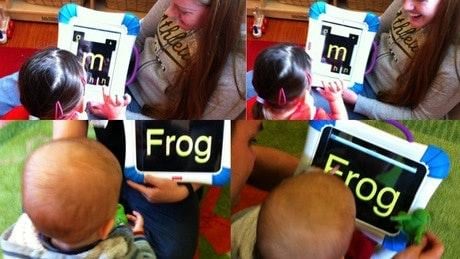
In this short course you will explore the possibility that children might acquire written language in a way that is similar to how they acquire spoken language—without instruction. You will encounter various aspects of behavioral science and technology that are relevant to this proposition. You will have the opportunity to learn the the perceptual, cognitive, and neurological capacities of children during their first years of life. You will advance your understanding of children and how they learn language. You will also be more attuned to current advances in the technology of human machine interactions, and what these phenomena imply for learning to read at an early age.

Jun 8th 2026
3 Weeks
Data Collection: Online, Telephone and Face-to-face (Coursera) Coursera
University of Michigan

Data Collection: Online, Telephone and Face-to-face (Coursera)

This course presents research conducted to increase our understanding of how data collection decisions affect survey errors. This is not a “how–to-do-it” course on data collection, but instead reviews the literature on survey design decisions and data quality in order to sensitize learners to how alternative survey designs might impact the data obtained from those surveys.

Jun 1st 2026
4 Weeks
Positive Psychology: Character, Grit and Research Methods (Coursera) Coursera
University of Pennsylvania

Positive Psychology: Character, Grit and Research Methods (Coursera)

Learners discover how apply to research methods to their study of Positive Psychology. In this course, we study with Dr. Angela Duckworth and Dr. Claire Robertson-Kraft. Through an exploration their work "True Grit" and interviews with researchers and practitioners, you develop a research hypothesis and learn how to understand the difference between internal and external validity. You also begin to understand and apply the strengths and weaknesses associated with different types of measurements and evaluation designs. You then interpret the results in an empirical study.

Jun 1st 2026
4 Weeks
Sampling People, Networks and Records (Coursera) Coursera
University of Michigan

Sampling People, Networks and Records (Coursera)

Good data collection is built on good samples. But the samples can be chosen in many ways. Samples can be haphazard or convenient selections of persons, or records, or networks, or other units, but one questions the quality of such samples, especially what these selection methods mean for drawing good conclusions about a population after data collection and analysis is done. Samples can be more carefully selected based on a researcher’s judgment, but one then questions whether that judgment can be biased by personal factors.

Jun 1st 2026
5-12 Weeks
Positive Psychology: Applications and Interventions (Coursera) Coursera
University of Pennsylvania

Positive Psychology: Applications and Interventions (Coursera)

Positive interventions are one of the building blocks for the application of positive psychology in our day-to-day lives. In this course taught by Dr. James Pawelski, we explore positive interventions through theory, research and practice. We provide learners the basic tools for using and measuring positive psychology in professional or personal contexts. Suggested prerequisite: Positive Psychology: Martin E. P. Seligman’s Visionary Science.

Jun 8th 2026
4 Weeks
Intellectual Humility: Theory (Coursera) Coursera
University of Edinburgh

Intellectual Humility: Theory (Coursera)

Faced with difficult questions people often tend to dismiss and marginalize dissent. Political and moral disagreements can be incredibly polarizing, and sometimes even dangerous. And whether it’s Christian fundamentalism, Islamic extremism, or militant atheism, religious dialogue remains tinted by arrogance, dogma, and ignorance. The world needs more people who are sensitive to reasons both for and against their beliefs, and are willing to consider the possibility that their political, religious and moral beliefs might be mistaken. The world needs more intellectual humility.

Jun 8th 2026
3 Weeks
Positive Psychology: Resilience Skills (Coursera) Coursera
University of Pennsylvania

Positive Psychology: Resilience Skills (Coursera)

Learn how to incorporate resilience interventions into your personal and professional life with Dr. Karen Reivich. In this course, you are exposed to the foundational research in resilience, including protective factors such as mental agility and optimism. Several types of resilience interventions are explored including cognitive strategies; strategies to manage anxiety and increase positive emotions such as gratitude; and a critical relationship enhancement skill.

Jun 8th 2026
4 Weeks
Understanding Obesity (Coursera) Coursera
University of Edinburgh

Understanding Obesity (Coursera)

In this course, we’ll look at the facts and misconceptions around obesity and discuss key physiological and psychological concepts around the brain’s control of appetite and body weight. We’ll consider the biological and environmental pressures that make it easy to gain weight (and hard to lose it!). Most importantly, we'll give you the opportunity to reflect on your own knowledge and assumptions around the subject.

Jun 1st 2026
4 Weeks
The History of Medicine: Philosophy, Science, and Psychology (Coursera) Coursera
University of California, Santa Cruz

The History of Medicine: Philosophy, Science, and Psychology (Coursera)

"History of Medicine" provides an accessible historical and interdisciplinary perspective on medicine, focused primarily upon therapy and practice, to achieve better understanding of the scope, practice, and limits of medicine. Medicine is defined as the treatment of disease. Human attempts to understand and treat disease will be seen as evolving from the spiritual and mystical practices of the distant past, to the rational approach of the Classical World, and finally to the scientific thinking of the Renaissance and beyond.

Jun 8th 2026
5-12 Weeks
The Harder Side of Science Communication (Coursera) Coursera
University of Colorado Boulder

The Harder Side of Science Communication (Coursera)

In this course, you will explore how to develop and implement evidence-based methods for science communication. We’ll discuss major theories of human learning, cognitive phenomena like bias and motivated reasoning that can undermine even the best activities, and the science behind why mis/disinformation spreads so quickly. We’ll end with motivational interviewing and a discussion of how to use learning engineering to design educational activities.

Jun 8th 2026
4 Weeks