EdX

Gender and Intersectionality (edX)

Gender and Intersectionality (edX)

Gender intersects with everything. Using examples from popular culture, classical literature, and history, this course will teach you how to analyze religious texts and traditions, class divisions, racial inequality, sexualities and nationalism through a gendered lens.

Class Deals by MOOC List - Click here and see EdX's Active Discounts, Deals, and Promo Codes.

Understanding how gender intersects with various cultural and social concepts is not only essential to understanding gender studies as a scientific discipline, it is also an important part of moving through and experiencing the world as a human being. Understanding gender and intersectionality can help us understand ourselves and the world and culture we live in.
This course from GRÓ GEST offers an excellent starting point for anyone coming to gender studies for the first time, or for those already in the field who wish to brush up on the basics through a more visual experience. The course will offer different resources in the form of literature, articles, images, audio, websites, and visual texts about gender in many different contexts. Specifically using examples from popular culture, classical literature, and history, this course will teach you how to analyze religious texts and traditions, class divisions, racial inequality, sexualities, and nationalism through a gendered lens.

What you'll learn
By the end of course, you will be able to:

  • Identify ways gender intersects with religion, class, race, sexuality, nationalism and equality.
  • Discuss gender in literature, popular culture, and public discourse.
  • Understand how gender is prescribed in literature, music, art, and public discourse.
  • See gender itself as a spectrum rather than a monolith. Humanities, Social Sciences

Syllabus

Week 1 : Gender and Religion Religion impacts us all. Whether we are believers or non-believers, it is woven into the very fabric of our social, moral, ethical, even political lives. This week we learn about the gendering of the concept of God and religion, and how this shapes our collective identity. We also learn about men and women have been accorded different roles in religious formations throughout history, and how this continues to affect us today.
Week 2 : Gender and Class: In this segment we will be looking at feminist movements from around the world, and the ways in which gender concerns intersected with those of class. Of course, we cannot cover all feminist movements everywhere, but we will talk about some of the most influential, and flag important components that you can then trace in other movements that you might know about or learn about later. Do you know the TV series ‘Sex and the City?’
Week 3 : Gender and Race This week we learn how race became a gendered social and cultural construct. We learn about its historical impact on our sense of identity, and especially on gender. We will examine the gendered construction of black and white bodies in culture and history, and we will look at the concept of orientalism as well as the social impact of racial profiling on men and women.
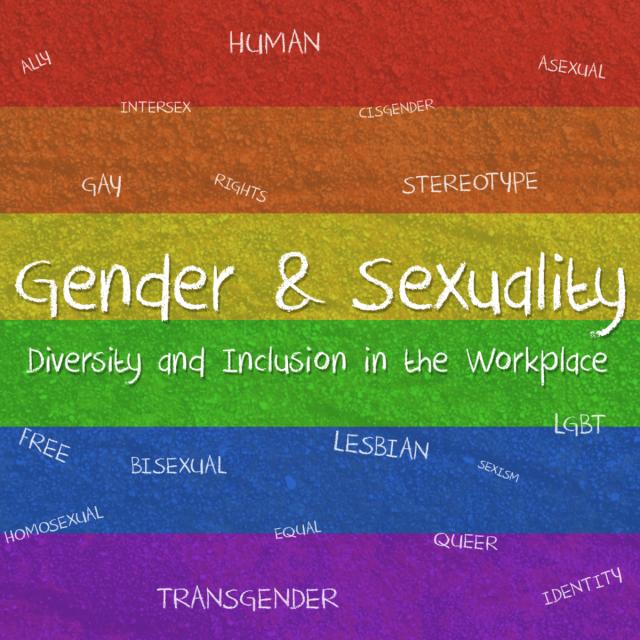
Week 4 : Gender and Sexuality Do we have to reinvent sexuality? Yes, we do. Because sexuality, like race, is understood and disseminated through socially constructed concepts. In this segment we trace the cultural history of sexuality back to ancient civilisations like India, China, Japan, and Greece. We will show how sexuality came to be regarded as a kind of gendered identity. We will also give you some tools to analyze the gender and sexuality components in popular culture and fairytales.
Week 5 : Gender and Nationalism Patriotism is markedly different from nationalism. This week we will discover how our ideas about gender have historically constructed our ideas about nationhood. We will look closer at ideas about racial purity, nostalgia and the so-called ‘culture wars’ from a gendered perspective.
Week 6 : Gender and the Idea of Equality It is hard to say ‘gender’ without saying ‘equality.’ But what does equality even mean and what does it, or would it, look like in practice? In the last week of this course, we trace ideas about equality and gender back through history in different cultures and laws.

Go to Class
MOOC List is learner-supported. When you buy through links on our site, we may earn an affiliate commission.

Related Courses

Religious Transformation in Early China: the Period of Division (Coursera) Coursera
The Chinese University of Hong Kong

Religious Transformation in Early China: the Period of Division (Coursera)

This sequence of four courses will propose a multi-disciplinary approach to the study of Chinese cultural history conceived of as a succession of modes of rationality (philosophical, bureaucratic, and economic). The focus will be on the moments of paradigm shift from one mode of rationality to another. For each of these moments, cultural facts and artifacts—thought, literature, ritual—will be examined in relationship to changing social, political, and economic systems.

Sep 7th 2026
5-12 Weeks
Human Reproduction: Sex, Science and Society (edX) EdX
The University of Newcastle, Australia,NewcastleX

Human Reproduction: Sex, Science and Society (edX)

A cross-disciplinary look at the biological factors that influence sex, fertility and making babies in modern society. Are you trying to conceive? Do you want to prevent conception (contraception)? Would you like to know more about your fertility? Have you considered how social factors influence the choices we make about sex and reproduction? What about the latest technological developments in assisted conception (otherwise known as IVF)? Join world leader in human reproduction, Laureate Professor John Aitken, as we explore the biological, technological, and social factors that influence human reproduction.

No sessions available
5-12 Weeks
Advancing Equity and Inclusion Through Gender Partnership (edX) EdX
Catalyst,CatalystX

Advancing Equity and Inclusion Through Gender Partnership (edX)

Understand and harness the power of gender partnership to foster greater inclusion both inside and outside your workplace. This inclusive leadership course will equip you with the tools to model and practice effective gender partnership as a means of creating culture change inside and outside your workplace.

Self Paced
Self-Paced
Philosophy, Science and Religion: Philosophy and Religion (Coursera) Coursera
University of Edinburgh

Philosophy, Science and Religion: Philosophy and Religion (Coursera)

Philosophy, Science and Religion mark three of the most fundamental modes of thinking about the world and our place in it. Are these modes incompatible? Put another way: is the intellectually responsible thing to do to ‘pick sides’ and identify with one of these approaches at the exclusion of others? Or, are they complementary or mutually supportive? As is typical of questions of such magnitude, the devil is in the details. For example, it is important to work out what is really distinctive about each of these ways of inquiring about the world. In order to gain some clarity here, we’ll be investigating what some of the current leading thinkers in philosophy, science and religion are actually doing.

Sep 14th 2026
5-12 Weeks
What does it mean to identify as Transgender or Gender Non-Conforming (TGNC)? (Coursera) Coursera
University of Minnesota

What does it mean to identify as Transgender or Gender Non-Conforming (TGNC)? (Coursera)

In the last decade transgender and gender nonconforming (TGNC) individuals have become increasingly visible in our families, culture, and public discourse. This course explores the concept of gender identity for people who are curious about the nature of gender, the process of gender affirmation, or changing social dynamics. Participants will learn the unique challenges faced by the TGNC population as well as develop the skills to build inclusive spaces in all spheres of their life. This course was developed under the Joycelyn Elders Chair for Sexual Health Education at the University of Minnesota.

Sep 14th 2026
5-12 Weeks
Pensamiento del Papa Francisco (edX) EdX
The Pontificia Universidad Javeriana,JaverianaX

Pensamiento del Papa Francisco (edX)

Ante el auge a nivel mundial que está presentando el pensamiento del Papa Francisco, urge un estudio teológico sobre su pensamiento social. Analizar el contexto próximo del Papa Francisco y proponer alternativas de acción. Este curso teórico práctico, pretende hacer una aproximación reflexiva y crítica al pensamiento social del Papa Francisco desde la teología, teniendo como marco doctrinal de referencia, la doctrina social de la Iglesia, la realidad latinoamericana y mundial.

No sessions available
5-12 Weeks
Understanding Religious Symbolism (edX) EdX
Seoul National University,SNUx

Understanding Religious Symbolism (edX)

This course aims to provide a broader and deeper understanding of how religious people have thought and practiced by introducing basic theories of religious symbolism and by demonstrating examples of religious symbols from various cultures around the world. Students will gain an acquaintance with religious symbolism and other elements of religion. Students will also develop insights into the meanings of symbols that are embedded in various cultural contexts, ranging from ancient myths to contemporary novels and movies.

Self Paced
Self-Paced
Structuring Values in Modern China (Coursera) Coursera
The Chinese University of Hong Kong

Structuring Values in Modern China (Coursera)

This sequence of four courses will propose a multi-disciplinary approach to the study of Chinese cultural history conceived of as a succession of modes of rationality (philosophical, bureaucratic, and economic). The focus will be on the moments of paradigm shift from one mode of rationality to another. For each of these moments, cultural facts and artifacts—thought, literature, ritual—will be examined in relationship to changing social, political, and economic systems.

Sep 14th 2026
5-12 Weeks
Religious Symbols of the World (edX) EdX
Seoul National University,SNUx

Religious Symbols of the World (edX)

This course is the third and final course in the series following “Understanding Religious Symbolism” and “Myths, Rituals, and Cosmos.” Through the theories and patterns that you learned in these three courses, I hope that you will be able to interpret the various religious phenomena in different cultures, and through this gain a better understanding of culture and human beings.

Self Paced
Self-Paced