The Future of Farming: Exploring Climate Smart Agriculture (FutureLearn)

Offered by University of Reading,
The Future of Farming: Exploring Climate Smart Agriculture (FutureLearn)

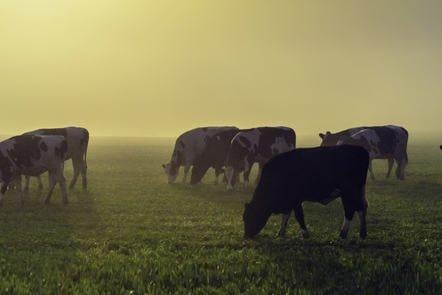
How can we adapt farming to an uncertain future? Could the answer be Climate Smart Agriculture? Find out with this free course. Can Climate Smart Agriculture help farming meet the challenges of climate change? Global warming is a reality so it’s vital our societies and industries respond to the changing climate. Can farming meet this challenge? Explore the principles and practical applications of Climate Smart Agriculture: mitigation of greenhouse gas emissions, adaption to climate change and stable or increased food production in the context of European dairy farming and wine production.

Class Deals by MOOC List - Click here and see FutureLearn's Active Discounts, Deals, and Promo Codes.

How does farming impact on global warming and greenhouse gases? What are the barriers to adopting CSA and how can these be addressed?

What topics will you cover?

Week 1:

  • Climate change and greenhouse gases
  • The interactions between climate change and agriculture
  • Food security
  • Climate smart agriculture; history, principles and examples
  • Different views on the food production system

Week 2:

  • The basics of milk production, cow husbandry, digestion and herd management
  • Greenhouse gas emissions and the possibilities for reducing them, within dairy farming
  • The importance of plants for our atmosphere
  • Other forms of sustainable farming
  • Possible options for reducing energy consumption

Week 3:

  • The basics of wine production
  • General, sustainable crop management practices
  • Problems for the wine industry created by climate change
  • Possibilities for adapting the wine industry to climate change
  • Examples of how data can be used to to help make decisions in agriculture
  • Critical views regarding climate smart agriculture

What will you achieve?
By the end of the course, you'll be able to...

  • Investigate the interactions between climate change and agriculture, including basic facts about the effects of climate change and the most important greenhouse gases.
  • Describe the principles of climate smart agriculture, in particular the three pillars of mitigation, adaptation and productivity.
  • Explore the basics of milk and wine production, possible future problems in these sectors and how they can be subject to adaptation and mitigation.
  • Discuss the complexity of food production systems, why it can be difficult to implement climate smart agriculture and other forms of sustainable farming, and how the effects can be measured.
  • Reflect on how consumer behaviour, policies and regulations, and financial aspects influence the adoption of climate smart and other sustainable practices.
Go to Class
MOOC List is learner-supported. When you buy through links on our site, we may earn an affiliate commission.

Related Courses

Learning for a Sustainable Future (FutureLearn) FutureLearn
University of Edinburgh,British Council,Learning for a Sustainable Scotland

Learning for a Sustainable Future (FutureLearn)

Join a personal and professional global learning journey towards a sustainable future. What on Earth could be more important? Grow your knowledge of sustainability. Climate change, gender equality, health, social equity, and inclusion are issues that affect us all, impacting human well-being and economic stability. How to live a sustainable life affects – and connects - us all.

Mar 13th 2023
5-12 Weeks
Real Climate Action: How to Engage People in Climate Change (FutureLearn) FutureLearn
EIT Climate-KIC

Real Climate Action: How to Engage People in Climate Change (FutureLearn)

Engage with and motivate others to join you in the fight against climate change using a variety of approaches. Inspire climate action in others with strategies that really work. To take effective climate action, it’s important to communicate and engage with others around climate change. This four-week course from EIT Climate-KIC will show you how to do that, while achieving audience buy-in and behaviour change.

Nov 1st 2021
5-12 Weeks
Taking on the Climate Crisis with Social Change (FutureLearn) FutureLearn
Stockholm University

Taking on the Climate Crisis with Social Change (FutureLearn)

Explore the reasons and solutions for the climate crisis, equipping you to create a better today and tomorrow. Discover how social transformation can help us tackle the climate crisis The harsh realities of global warming and climate change often make people feel helpless, but there is a lot that can be done. This three-week course will open your eyes to the actions you can take.

Feb 13th 2023
3 Weeks
Understanding Climate Change using Satellite Data (FutureLearn) FutureLearn
University of Twente

Understanding Climate Change using Satellite Data (FutureLearn)

Explore cutting-edge technology and learn how to analyse satellite climate data to help measure and mitigate climate change. Explore the tools that can help with climate change solutions. To accurately study climate change, assess its risks, and mitigate the impact, we need systematic observations of the climate.

Nov 29th 2021
3 Weeks
Agriculture and Nutrition (FutureLearn) FutureLearn
Taipei Medical University

Agriculture and Nutrition (FutureLearn)

The benefits of rice bran for preventing chronic diseases; the relationships of the mammary gland, and immune in cow. In this course, you will learn about the bioactive components and the benefits of rice bran and fermented rice bran for preventing chronic diseases such as metabolic syndrome. You will learn about the basic knowledge of the immune system and the correlations among mammary gland, epithelial mucosa, and immune in the dairy cows.

Apr 15th 2024
4 Weeks
Using Systems Thinking to Tackle the Climate and Biodiversity Crisis (FutureLearn) FutureLearn
University of Reading

Using Systems Thinking to Tackle the Climate and Biodiversity Crisis (FutureLearn)

Discover how switching to a systems mindset could help overcome the global environmental challenges we face today. Take a big picture approach to the climate and biodiversity crisis. With crises as vast, complex, and interconnected as climate change and biodiversity loss, focusing on one aspect of the problem will never be enough. Systems thinking offers a new way of seeing and understanding environmental issues, which could radically change how we go about tackling them. On this two-week course from the University of Reading, you’ll learn what systems thinking is and how it could transform your approach to the climate and biodiversity crisis.

Feb 27th 2023
2 Weeks
Causes of Climate Change (FutureLearn) FutureLearn
University of Bergen

Causes of Climate Change (FutureLearn)

Learn the physical processes behind climate variation around the world to better understand the causes of climate change. Uncover the past, present, and future of the causes of climate change. This free online course provides the basis for understanding the underlying physical processes governing climate variations in the past, present and future.

Sep 20th 2021
3 Weeks
Improving Food Production with Agricultural Technology and Plant Biotechnology (FutureLearn) FutureLearn
University of Cambridge,EIT Food,EIT

Improving Food Production with Agricultural Technology and Plant Biotechnology (FutureLearn)

Build your knowledge of food production challenges and technology with this online course for 16-19 year olds studying biology. Learn how to address challenges in growing, harvesting, and processing food. Are you inspired to join the next generation of scientists and tackle challenges in food security? On this course, you will get access to innovative research solutions that address some of the biggest issues in food, agriculture, and plant biotechnology.

Jan 2nd 2023
3 Weeks
Innovation in Arable Farming: Technologies for Sustainable Farming Systems (FutureLearn) FutureLearn
University of Reading,EIT Food,EIT

Innovation in Arable Farming: Technologies for Sustainable Farming Systems (FutureLearn)

Explore how innovative, digital technologies can help achieve sustainable intensification of arable farming systems. Consider ways arable farmers in the EU can use agri-tech to benefit business. On this course, you’ll explore evidence-based information that outlines the benefits and challenges of adopting new technologies within the EU, and have the chance to read case study examples of some of these applications.

Jan 2nd 2023
3 Weeks
The Regenerative Agriculture Revolution (FutureLearn) FutureLearn
EIT Food,EIT

The Regenerative Agriculture Revolution (FutureLearn)

Build your knowledge of sustainable farming methods and the skills and policies needed to transition to a regenerative model. Discover the inspiring future of sustainable farming. Current mainstream farming methods are resulting in the loss of fertile soil and biodiversity, meaning that the world could run out of topsoil in about 60 years. On this two-week course from EIT Food, you’ll learn what regenerative agriculture involves, why it’s crucial for the future of farming, and how to implement your own transition to the regenerative model.

Jan 2nd 2023
2 Weeks
Global Shocks: How to Manage Change in the Global Business Environment (FutureLearn) FutureLearn
Auckland University of Technology - AUT

Global Shocks: How to Manage Change in the Global Business Environment (FutureLearn)

Learn how to analyse the global business environment and adapt to technological, environmental, and economic changes. Discover how the COVID-19 pandemic has changed global business. The COVID-19 pandemic has highlighted the many ways that global business intersects our lives and, in many ways, seems to have ‘rewritten’ the rules of global business entirely. This course from the Auckland University of Technology (AUT) will help you understand and adapt to changes in the global business environment.

Jun 27th 2022
4 Weeks
Nature Connectedness with the University of Derby (FutureLearn) FutureLearn
University of Derby

Nature Connectedness with the University of Derby (FutureLearn)

Learn to establish a new relationship with nature to help improve your wellbeing and tackle larger issues such as climate change. Explore the relationship between nature connection and the climate crisis. Too often we see nature as something to use, control, or as a threat to us. The climate crisis and wildlife emergency show that the existing relationship between people and the rest of nature is breaking down. It has become too disconnected and narrow.

Jul 26th 2021
4 Weeks