EdX

Fundamentos TIC para profesionales de negocios: Hardware (edX)

Fundamentos TIC para profesionales de negocios: Hardware (edX)

¿Tienes que trabajar con las Tecnologías de la Información y te faltan conocimientos? Aprende las bases hardware de los Sistemas de Información y las Redes de Comunicaciones. Este curso forma parte de una serie de 5 cursos de introducción al uso de sistemas de información en las empresas que te introducirá en el apasionante mundo de las TIC.

Class Deals by MOOC List - Click here and see EdX's Active Discounts, Deals, and Promo Codes.

La serie de cursos está pensada para que un profesional de un campo ajeno a las tecnologías de la información (financiero, administrativo o gerencial) adquiera los conocimientos básicos en Tecnologías de la Información necesarios para poder relacionarse de forma más provechosa con los especialistas en informática y telecomunicaciones de su empresa u otras corporaciones con las que tenga relación, siendo capaz de especificar requerimientos, evaluar cargas de trabajo y supervisar resultados de forma mucho más efectiva.
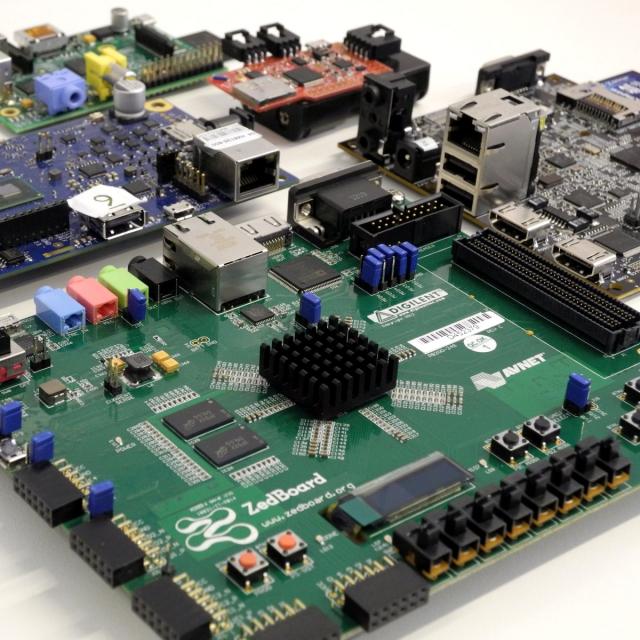
En este curso aprenderás los conceptos básicos hardware en los que se basan los sistemas de información y las redes de comunicaciones. Veremos los distintos componentes de un ordenador personal (CPU, memoria, placa base, discos duros) y sus periféricos, las bases del sistema binario y cómo está codificada la información en los sistemas informáticos, las bases de las redes de comunicación electrónica y los distintos equipos y estándares utilizados en las redes cableadas e inalámbricas.
Al completar la serie de 5 cursos, estarás preparado para relacionarte de forma eficaz con los especialistas del sector de las Tecnologías de la Información.
This course is part of the Fundamentos TIC para profesionales de negocios Professional Certificate.

What you'll learn
Aprenderás sobre:

  • Funciones llevadas a cabo por el hardware del ordenador, el de comunicaciones y el de red
  • Arquitecturas cliente/servidor
  • Dispositivos de comunicaciones inalámbricas (móvil, satélite, GPS)
  • Representación digital de la información (texto, números, multimedia) y uso del sistema binario
  • Arquitecturas de red de área local y empresarial
Go to Class
MOOC List is learner-supported. When you buy through links on our site, we may earn an affiliate commission.

Related Courses

Fundamentos do Suporte Técnico (Coursera) Coursera
Google

Fundamentos do Suporte Técnico (Coursera)

Ele é o primeiro de uma série que visa prepará-lo para entrar no mercado de TI como especialista de suporte técnico. Neste curso, apresentaremos o mundo da Tecnologia da Informação, ou TI. Você aprenderá sobre diversas facetas da Tecnologia da Informação, como hardware, software, internet, resolução de problemas e atendimento ao cliente. Mostraremos como uma entrevista técnica costuma transcorrer e daremos dicas de como se preparar melhor para esse tipo de ocasião.

Jul 27th 2026
5-12 Weeks
Sensors and Sensor Circuit Design (Coursera) Coursera
University of Colorado Boulder

Sensors and Sensor Circuit Design (Coursera)

After taking this course, you will be able to: understand how to specify the proper thermal, flow, or rotary sensor for taking real-time process data; implement thermal sensors into an embedded system in both hardware and software; add the sensor and sensor interface into a microprocessor based development kit; create hardware and firmware to process sensor signals and feed data to a microprocessor for further evaluation; study sensor signal noise and apply proper hardware techniques to reduce it to acceptable levels.

Jul 27th 2026
5-12 Weeks
IoT System Design: Software and Hardware Integration (edX) EdX
Waseda University,WasedaX

IoT System Design: Software and Hardware Integration (edX)

Start developing your own Internet of Things (IoT) system with this exploration of the interaction between software and hardware. This course is designed to teach you how systems are developed using IoT technology. Many engineers and developers tend to focus on a single discipline - either software or hardware. However, in today’s connected age it's critical to have a comprehensive understanding of both disciplines and how they are intertwined.

Self Paced
Self-Paced
Applied Quantum Computing II: Hardware (edX) EdX
Purdue University,PurdueX

Applied Quantum Computing II: Hardware (edX)

Learn how present-day material platforms are built to perform quantum information processing tasks. This course is part 2 of the series of Quantum computing courses, which covers aspects from fundamentals to present-day hardware platforms to quantum software and programming. The goal of part 2 is to provide the essential understanding of how the fundamental quantum phenomena discussed in part 1 can be realized in various material platforms and the underlying challenges faced by each platform.

Feb 12th 2024
5-12 Weeks
Architecting Smart IoT Devices (Coursera) Coursera
EIT Digital

Architecting Smart IoT Devices (Coursera)

This course will teach you how to develop an embedded systems device. In order to reduce the time to market, many pre-made hardware and software components are available today. You'll discover all the available hardware and software components, such as processor families, operating systems, boards and networks. You'll also learn how to actually use and integrate these components.

Jul 27th 2026
5-12 Weeks
IoT Communications (Coursera) Coursera
University of Illinois at Urbana-Champaign

IoT Communications (Coursera)

This course builds on the previous course: IoT Devices. After we have built and programmed a small self-driving vehicle, now it's time get into more advanced territory and enhance the device's connectivity further. To do so you will study radio frequency (RF) communication, the MAC layer, Mesh Networking as well as distributed algorithms for use with geographic locations. These techniques will be applied to your device in the lab, which is composed of four steps, one in each week of the course.

Jul 27th 2026
4 Weeks
FPGA computing systems: Background knowledge and introductory materials (Coursera) Coursera
Politecnico di Milano

FPGA computing systems: Background knowledge and introductory materials (Coursera)

This course is for anyone passionate in learning how a hardware component can be adapted at runtime to better respond to users/environment needs. This adaptation can be provided by the designers, or it can be an embedded characteristic of the system itself. These runtime adaptable systems will be implemented by using FPGA technologies.

Aug 10th 2026
4 Weeks
Hardware Security (Coursera) Coursera
University of Maryland, College Park

Hardware Security (Coursera)

In this course, we will study security and trust from the hardware perspective. Upon completing the course, students will understand the vulnerabilities in current digital system design flow and the physical attacks to these systems. They will learn that security starts from hardware design and be familiar with the tools and skills to build secure and trusted hardware.

Jul 20th 2026
5-12 Weeks
Applied Quantum Computing III: Algorithm and Software (edX) EdX
Purdue University,PurdueX

Applied Quantum Computing III: Algorithm and Software (edX)

Learn domain-specific quantum algorithms and how to run them on present-day quantum hardware. This course is part III of the series of Quantum computing courses, which covers aspects from fundamentals to present-day hardware platforms to quantum software and programming. The goal of part III is to discuss some of the key domain-specific algorithms that are developed by exploiting the fundamental quantum phenomena (e.g. entanglement)and computing models discussed in part I.

Mar 25th 2024
5-12 Weeks
IoT Networking (Coursera) Coursera
University of Illinois at Urbana-Champaign

IoT Networking (Coursera)

This course builds on the first two courses in this series: IoT Devices and IoT Communications. Here you will begin to learn enterprise IoT. Enterprise networks, from first-hop access to backend IoT services are critical because they allow your IoT devices to reach the Internet and achieve their true intelligence. IoT places extreme demands on first-hop access - ultra-dense deployments challenge spectrum allocation, the need to provide strong segmentation yet let devices reach into IoT services such as gateways and databases.

Jul 27th 2026
4 Weeks