EdX

Fundamentals of Macroeconomics (edX)

Fundamentals of Macroeconomics (edX)

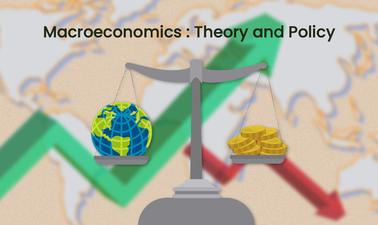
This introductory course to macroeconomic analysis provides a thorough view of what economists know about aggregate production, inflation, unemployment and economic policies and elevates the learner to a first-year undergraduate level.

Class Deals by MOOC List - Click here and see EdX's Active Discounts, Deals, and Promo Codes.

Are you interested in a serious and solid background in economics?
This course offers you a thorough view of everything economists know about markets: their strengths, their failures, and how this view can help you understand the most relevant economic problems. We follow a rigorous approach that combines visual arguments with realistic examplesto help you connect the main economic concepts with your own experiences.
The only required knowledge is certain familiarity with graph reading and basic high school mathematics.
By the end of this course, you will have explored thekey questions in macroeconomics:

  • Why some societies manage to coordinate and prosper in the long run and others don’t. Are developing countries doomed? What is postponing their prosperity?
  • Why even the most successful economies experience occasional crises that compromise the quality of life?
  • Why are there spikes in the unemployment or inflation that cause pain in our societies? What can we do about it?

What you'll learn

  • The GDP, its meaning, measurement,and components
  • The main indicators of the labor market and the nature of unemployment
  • Savings, investment,and the financial system
  • The monetary and the banking system
  • Central banks, monetary policies,and inflation
  • International trade, capital flows,and exchange rates
  • Economic fluctuations
  • Fiscal and monetary policies

Syllabus

Week 1: Introduction and Gross Domestic Product
Macroeconomic aggregates and Gross Domestic Product. The value added and the return of productive factors. The components of GDP. Real and nominal GDP and the GDP deflator. The determinants of productivity in the long run.

Week 2: Savings and Investment. Labor Market. Consumer Price Index
Savings and investment in a closed economy. The market for loanable funds. Main statistics of the labor market. Types of unemployment: the natural rate and the cyclical unemployment. The consumer price index and the measurement of inflation.

Week 3: Money, monetary system and inflation
Definitions of money. The fractional-reserve banking system. The central banks. The tools for monetary control. Money demand, money supply,and price level determination. The quantity theory of money and the causes of inflationover the long run.

Week 4: Open economies and exchange rates
Open economies and trade balances. Capital flows. The relationship between savings, investment,and capital flows in open economies. Nominal and real exchange rate. The Purchasing-power Parity theory for determination of nominal exchange rates. The relationship between inflation and depreciation.

Week 5: Economic fluctuations
Empirical regularities of economic fluctuations. The aggregate demand curve. The long-run aggregate supply curve. The short-run aggregate supply curve. The long-run equilibrium and the short run economic fluctuations.

Week 6: Fiscal and Monetary Policies
The money demand and the theory of liquidity preference. The impact of monetary policies on the aggregate demand. Fiscal policies and the multiplier effect. Fiscal policies and the crowding-out effect. The argument for and against the use of fiscal and monetary policy to stabilize the economy.
Go to Class
MOOC List is learner-supported. When you buy through links on our site, we may earn an affiliate commission.

Related Courses

Inversión Extranjera como Motor del Desarrollo para América Latina y el Caribe (edX) EdX
Inter-American Development Bank - IDB,IDBx

Inversión Extranjera como Motor del Desarrollo para América Latina y el Caribe (edX)

Aprende qué significa la inversión extranjera directa (IED) para las personas, empresas y economías de América Latina y el Caribe, y cómo los gobiernos la pueden atraer con más éxito. En las últimas dos décadas, se ha producido un aumento considerable de los flujos de inversión extranjera directa (IED). Tradicionalmente, los flujos de inversión extranjera provenían solo de países desarrollados, pero recientemente los países en desarrollo se han convertido en una fuente significativa de inversiones.

Self Paced
Self-Paced
Programmation et Politiques Financières, Première Partie: Analyse des Comptes Macroéconomiques (edX) EdX
International Monetary Fund - IMF,IMFx

Programmation et Politiques Financières, Première Partie: Analyse des Comptes Macroéconomiques (edX)

Un cours sur les comptes macroéconomiques, leurs interrelations, et l’analyse des événements économiques. Quel est l’état de santé de l’économie ? Comment la politique économique peut-elle rétablir ou contribuer à la bonne santé d’un pays ? Ces questions sont au cœur de la programmation financière. Nos cours de PPF (Programmation et politiques financières) vous permettront d’acquérir les bases nécessaires pour y répondre.

Self Paced
Self-Paced
How to Save Money: Making Smart Financial Decisions (edX) EdX
University of California, Berkeley,BerkeleyX

How to Save Money: Making Smart Financial Decisions (edX)

Maximize your money by making the right choices in everything from mortgages, to credit cards, insurance, stocks, and retirement savings. You will learn the basics of personal finance. How to balance spending and saving; which debts to pay first, what insurance you need and don’t need, how to invest for retirement and other long-term goals. In addition to watching online lectures, students will be shown how to do practical “homework” assignments including looking up the fees on mutual funds and requesting a free credit report.

No sessions available
Self-Paced
From Poverty to Prosperity: Understanding Economic Development (edX) EdX
University of Oxford

From Poverty to Prosperity: Understanding Economic Development (edX)

Learn about the role of government and the key political, social, and economic processes that elevate any society from poverty to prosperity. How can poor societies become prosperous and overcome obstacles to do so? Professor Sir Paul Collier is one of the world’s leading scholars on this question, and in this economics course you will have the opportunity to learn from him directly.

Self Paced
Self-Paced
Principles of Microeconomics: Competitive Markets (edX) EdX
University of Queensland,UQx

Principles of Microeconomics: Competitive Markets (edX)

Become immersed in economic concepts including elasticity of demand, market pricing, explicit and implicit costs and economic profit maximisation. Learn about monopolistic markets and market structure impacts on production and profit. By undertaking this course, you will be immersed in economic concepts including elasticity calculation, elasticity of demand, market pricing, explicit and implicit costs, economic profit and mapping supply. You’ll explore the two distinct functions of market pricing and the concept of marginal cost, which is central to identifying the optimum production levels.

Self Paced
Self-Paced
U.S. Public Policy: Social, Economic, and Foreign Policies (edX) EdX
HarvardX,Harvard University

U.S. Public Policy: Social, Economic, and Foreign Policies (edX)

Learn about public policy in America and the dynamics of American politics. Public policy puts laws into action. The executive branch directs the combined activities of the federal government to address a multitude of problems, from the environment to the economy. The policies of the United States affect social issues, economic growth, taxes, regulation, and foreign affairs. This course will take a broad view of public policy in America but will use specific examples, such as the 2008 economic downturn and climate change, to illustrate the wide-ranging effects of those policies.

Self Paced
Self-Paced
Introduction to Investments (edX) EdX
Indian Institute of Management, Bangalore,IIMBx

Introduction to Investments (edX)

Learn about equity markets and security valuation. When you complete this course, you will become familiar with the general structure of primary and secondary equity markets from a domestic and international perspective. Beginning with introductory finance notions of risk and return, we examine qualitative concepts such as market efficiency and valuation.

This course is archived
5-12 Weeks
Macroeconomic Principles (edX) EdX
Arizona State University

Macroeconomic Principles (edX)

Learn how the economic decisions you and others make impact what you pay for things and how much you get paid, in this credit-eligible course. The macroeconomy is the sum of all our productive efforts, spending, and income. Economic outcomes are the result of our complex interactions with other people, businesses, the government, as well as with people and businesses globally. In this economics course, you will learn the basic stylized framework that economists use to think about, account for, measure and explain these complex interactions and outcomes.

No sessions available
5-12 Weeks
Macroeconomic Diagnostics (edX) EdX
International Monetary Fund - IMF,IMFx

Macroeconomic Diagnostics (edX)

Through this course, learn to assess a country’s macroeconomic situation utilizing practical tools that will help you engage in day-to-day macroeconomic analysis. In this online course on Macroeconomic Diagnostics (MDSx), you will learn some applied tools that will allow you to assess the economic situation in a country. These analytical tools are the ones most used by applied macroeconomists—including those at the IMF. You will learn both how to technically implement these tools and to interpret their results.

Self Paced
Self-Paced
Islamic Finance and Banking (edX) EdX
The Islamic Research and Training Institute - IRTI,IRTIx

Islamic Finance and Banking (edX)

Learn about the foundation and key features of the Islamic financial and banking system. This economics and finance course will give you an overview of the Islamic financial system. You will learn the core principles and basic models of Islamic finance and establish a framework for understanding this financial system.

No sessions available
4 Weeks
Cosmopolitan Tang: Aristocratic Culture in China (edX) EdX
HarvardX,Harvard University

Cosmopolitan Tang: Aristocratic Culture in China (edX)

Explore the reunification of China under the Tang with a focus on aristocratic culture — from poetry to calligraphy to literature. By the Tang period, China was divided into northern and southern dynasties with different rulers and political systems. The north was conquered by relatively unsophisticated barbarians, but in the south, the aristocratic families established a refined appreciation of writing and literature.

Self Paced
Self-Paced