Formation COVID-19 pour personnels de santé (Coursera)

Offered by Stanford University,
Formation COVID-19 pour personnels de santé (Coursera)

La COVID-19 se propage rapidement à travers le monde, et l’ensemble des personnels de santé doit être prêt à identifier, stabiliser et traiter les patients atteints de la nouvelle infection par le coronavirus. Après avoir effectué ce court programme, les médecins, infirmiers ou infirmières et autres professionnels de santé utiliseront une approche commune et factuelle pour sauver la vie de patients atteints de COVID-19, y compris de ceux qui sont gravement atteints.

Class Deals by MOOC List - Click here and see Coursera's Active Discounts, Deals, and Promo Codes.

100% off - Original price: €42
Sale price: €0 with 100 percent off
Free enrollment available until December 31, 2021. Valid for one enrollment per person.

Les modules d’enseignement sont divisés en courtes vidéos, qui sont présentées de façon illustrée et convaincante. Le cours est adaptable à votre propre rythme, et les personnels de santé peuvent planifier leur apprentissage en fonction de leur emploi du temps. Parmi les sujets abordés, on trouve les symptômes et les signaux chez les patients atteints de COVID-19, la stabilisation précoce des patients, comment éviter l’intubation, ainsi que l’utilisation et la gestion du ventilateur. Les meilleures données probantes ainsi que consignes sont résumées, et des documents d’accompagnement récapitulent les enseignements essentiels et proposent des liens vers les ressources en ligne. Des infographies simples sont à la disposition des personnels de santé dans les centres de soins, afin de les former et de promouvoir des traitements optimaux au sein de leur établissement.

What You Will Learn

  • Reconnaitre les caractéristiques principales de la COVID-19 et ses symptômes les plus courants.
  • Empêcher la transmission de la COVID-19 aux personnels de santé ainsi qu’à tout autre individu.
  • Évaluer et apporter des soins immédiats aux patients en détresse respiratoire aiguë afin d’empêcher une aggravation de leur état.
  • Apporter un encadrement et une stabilisation fiable aux patients en détresse respiratoire sévère, y compris par utilisation précoce d’un ventilateur.

Syllabus

WEEK 1
Caractéristiques principales de la COVID-19 et EPI
Dans ce module, vous allez apprendre les signes cliniques de l'infection par la COVID-19 chez les patients et la façon d'utiliser efficacement votre équipement de protection personnelle afin de réduire vos risques d'exposition à la COVID-19.
Évaluation clinique des patients COVID-19
Dans ce module, vous apprendrez comment procéder à l'examen de n'importe quel patient y compris ceux qui sont en détresse respiratoire. Vous apprendrez également comment organiser et mener une consultation en distanciel afin de prodiguer des soins dans les limites de la télémédecine.
Évaluation diagnostique des patients COVID-19
Dans ce module, vous apprendrez à utiliser l'échographie au chevet du patient pour vos diagnostics de patients COVID-19, ainsi que l'utilisation d'autres tests communs pour vos diagnostics.
Traitement Précoce du Patient Dyspnéique COVID-19
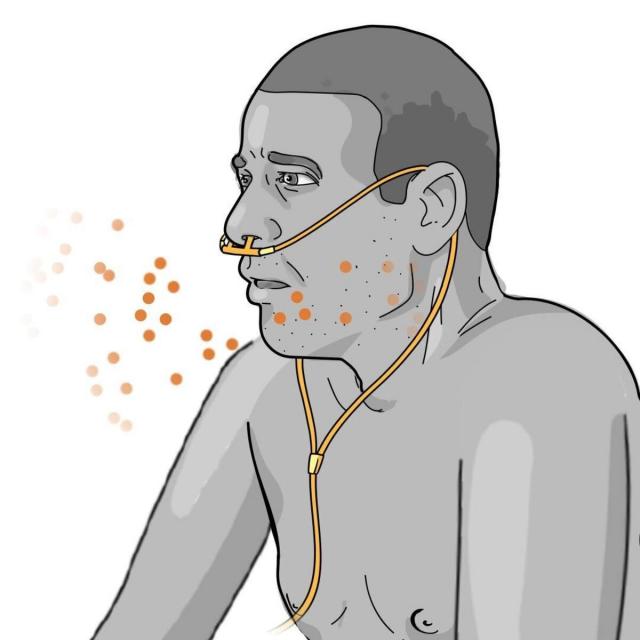
Dans ce module, vous recevrez des informations sur le positionnement du patient, sur les différents types d'oxygénothérapie, et sur les traitements pour les patients suspectés de COVID-19.
Traitement Avancé du Patient COVID-19 Sévèrement Dyspnéique
Dans ce module, vous acquerrez des connaissances sur les techniques avancées de gestion des voies respiratoires, sur la ventilation par masque avec ballonnet, sur l'intubation endotrachéale, et sur l'administration de médicaments aux patients intubés.
Gestion Initiale du Respirateur et Dépannage chez les Patients COVID-19
Dans ce module, vous verrez comment gérer les premières étapes d'une ventilation assistée et comment détecter d'éventuelles complications chez les patients COVID-19 intubés.

Go to Class
MOOC List is learner-supported. When you buy through links on our site, we may earn an affiliate commission.

Related Courses

Training and Learning Programs for Volunteer Community Health Workers (Coursera) Coursera
Johns Hopkins University

Training and Learning Programs for Volunteer Community Health Workers (Coursera)

Volunteer community health workers (CHWs) are a major strategy for increasing access to and coverage of basic health interventions. Our village health worker training course reviews the process of training and continuing education of CHWs as an important component of involving communities in their own health service delivery. Participants will be guided through the steps of planning training and continuing education activities for village volunteers. The course draws on real-life examples from community-directed onchocerciasis control, village health worker programs, community case management efforts, peer educators programs and patent medicine vendor training programs, to name a few.

Sep 14th 2026
5-12 Weeks
Schizophrenia (Coursera) Coursera
Wesleyan University

Schizophrenia (Coursera)

The main goal of this class are to gain an introductory exposure to the nature of the psychiatric disorder known as schizophrenia as revealed by the scientific method. We will discuss a broad range of findings from the scientific investigation of biological and psychological factors related to schizophrenia and its treatment.

Sep 14th 2026
5-12 Weeks
Preventing Chronic Pain: A Human Systems Approach (Coursera) Coursera
University of Minnesota

Preventing Chronic Pain: A Human Systems Approach (Coursera)

Chronic pain is at epidemic levels and has become the highest-cost condition in health care. This course uses both creative and experiential learning to better understand chronic pain conditions and how they can be prevented through self-management in our cognitive, behavioral, physical, emotional, spiritual, social, and environmental realms.

Sep 14th 2026
5-12 Weeks
Case Studies in Personalized Medicine (Coursera) Coursera
Vanderbilt University

Case Studies in Personalized Medicine (Coursera)

Learn how advances in biomedicine hold the potential to revolutionize drug development, drug treatments, and disease prevention: where are we now, and what does the future hold? This course will present short primers in genetics and mechanisms underlying variability in drug responses. A series of case studies will be used to illustrate principles of how genetics are being brought to bear on refining diagnoses and on personalizing treatment in rare and common diseases. The ethical and operational issues around how to implement large scale genomic sequencing in clinical practice will be addressed.

Sep 14th 2026
5-12 Weeks
Business Models for Innovative Care for Older People (Coursera) Coursera
University of Copenhagen,Copenhagen Business School

Business Models for Innovative Care for Older People (Coursera)

This course will introduce you to healthcare innovation within the field of healthy living and active aging. By following two specific cases on diabetes and rehabilitation, this interdisciplinary course will provide you with key theories, tools and concepts for analyzing and developing viable innovative solutions for aging populations. The lectures will cover demographic, biological, economic, social and cultural aspects of active aging and healthy living, along with lectures on current innovation theories and methods.

Sep 14th 2026
5-12 Weeks
eHealth: More than just an electronic record (Coursera) Coursera
The University of Sydney

eHealth: More than just an electronic record (Coursera)

The MOOC, "eHealth: More than just an electronic record!", is multidisciplinary in nature, and aims to equip the global audience of health clinicians, students, managers, administrators, and researchers to reflect on the overall impact of eHealth on the integration of care. It explores the breadth of technology application, current and emerging trends, and showcases both local and international eHealth practice and research.

Sep 14th 2026
5-12 Weeks
A Life of Happiness and Fulfillment (Coursera) Coursera
Indian School of Business - ISB

A Life of Happiness and Fulfillment (Coursera)

What are the determinants of a happy and fulfilling life? This is surely one of life’s biggest questions, and a question that has interested many of our ancestors. Buddha famously gave up his kingdom in search of happiness. Several Greek philosophers (from Aristotle to Epicurus and Plato to Socrates) had their own views on what it takes to be happy. And of course, we all have our own theories about happiness too.

Sep 14th 2026
5-12 Weeks
Medical Neuroscience (Coursera) Coursera
Duke University

Medical Neuroscience (Coursera)

Medical Neuroscience explores the functional organization and neurophysiology of the human central nervous system, while providing a neurobiological framework for understanding human behavior. In this course, you will discover the organization of the neural systems in the brain and spinal cord that mediate sensation, motivate bodily action, and integrate sensorimotor signals with memory, emotion and related faculties of cognition. The overall goal of this course is to provide the foundation for understanding the impairments of sensation, action and cognition that accompany injury, disease or dysfunction in the central nervous system. The course will build upon knowledge acquired through prior studies of cell and molecular biology, general physiology and human anatomy, as we focus primarily on the central nervous system.

Sep 14th 2026
13-24 Weeks
Drugs, drug use, drug policy and health (Coursera) Coursera
University of Geneva

Drugs, drug use, drug policy and health (Coursera)

This MOOC is the first of its kind, since it addresses critical issues related to drugs from a multidisciplinary, health and human rights-based approach. Throughout the course you will cover a range of questions including what are drugs and why they controlled? What are the benefits and harms of taking drugs? How public health policies can address drug use?

Sep 14th 2026
5-12 Weeks
Diabetes - a Global Challenge (Coursera) Coursera
University of Copenhagen

Diabetes - a Global Challenge (Coursera)

Diabetes and obesity are growing health problems in rich and poor countries alike. With this course you will get updated on cutting-edge diabetes and obesity research including biological, genetic and clinical aspects as well as prevention and epidemiology of diabetes and obesity. All lectures are provided by high-profile scientists from one the world's leading universities in diabetes research.

Sep 14th 2026
5-12 Weeks