First Steps in Linear Algebra for Machine Learning (Coursera)

First Steps in Linear Algebra for Machine Learning (Coursera)

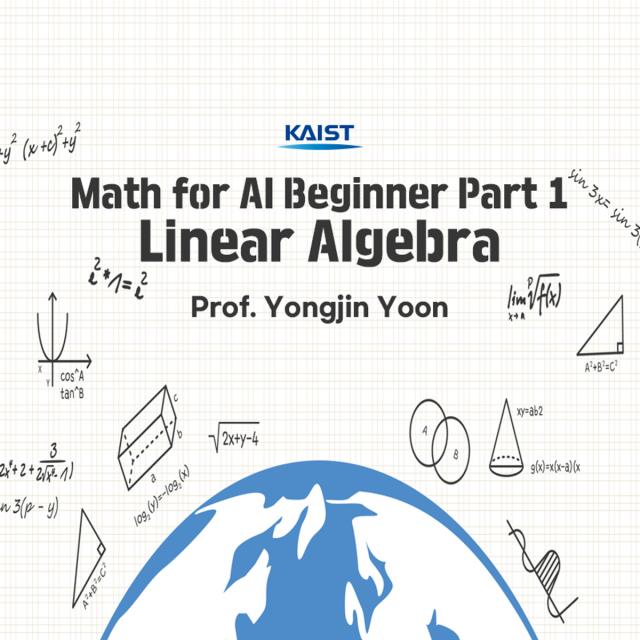
The main goal of the course is to explain the main concepts of linear algebra that are used in data analysis and machine learning. Another goal is to improve the student’s practical skills of using linear algebra methods in machine learning and data analysis. You will learn the fundamentals of working with data in vector and matrix form, acquire skills for solving systems of linear algebraic equations and finding the basic matrix decompositions and general understanding of their applicability.

Class Deals by MOOC List - Click here and see Coursera's Active Discounts, Deals, and Promo Codes.

This course is suitable for you if you are not an absolute beginner in Matrix Analysis or Linear Algebra (for example, have studied it a long time ago, but now want to take the first steps in the direction of those aspects of Linear Algebra that are used in Machine Learning). Certainly, if you are highly motivated in study of Linear Algebra for Data Sciences this course could be suitable for you as well.
Course 3 of 4 in the Mathematics for Data Science Specialization.

Syllabus

WEEK 1
Systems of linear equations and linear classifier
In the first week we provide an introduction to multi-dimensional geometry and matrix algebra. After that, we study methods for finding linear system solutions based on Gaussian eliminations and LU-decompositions. We illustrate the methods with Python code examples of matrix calculations.

WEEK 2
Full rank decomposition and systems of linear equations
The second week is devoted to getting to know some fundamental notions of linear algebra, namely: vector spaces, linear independence, and basis. Next, we will discuss what a rank of a matrix is, and how it could help us decompose a matrix. In addition, we will talk about the properties of a set of solutions for a system of linear equations. At the end of this week we will apply this theory to a scanned document processing.

WEEK 3
Euclidean spaces
In the third week, we firstly introduce coordinates in an abstract vector space. This allows us to apply the usual matrix arithmetic to abstract vectors. Next, we discuss the concept of Euclidean space which allows us to measure distances and angles in vector spaces. Then we use these measures in the least squares method to find approximate solutions of linear systems and in the linear regression model based on it. Finally, we describe the core of the most common linear classifier called Support Vector Machine.

WEEK 4
Final Project
In this week we will apply the acquired knowledge about linear regression and SVM models in this final project.

Go to Class
MOOC List is learner-supported. When you buy through links on our site, we may earn an affiliate commission.

Related Courses

Machine Learning Foundations: A Case Study Approach (Coursera) Coursera
University of Washington

Machine Learning Foundations: A Case Study Approach (Coursera)

Do you have data and wonder what it can tell you? Do you need a deeper understanding of the core ways in which machine learning can improve your business? Do you want to be able to converse with specialists about anything from regression and classification to deep learning and recommender systems? In this course, you will get hands-on experience with machine learning from a series of practical case-studies.

Jun 1st 2026
5-12 Weeks
A Crash Course in Data Science (Coursera) Coursera
Johns Hopkins University

A Crash Course in Data Science (Coursera)

By now you have definitely heard about data science and big data. In this one-week class, we will provide a crash course in what these terms mean and how they play a role in successful organizations. This class is for anyone who wants to learn what all the data science action is about, including those who will eventually need to manage data scientists. The goal is to get you up to speed as quickly as possible on data science without all the fluff. We've designed this course to be as convenient as possible without sacrificing any of the essentials.

Jun 1st 2026
1 Week
Machine Learning for Data Analysis (Coursera) Coursera
Wesleyan University

Machine Learning for Data Analysis (Coursera)

Are you interested in predicting future outcomes using your data? This course helps you do just that! Machine learning is the process of developing, testing, and applying predictive algorithms to achieve this goal. Make sure to familiarize yourself with course 3 of this specialization before diving into these machine learning concepts. Building on Course 3, which introduces students to integral supervised machine learning concepts, this course will provide an overview of many additional concepts, techniques, and algorithms in machine learning, from basic classification to decision trees and clustering.

Jun 1st 2026
4 Weeks
Learn to code with AI (Coursera) Coursera
Scrimba

Learn to code with AI (Coursera)

Imagine waking up tomorrow as a web developer. What would you want to build? With AI tools like ChatGPT, you're already a developer, regardless of your experience, if you know how to work with them. So in this course, you'll build functional, interactive front-end projects while learning how to write effective prompts and debug and refine your code with the help of AI.

Jun 3rd 2026
2 Weeks
Regression Modeling in Practice (Coursera) Coursera
Wesleyan University

Regression Modeling in Practice (Coursera)

This course focuses on one of the most important tools in your data analysis arsenal: regression analysis. Using either SAS or Python, you will begin with linear regression and then learn how to adapt when two variables do not present a clear linear relationship. You will examine multiple predictors of your outcome and be able to identify confounding variables, which can tell a more compelling story about your results. You will learn the assumptions underlying regression analysis, how to interpret regression coefficients, and how to use regression diagnostic plots and other tools to evaluate the quality of your regression model. Throughout the course, you will share with others the regression models you have developed and the stories they tell you.

Jun 5th 2026
4 Weeks
Introduction to Big Data (Coursera) Coursera
University of California, San Diego

Introduction to Big Data (Coursera)

Interested in increasing your knowledge of the Big Data landscape? This course is for those new to data science and interested in understanding why the Big Data Era has come to be. It is for those who want to become conversant with the terminology and the core concepts behind big data problems, applications, and systems. It is for those who want to start thinking about how Big Data might be useful in their business or career. It provides an introduction to one of the most common frameworks, Hadoop, that has made big data analysis easier and more accessible -- increasing the potential for data to transform our world!

Jun 1st 2026
3 Weeks
Case studies in business analytics with ACCENTURE (Coursera) Coursera
ESSEC Business School

Case studies in business analytics with ACCENTURE (Coursera)

This course is RESTRICTED TO LEARNERS ENROLLED IN Strategic Business Analytics SPECIALIZATION as a preparation to the capstone project. During the first two MOOCs, we focused on specific techniques for specific applications. Instead, with this third MOOC, we provide you with different examples to open your mind to different applications from different industries and sectors. The objective is to give you an helicopter overview on what's happening in this field. You will see how the tools presented in the two previous courses of the Specialization are used in real life projects.

Jun 1st 2026
3 Weeks
Share Data Through the Art of Visualization (Coursera) Coursera
Google

Share Data Through the Art of Visualization (Coursera)

This is the sixth course in the Google Data Analytics Certificate. These courses will equip you with the skills needed to apply to introductory-level data analyst jobs. You’ll learn how to visualize and present your data findings as you complete the data analysis process. This course will show you how data visualizations, such as visual dashboards, can help bring your data to life. You’ll also explore Tableau, a data visualization platform that will help you create effective visualizations for your presentations.

Jun 2nd 2026
4 Weeks
Ask Questions to Make Data-Driven Decisions (Coursera) Coursera
Google

Ask Questions to Make Data-Driven Decisions (Coursera)

This is the second course in the Google Data Analytics Certificate. These courses will equip you with the skills needed to apply to introductory-level data analyst jobs. You’ll build on your understanding of the topics that were introduced in the first Google Data Analytics Certificate course. The material will help you learn how to ask effective questions to make data-driven decisions, while connecting with stakeholders’ needs. Current Google data analysts will continue to instruct and provide you with hands-on ways to accomplish common data analyst tasks with the best tools and resources.

Jun 2nd 2026
4 Weeks
Data Visualization and Communication with Tableau (Coursera) Coursera
Duke University

Data Visualization and Communication with Tableau (Coursera)

One of the skills that characterizes great business data analysts is the ability to communicate practical implications of quantitative analyses to any kind of audience member. Even the most sophisticated statistical analyses are not useful to a business if they do not lead to actionable advice, or if the answers to those business questions are not conveyed in a way that non-technical people can understand. In this course you will learn how to become a master at communicating business-relevant implications of data analyses.

Jun 1st 2026
5-12 Weeks
Advanced Algorithms and Complexity (Coursera) Coursera
University of California, San Diego,Higher School of Economics - HSE University

Advanced Algorithms and Complexity (Coursera)

You've learned the basic algorithms now and are ready to step into the area of more complex problems and algorithms to solve them. Advanced algorithms build upon basic ones and use new ideas. We will start with networks flows which are used in more typical applications such as optimal matchings, finding disjoint paths and flight scheduling as well as more surprising ones like image segmentation in computer vision.

Jun 1st 2026
5-12 Weeks
Teaching Impacts of Technology: Data Collection, Use, and Privacy (Coursera) Coursera
University of California, San Diego

Teaching Impacts of Technology: Data Collection, Use, and Privacy (Coursera)

In this course you’ll focus on how constant data collection and big data analysis have impacted us, exploring the interplay between using your data and protecting it, as well as thinking about what it could do for you in the future. This will be done through a series of paired teaching sections, exploring a specific “Impact of Computing” in your typical day and the “Technologies and Computing Concepts” that enable that impact, all at a K12-appropriate level.

Jun 3rd 2026
4 Weeks