Finanças Orientada a Dados (Coursera)

Offered by FIA Business School,
Finanças Orientada a Dados (Coursera)

Nossas boas-vindas ao Curso Finanças Orientada a Dados. Neste curso, você aprenderá que os dados se tornaram o principal ativo de negócios nos dias de hoje. Com o aumento do Big Data e criação de novas tecnologias, as organizações em todo o mercado financeiro estão sempre inovando e descobrindo novas formas para analisar o potencial dos dados à sua disposição, o que ajuda no crescimento, na lucratividade, no direcionamento das operações gerais e no aumento da satisfação do cliente.

Class Deals by MOOC List - Click here and see Coursera's Active Discounts, Deals, and Promo Codes.

Mas para que tudo isso funcione corretamente e seja possível extrair todo o potencial de forma precisa e que seja viável para o negócio, criou-se a área de ciência de dados.
O curso tem como objetivo, apresentar a evolução do mercado financeiro ao longo da evolução e como a tecnologia revolucionou a área financeira.
Ao final deste curso, você será capaz de compreender as principais transformações tecnológicas do mercado financeiro, todo o conceito de Open Data, Open Finance e Open Everything e o futuro das finanças orientada a dados.
Este curso é composto por quatro módulos, disponibilizados em semanas de aprendizagem. Cada módulo é composto por vídeos, leituras e testes de verificação de aprendizagem. Ao final de cada módulo, temos uma avaliação de verificação dos conhecimentos.
Estamos muito felizes com sua presença neste curso e esperamos que você tire o máximo de proveito dos conceitos aqui apresentados.
Bons estudos!
Course 1 of 4 in the Ciência de Dados para Finanças Specialization.

Syllabus

WEEK 1
Finanças no Mundo Digital
Em um mundo que gira em torno de dados, bilhões de dólares são gastos ao redor do mundo diariamente em iniciativas para coletar e processar essas informações, e o grande diferencial competitivo ficam em cima de empresas que conseguem analisar os dados de forma precisa, com segurança e com velocidade para estabelecer previsões, descobrir padrões e gerar valor para o negócio.

WEEK 2
Tecnologia Financeira
Enquanto o mundo cede aos avanços da tecnologia, a digitalização contínua e inovações nos processos financeiros vão afetar cada vez mais nossas tarefas diárias. Sem dados, muitas profissões ou áreas de estudos podem ser colocadas em risco em um futuro muito próximo.Em um mundo completamente conectado, os dados são analisados quase que em tempo real e com grande potencial de tomada de decisão, que até então seriam difíceis de prever. O mercado financeiro sempre se adaptou à tecnologia da informação. Atualmente, a nova geração é chamada de Tecnologia Financeira ou simplesmente fintech.

WEEK 3
Open Data, Open Banking e Open Finance
O conceito de dados abertos traz dinamismo, inovação e transparência para o mercado, permitindo uma infinidade de novos serviços de acordo com a demanda do mercado atual, levando em consideração aspectos técnicos e de mudança de comportamento dos clientes em uma economia em que os dados são de propriedade dos clientes, e não das instituições. Isso favorece um um ambiente de negócios mais competitivo e inclusivo.

WEEK 4
Finanças Orientadas a Dados
O setor financeiro foi um dos que mais progrediu em termos de gestão de dados e ativos e passou de processos e burocracias cheios de papeladas para aplicativos conectados e que estão a um toque de distância, o que traz um retorno positivo na receita e melhora a experiência dos clientes. As fintechs foram as grandes responsáveis por liderar essa mudança, levando o mercado a transformar a forma em que as operações são realizadas e proporcionando uma melhoria contínua para o setor.
Go to Class
MOOC List is learner-supported. When you buy through links on our site, we may earn an affiliate commission.

Related Courses

Julia Scientific Programming (Coursera) Coursera
University of Cape Town

Julia Scientific Programming (Coursera)

This four-module course introduces users to Julia as a first language. Julia is a high-level, high-performance dynamic programming language developed specifically for scientific computing. This language will be particularly useful for applications in physics, chemistry, astronomy, engineering, data science, bioinformatics and many more.

Sep 14th 2026
4 Weeks
Analysis and Interpretation of Large-Scale Programs (Coursera) Coursera
Johns Hopkins University

Analysis and Interpretation of Large-Scale Programs (Coursera)

This course is for implementers, managers, funders, and evaluators of health programs targeting women and children in low- and middle-income countries as well as undergraduate and graduate students in health-related fields. Course participants will learn how to 1) transform quantitative components of an evaluation measurement plan into a sound analysis plan to address the evaluation questions, 2) conduct quantitative analyses of primary or secondary surveys or other available data, 3) interpret the meaning of the analysis results and their implications, and 4) disseminate the evaluation findings to program implementers, local and global stakeholders.

Sep 21st 2026
5-12 Weeks
Statistical Thinking for Industrial Problem Solving, presented by JMP (Coursera) Coursera
SAS

Statistical Thinking for Industrial Problem Solving, presented by JMP (Coursera)

Statistical Thinking for Industrial Problem Solving is an applied statistics course for scientists and engineers offered by JMP, a division of SAS. By completing this course, students will understand the importance of statistical thinking, and will be able to use data and basic statistical methods to solve many real-world problems.

Sep 21st 2026
5-12 Weeks
Structural Equation Model and its Applications | 结构方程模型及其应用 (普通话) (Coursera) Coursera
The Chinese University of Hong Kong

Structural Equation Model and its Applications | 结构方程模型及其应用 (普通话) (Coursera)

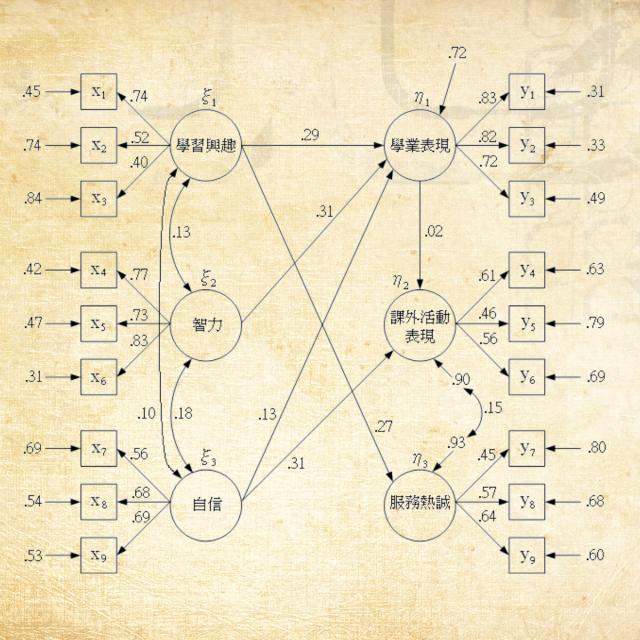
在社会学、心理学、教育学、经济学、管理学、市场学等研究领域的数据分析中,结构方程建模是当前最前沿的统计方法中应用最广、研究最多的一个。它包含了方差分析、回归分析、路径分析和因子分析,弥补了传统回归分析和因子分析的不足,可以分析多因多果的联系、潜变量的关系,

Sep 14th 2026
5-12 Weeks
SQL: A Practical Introduction for Querying Databases (Coursera) Coursera
IBM

SQL: A Practical Introduction for Querying Databases (Coursera)

Much of the world's data lives in databases. SQL (or Structured Query Language) is a powerful programming language that is used for communicating with and manipulating data in databases. A working knowledge of databases and SQL is a must for anyone who wants to start a career in Data Engineering, Data Warehousing, Data Analytics, Data Science or Business Intelligence. The purpose of this course is to help you learn and apply foundational and intermediate knowledge of the SQL language, and become familiar with many relational database (RDBMS) concepts along the way.

Sep 21st 2026
5-12 Weeks
Doing Economics: Measuring Climate Change (Coursera) Coursera
University of London,University College London,CORE

Doing Economics: Measuring Climate Change (Coursera)

This course will give you practical experience in working with real-world data, with applications to important policy issues in today’s society. Each week, you will learn specific data handling skills in Excel and use these techniques to analyse climate change data, with appropriate readings to provide background information on the data you are working with. You will also learn about the consequences of climate change and how governments can address this issue.

Sep 21st 2026
4 Weeks
Fundamentals of Data Analysis in Excel (Coursera) Coursera
Corporate Finance Institute

Fundamentals of Data Analysis in Excel (Coursera)

Excel is the most widely used analysis tool in the world and a great starting point for diving into data analysis. In this course, you’ll apply Excel’s native tools to structure your data into spreadsheets and tables. You’ll then analyze and produce insights from that data using pivot tables. Finally, you’ll visualize those insights by building a dashboard in Excel. You’ll apply these skills using modern functionality like dynamic array formulas, linked data types, and Ideas in Excel. You’ll work hands-on with real-world scenarios, using datasets pulled from financial statements and retail sales.

Sep 21st 2026
5-12 Weeks
Principles of fMRI 1 (Coursera) Coursera
Johns Hopkins University

Principles of fMRI 1 (Coursera)

Functional Magnetic Resonance Imaging (fMRI) is the most widely used technique for investigating the living, functioning human brain as people perform tasks and experience mental states. It is a convergence point for multidisciplinary work from many disciplines. Psychologists, statisticians, physicists, computer scientists, neuroscientists, medical researchers, behavioral scientists, engineers, public health researchers, biologists, and others are coming together to advance our understanding of the human mind and brain. This course covers the design, acquisition, and analysis of Functional Magnetic Resonance Imaging (fMRI) data, including psychological inference, MR Physics, K Space, experimental design, pre-processing of fMRI data, as well as Generalized Linear Models (GLM’s).

Sep 14th 2026
4 Weeks
Process Mining: Data science in Action (Coursera) Coursera
Eindhoven University of Technology

Process Mining: Data science in Action (Coursera)

Process mining is the missing link between model-based process analysis and data-oriented analysis techniques. Through concrete data sets and easy to use software the course provides data science knowledge that can be applied directly to analyze and improve processes in a variety of domains. Data science is the profession of the future, because organizations that are unable to use (big) data in a smart way will not survive. It is not sufficient to focus on data storage and data analysis. The data scientist also needs to relate data to process analysis.

Sep 21st 2026
5-12 Weeks
Fundamentos de Excel para Negocios (Coursera) Coursera
Universidad Austral

Fundamentos de Excel para Negocios (Coursera)

Cuando finalices este curso habrás logrado un gran número de habilidades como introducir información, ordenarla, manipularla, realizar cálculos de diversa índole (matemáticos, trigonométricos, estadísticos, financieros, ingenieriles, probabilísticos), extraer conclusiones, trabajar con fechas y horas, construir gráficos, imprimir reportes y muchas más.

Sep 14th 2026
5-12 Weeks