Extract, Transform and Load Data in Power BI (Coursera)

Offered by Microsoft,
Extract, Transform and Load Data in Power BI (Coursera)

This course forms part of the Microsoft Power BI Analyst Professional Certificate. This Professional Certificate consists of a series of courses that offers a good starting point for a career in data analysis using Microsoft Power BI.

Class Deals by MOOC List - Click here and see Coursera's Active Discounts, Deals, and Promo Codes.

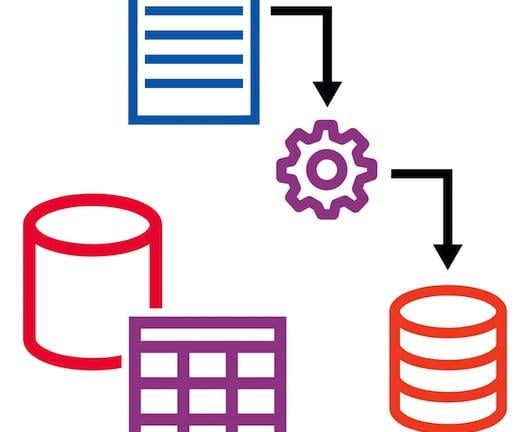
In this course, you will learn the process of Extract, Transform and Load or ETL. You will identify how to collect data from and configure multiple sources in Power BI and prepare and clean data using Power Query. You’ll also have the opportunity to inspect and analyze ingested data to ensure data integrity.

After completing this course, you’ll be able to:

• Identify, explain and configure multiple data sources in Power BI
• Clean and transform data using Power Query
• Inspect and analyze ingested data to ensure data integrity
This is also a great way to prepare for the Microsoft PL-300 exam. By passing the PL-300 exam, you’ll earn the Microsoft Power BI Data Analyst certification.
This course is part of the Microsoft Power BI Data Analyst Professional Certificate.

What you'll learn

  • How to set up a data source and explain and configure storage modes in Power BI.
  • How to prepare for data modeling by cleaning and transforming data.
  • How to use profiling tools to identify data anomalies.
  • How to reference queries and dataflows and use the Advanced Editor to modify code.

Syllabus

Data Sources in Power BI
Module 1
In this module, you'll set up data sources and explore the different data source capabilities in Power BI.

Transforming Data in Power BI
Module 2
In this module, you'll practice cleaning and transforming data to prepare for data modeling in later courses.

Advanced ETL in PowerBI
Module 3
In this module, you'll gain an understanding of the load portion of the ETL process and practice data profiling and advanced queries.

Graded Assessment and Course wrap up
Module 4
In this module, you'll be assessed on the key skills covered in the course.
Go to Class
MOOC List is learner-supported. When you buy through links on our site, we may earn an affiliate commission.

Related Courses

Football: More than a Game (Coursera) Coursera
University of Edinburgh

Football: More than a Game (Coursera)

Explore the world of football (soccer), the money, the rivalries, the trends, the past, the present, the men’s game, the women's game and the real issues. Whether you love it, hate it or try to ignore it – join us as we go behind the scenes to examine why football is more than just a game.

Sep 21st 2026
5-12 Weeks
Empathy, Data, and Risk (Coursera) Coursera
University of Illinois at Urbana-Champaign

Empathy, Data, and Risk (Coursera)

Risk Management and Innovation develops your ability to conduct empathy-driven and data-driven analysis in the domain of risk management. This course introduces empathy as a professional competency. It explains the psychological processes that inhibit empathy-building and the processes that determine how organizational stakeholders respond to risk.

Sep 28th 2026
4 Weeks
Statistical Thinking for Industrial Problem Solving, presented by JMP (Coursera) Coursera
SAS

Statistical Thinking for Industrial Problem Solving, presented by JMP (Coursera)

Statistical Thinking for Industrial Problem Solving is an applied statistics course for scientists and engineers offered by JMP, a division of SAS. By completing this course, students will understand the importance of statistical thinking, and will be able to use data and basic statistical methods to solve many real-world problems.

Sep 21st 2026
5-12 Weeks
Business Intelligence and Competitive Analysis (Coursera) Coursera
Rutgers University

Business Intelligence and Competitive Analysis (Coursera)

By the end of 2019, it is clear that American Airlines (AAL), the world’s largest airline group, is in trouble. With the growth rate of its stock price ranked at the bottom of all major US airlines and going in the opposite direction from the SP500 index, AAL needs to find out what is going on, and how to turn the company and its stock price around.

Sep 28th 2026
4 Weeks
Data Visualization for Genome Biology (Coursera) Coursera
University of Toronto

Data Visualization for Genome Biology (Coursera)

The past decade has seen a vast increase in the amount of data available to biologists, driven by the dramatic decrease in cost and concomitant rise in throughput of various next-generation sequencing technologies, such that a project unimaginable 10 years ago was recently proposed, the Earth BioGenomes Project, which aims to sequence the genomes of all eukaryotic species on the planet within the next 10 years. So while data are no longer limiting, accessing and interpreting those data has become a bottleneck. One important aspect of interpreting data is data visualization. This course introduces theoretical topics in data visualization through mini-lectures, and applied aspects in the form of hands-on labs.

Sep 21st 2026
5-12 Weeks
Analyzing and Visualizing Data in Looker (Coursera) Coursera
Google Cloud

Analyzing and Visualizing Data in Looker (Coursera)

In this course, you learn how to do the kind of data exploration and analysis in Looker that would formerly be done primarily by SQL developers or analysts. Upon completion of this course, you will be able to leverage Looker's modern analytics platform to find and explore relevant content in your organization’s Looker instance, ask questions of your data, create new metrics as needed, and build and share visualizations and dashboards to facilitate data-driven decision making.

Sep 28th 2026
2 Weeks
Population Health: Predictive Analytics (Coursera) Coursera
Leiden University

Population Health: Predictive Analytics (Coursera)

Predictive analytics has a longstanding tradition in medicine. Developing better prediction models is a critical step in the pursuit of improved health care: we need these tools to guide our decision-making on preventive measures, and individualized treatments. In order to effectively use and develop these models, we must understand them better. In this course, you will learn how to make accurate prediction tools, and how to assess their validity. First, we will discuss the role of predictive analytics for prevention, diagnosis, and effectiveness. Then, we look at key concepts such as study design, sample size and overfitting.

Sep 28th 2026
4 Weeks
HI-FIVE: Health Informatics For Innovation, Value & Enrichment (Administrative/IT Perspective) (Coursera) Coursera
Columbia University

HI-FIVE: Health Informatics For Innovation, Value & Enrichment (Administrative/IT Perspective) (Coursera)

HI-FIVE (Health Informatics For Innovation, Value & Enrichment) Training is an approximately 10-hour online course designed by Columbia University in 2016, with sponsorship from the Office of the National Coordinator for Health Information Technology (ONC). The training is role-based and uses case scenarios. No additional hardware or software are required for this course. Our nation’s healthcare system is changing at a rapid pace.

Sep 28th 2026
4 Weeks
Fundamentos de estadística aplicada (Coursera) Coursera
Universidad de los Andes

Fundamentos de estadística aplicada (Coursera)

El curso está orientado a profesionales de diferentes campos, que estén interesados en adquirir conceptos fundamentales de estadística aplicada. El contenido del curso será particularmente útil para profesionales que estén interesados en adelantar estudios de postgrado en ingeniería, administración o economía, entre otras profesiones, y que requieran de una adecuada fundamentación en estadística.

Sep 28th 2026
4 Weeks
Bioinformatic Methods I (Coursera) Coursera
University of Toronto

Bioinformatic Methods I (Coursera)

Large-scale biology projects such as the sequencing of the human genome and gene expression surveys using RNA-seq, microarrays and other technologies have created a wealth of data for biologists. However, the challenge facing scientists is analyzing and even accessing these data to extract useful information pertaining to the system being studied. This course focuses on employing existing bioinformatic resources – mainly web-based programs and databases – to access the wealth of data to answer questions relevant to the average biologist, and is highly hands-on.

Sep 21st 2026
5-12 Weeks
Bioinformatic Methods II (Coursera) Coursera
University of Toronto

Bioinformatic Methods II (Coursera)

Large-scale biology projects such as the sequencing of the human genome and gene expression surveys using RNA-seq, microarrays and other technologies have created a wealth of data for biologists. However, the challenge facing scientists is analyzing and even accessing these data to extract useful information pertaining to the system being studied. This course focuses on employing existing bioinformatic resources – mainly web-based programs and databases – to access the wealth of data to answer questions relevant to the average biologist, and is highly hands-on.

Sep 28th 2026
5-12 Weeks