Good Brain, Bad Brain: basics (FutureLearn)

Good Brain, Bad Brain: basics (FutureLearn)

What do we know and what are we discovering about the form and function of the human brain? Find out with this online course. We will look at what your brain is made of, how these components are organised and how they function.

Class Deals by MOOC List - Click here and see FutureLearn's Active Discounts, Deals, and Promo Codes.

This information is helping neuroscientists across the globe understand the brain - and how it is able to do everything from stopping you falling off your bike, to making you feel sad that your football team lost their game, to helping you learn how your brain works.

What topics will you cover?

  • The cells of the nervous system: neurones and glia
  • Basic neuroanatomy of the brain and the concept of the relationship between structure and function
  • Basic properties of neurones, including an introduction to the action potential
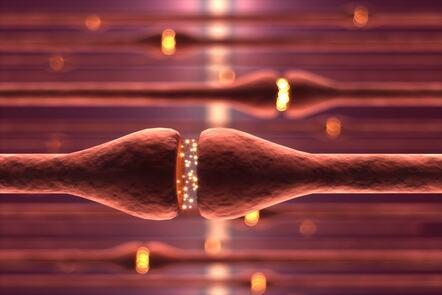
  • A brief introduction to the functioning of the synapse
  • Examples of drugs (legal and therapeutic) that alter the function of neurones and synapses
  • Examples of brain disorders that illustrate how some functions are highly localised, such as the sensory systems, whilst others are distributed throughout the brain, such as emotion

What will you achieve?
By the end of the course, you'll be able to...

  • Describe the key features of the cells that make up the human nervous system that allow them to carry out their function
  • Explain how the arrangement of these cells within the human brain relates to brain function
  • Explain how drugs can impact on the normal function of neurones of the brain
  • Discuss how brain disorders can impact on the functioning of the brain

This course is part of the Good Brain, Bad Brain program, which will enable you to explore the human brain, for CPD or as a gateway to further study.

Go to Class
MOOC List is learner-supported. When you buy through links on our site, we may earn an affiliate commission.

Related Courses

Why Do We Age? The Molecular Mechanisms of Ageing (FutureLearn) FutureLearn
University of Groningen,University Medical Center Groningen - UMCG

Why Do We Age? The Molecular Mechanisms of Ageing (FutureLearn)

Why do we age? Is there a limit to human lifespan? Can we prolong our lives? Find out with this free online course. Discover the science behind the ageing process. The “why” and “how” of ageing has puzzled mankind ever since it questioned its place in the universe.

Self Paced
5-12 Weeks
Inside Cancer: How Genes Influence Cancer Development (FutureLearn) FutureLearn
University of Bath

Inside Cancer: How Genes Influence Cancer Development (FutureLearn)

Understand how genetics influence the development and spread of cancer, with this free, introductory online course. What is the one thing that all cancers have in common? They begin as mutant or rebel cells! In this course we will explore how changes in cancer genetics and epigenetics enables these cells to grow uncontrollably, by exploiting our blood vessels and immune system along with other systemic changes.

Self Paced
4 Weeks
Genetics and Society: A Course for Educators (Coursera) Coursera
American Museum of Natural History

Genetics and Society: A Course for Educators (Coursera)

How have advances in genetics affected society? What do we need to know to make ethical decisions about genetic technologies? This course includes the study of cloning, genetic enhancement, and ownership of genetic information. Course participants will acquire the tools to explore the ethics of modern genetics and learn how to integrate these issues into their classrooms.

Sep 21st 2026
4 Weeks
Biochemistry: the Molecules of Life (FutureLearn) FutureLearn
University of East Anglia

Biochemistry: the Molecules of Life (FutureLearn)

Explore the impact of biochemistry on bioenergy and health, discovering why graduates are in demand; with the Biochemical Society. Biochemistry brings together all of the sciences to study the chemical and physical processes that occur in living organisms. It truly is the science of life. As a scientific discipline in its own right, biochemistry has a major impact on all areas of the life sciences and biochemists are in high demand among employers.

Self Paced
3 Weeks
Good Brain, Bad Brain: Parkinson's Disease (FutureLearn) FutureLearn
University of Birmingham

Good Brain, Bad Brain: Parkinson's Disease (FutureLearn)

Learn the fundamentals of Parkinson's disease with this online course. What causes it and what we can do to treat it? This online course is aimed at anyone who wants to find out the fundamentals of Parkinson’s disease. We will look at how Parkinson’s disease affects people; what causes it; what we can do to try to ameliorate the symptoms of Parkinson’s; and what we don’t yet know about it.

No sessions available
3 Weeks
The Mind is Flat: The Shocking Shallowness of Human Psychology (FutureLearn) FutureLearn
The University of Warwick

The Mind is Flat: The Shocking Shallowness of Human Psychology (FutureLearn)

Make better personal and professional decisions and consider the psychological dimension to key ethical and political choices. What are the forces shaping human behaviour? How do we think and decide? This course, from Professor Nick Chater and Warwick Business School, explores the origins of human rationality and irrationality.

Available now
5-12 Weeks
Metabolomics: Understanding Metabolism in the 21st Century (FutureLearn) FutureLearn
University of Birmingham

Metabolomics: Understanding Metabolism in the 21st Century (FutureLearn)

Discover how metabolomics is revolutionising our understanding of metabolism with this free online course. Metabolomics is an emerging field that aims to measure the complement of metabolites (the metabolome) in living organisms. The metabolome represents the downstream effect of an organism’s genome and its interaction with the environment. Metabolomics has a wide application area across the medical and biological sciences.

No sessions available
4 Weeks
Unlocking The Creative Brain: Develop and Teach Skills For Creative Thinking (FutureLearn) FutureLearn
Central Queensland University

Unlocking The Creative Brain: Develop and Teach Skills For Creative Thinking (FutureLearn)

Explore the neuroscientific principles underpinning creativity, and learn the scientific methods to foster creative classrooms. Discover the neuroscience of creativity. Creativity is an extremely important skill but it can be difficult to explain and to teach others. There is a science to it though, and we can link research into the brain’s functions to the creative process.

Self Paced
4 Weeks