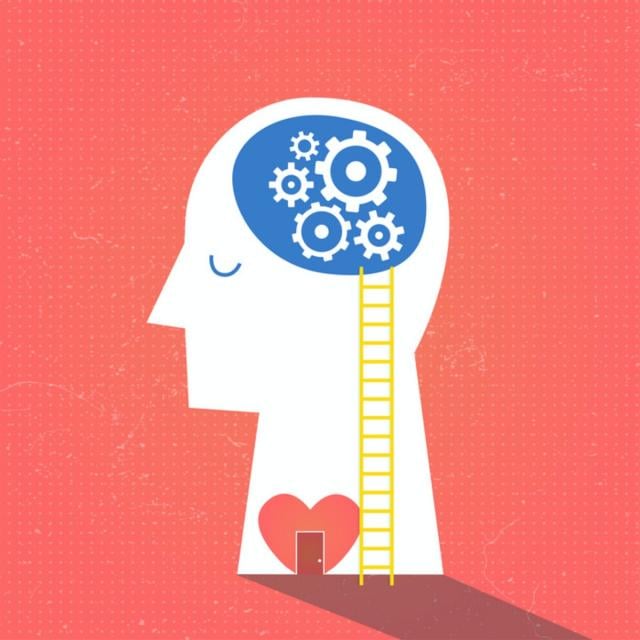
Explore existential themes in your personal and professional life. Develop strengths and counseling skills to improve your well-being and the well-being of others. This humanities course offers you the opportunity to explore what really matters in life and teaches you how to nurture your well-being and enhance the well-being of others.
Class Deals by MOOC List - Click here and see EdX's Active Discounts, Deals, and Promo Codes.
We will address themes in your personal and professional life and show you how to counsel at all stages. We start with a positive approach by giving attention to people’s talents. We recognize that human existence involves constraints and difficulties, which is why this course is based on the idea of “existential” well-being.
This course will teach you how to live fully as a human being, in this body, on this planet, while at the same time being conscious that you are just a small part of a vast, incomprehensible, universe.
Our experiential approach focuses on the innate wisdom of the human organism and our tendency to evolve in a forward-moving direction. You will learn how to become aware of this deeply felt knowledge by giving attention to your body as felt from the inside and to your emotions.
Our person-centered approach encourages building optimal human relationships through empathy, respect and authenticity. These are complex skills, which we will bring within your reach by means of simple exercises.
Through examples, role-play and video-demonstrations we will illustrate how you can apply our existential well-being approach in a variety of helping contexts, including counseling and psychotherapy. You will develop skills to embody the existential well-being approach as a person and as a professional.
Your learning will be enriched through exchanging thoughts and experiences with a diverse group of international participants. You will learn to notice how people from different cultures have different ideas about what it means to live well and meaningfully. You will engage in discussions where divergent values can be respectfully acknowledged. Your personal view of well-being will expand and deepen to a more universal perspective on what it means to be human.
This course is taught by instructors with decades of experience in existential psychotherapy, focusing -oriented and emotion-focused therapy, person-centered counseling and positive psychology.
The instructors are also teachers and researchers in the fields of psychotherapy, positive psychology, meaning and spirituality at KU Leuven, a prestigious European University.
This course offers you a high degree of flexibility. You can follow the content in sequence or choose to complete sections in order of interest to you. Be aware that it would be realistic to spend 6 to 8 hours on each section. The course will be available from October until the end of June and you can follow your own rhythm in studying and practicing what is offered in each section.
What you'll learn:
- Live meaningfully and make the best of different life situations
- Build optimal human relationships
- Focus on bodily felt wisdom
- Facilitate emotional, cognitive and behavioral change
- Improve counseling skills for different working contexts
Syllabus
1. Well-being and Positive psychology.
- Getting tuned in to theories of well-being and positive psychology.
- Developing awareness of well-being counseling.
- Developing attitudes for well-being: gratitude, empathy and (self-)compassion, simplicity.
2. Existential approach: coping with human life.
- Getting tuned in to existential theories.
- Developing existential connection.
- Developing awareness of existential givens.
- Becoming sensitive to existential practice.
3. Dimensions of human existence: goals and values.
- Addressing questions such as: “Who am I?” “What motivates and inspires me in my life?”
- Improving awareness of different dimensions, goals and values in human development.
- Recognizing imbalances and problems in human existence.
- Practicing Focusing as a skill for self-development.
- Being aware of similarities and differences between Focusing and Mindfulness.
4. Life Journey: Existential challenges and Strengths
- Deepening life stories in the frame of existential and positive psychology.
- Deepening existential themes: freedom, responsibility, choice, loss, sadness, grief, fear, solitude, finiteness and death.
- Developing strengths: self-knowledge, anger, confrontation, conflicts, forgiveness, wisdom.
5. Meaning and Spirituality.
- Exploring sources of meaning in life.
- Expanding awareness to the spiritual dimension.
- Developing virtues for living meaningfully and well. Including Love as the meaning giving virtue by excellence
6. Person-centered approach: interpersonal conditions of growth.
- Developing growth-promoting relationships and presence.
- Developing non-judgmental empathic relating and responding.
- Developing authentic relating and responding and interactional confrontation.
- Developing process-sensitivity and process-diagnosis.
7. Experiential approach: body-orientedness and intrapersonal conditions of growth.
- Developing embodied presence.
- Developing awareness of pre-verbal senses and body expressions.
- Developing attitudes and interventions to facilitate intrapersonal conditions of growth.
- Extending Focusing to non-verbal expressions and working with dreams.
8. Processing emotions and overcoming intrapersonal blocks
- Being aware of commonest process-blocks such as feeling “nothing”, feeling overwhelmed, one part which is victimizing or attacking another.
- Being aware of different styles of processing emotions.
- Recognizing ways people get stuck in emotions.
- Having some idea about Emotion-focused therapy.
9. Integration: Counseling from a person-centered, experiential, existential well-being perspective.
- Integrating counseling skills.
- Knowing how to start and end a counseling process.
- Deepening skills for self-care and healing.