Evaluación para el aprendizaje: Enfoque cualitativo (Coursera)

Evaluación para el aprendizaje: Enfoque cualitativo (Coursera)

La formación en educación media superior y superior implica no solamente el aprendizaje de conocimientos, sino también el desarrollo de habilidades y la formación de actitudes y valores, para lo cual es fundamental contar con instrumentos, estrategias y técnicas que le permitan al profesor obtener información sobre el progreso de sus estudiantes y así contribuir a la toma de decisiones para alcanzar el logro de los aprendizajes esperados, para ello el uso sistemático de instrumentos de evaluación de carácter cualitativo es frecuente en educación superior, particularmente en las áreas sociales y de la salud, como por ejemplo en Biología, Trabajo social, Psicología, Medicina, Antropología, entre otras.

Class Deals by MOOC List - Click here and see Coursera's Active Discounts, Deals, and Promo Codes.

Por esto es necesario que los docentes conozcan algunos de los instrumentos más empleados dentro de la evaluación cualitativa que pueden ayudar a la formación y a la evaluación de sus estudiantes, al mismo tiempo que obtienen evidencias respecto al avance y los logros de cada uno de ellos.
Este curso pretende que a través de ciertos recursos didácticos (videos, actividades, ejercicios y preguntas para reflexionar) el docente explore las posibilidades que ofrecen los instrumentos para realizar evaluaciones de carácter cualitativo.

Course 3 of 4 in the Evaluación educativa Specialization

Syllabus

WEEK 1
Introducción al enfoque cualitativo
En el presente módulo encontrarás una introducción acerca del enfoque de la evaluación para el aprendizaje de carácter cualitativo y comenzaremos la revisión de cinco de los principales instrumentos que integran dicho enfoque; iniciaremos con la exposición, mencionando sus características y la manera correcta de planearla y utilizar sus resultados.

WEEK 2
Instrumentos del enfoque cualitativo
En este módulo revisaremos el Ensayo, el Estudio de caso y el ECOE, de cada uno de ellos conoceremos qué son, cómo se diseñan y planean, así como el uso que se le puede dar a los resultados obtenidos por medio de ellos. El Estudio de caso y el ECOE están vinculados casi de manera directa, debido al alcance que tienen, ya que por medio de ambos es posible evaluar habilidades que van desde el mero conocimiento hasta la aplicación o la metaevaluación de los aprendizajes esperados en los estudiantes.

WEEK 3
Enfoque sistémico de la evaluación educativa
En este módulo revisaremos, el Portafolio como último instrumento de evaluación del enfoque cualitativo para la evaluación del aprendizaje, cuyo principal objetivo es recabar evidencias del desempeño de los estudiantes en diversas tareas o actividades. También, y como cierre general del curso veremos los principales retos del enfoque sistémico de la evaluación educativa.
Go to Class
MOOC List is learner-supported. When you buy through links on our site, we may earn an affiliate commission.

Related Courses

Mindshift: Break Through Obstacles to Learning and Discover Your Hidden Potential (Coursera) Coursera
McMaster University

Mindshift: Break Through Obstacles to Learning and Discover Your Hidden Potential (Coursera)

Mindshift is designed to help boost your career and life in today’s fast-paced learning environment. Whatever your age or stage, Mindshift teaches you essentials such as how to get the most out of online learning and MOOCs, how to seek out and work with mentors, the secrets to avoiding career ruts (and catastrophes) and general ruts in life, and insights such as the value of selective ignorance over general competence.

Nov 9th 2026
4 Weeks
Educating Deaf Children: Becoming an Empowered Teacher (Coursera) Coursera
University of Cape Town

Educating Deaf Children: Becoming an Empowered Teacher (Coursera)

Many Deaf children around the world still leave school functionally illiterate. In some cases there is no allowance made for education of Deaf children at all. This 4 week course provides you with invaluable knowledge and skills about teaching Deaf children. You will learn about the importance of Deaf culture and community, the need for a language rich environment for the Deaf child from as young as possible, and that having access to sign language can help Deaf children academically, emotionally, and socially.

Nov 9th 2026
4 Weeks
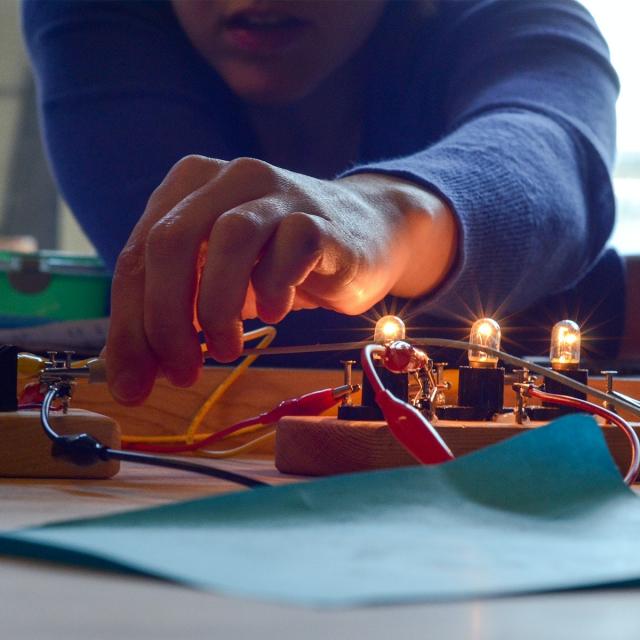
Tinkering Fundamentals: Circuits (Coursera) Coursera
Exploratorium

Tinkering Fundamentals: Circuits (Coursera)

The Tinkering Fundamentals course will offer educators and enthusiasts an opportunity to develop a practice of tinkering and making. We see tinkering as a serious endeavor -- one that is generalizable across content and especially good at interweaving disciplines in a way that leads to complex projects and individualized learning opportunities.

Nov 2nd 2026
5-12 Weeks
Copyright for Educators & Librarians (Coursera) Coursera
Duke University,Emory University,University of North Carolina at Chapel Hill

Copyright for Educators & Librarians (Coursera)

Fear and uncertainty about copyright law often plagues educators and sometimes prevents creative teaching. This course is a professional development opportunity designed to provide a basic introduction to US copyright law and to empower teachers and librarians at all grade levels. Course participants will discover that the law is designed to help educators and librarians.

Nov 9th 2026
5-12 Weeks
THINK GLOBAL: TEACHERS TRAINING COURSE (IDP-ICE) (Coursera) Coursera
University of Barcelona

THINK GLOBAL: TEACHERS TRAINING COURSE (IDP-ICE) (Coursera)

A group of seven European partners from Catalonia, Belgium, and Wales worked together on the Erasmus+ funded ‘Think Global’ project on global competence. The project seeks to address the following research question through development and piloting of practical classroom activities: What is global competence, and how can it be learned effectively?

Nov 9th 2026
5-12 Weeks
ICT in Primary Education: Transforming children's learning across the curriculum (Coursera) Coursera
University of London

ICT in Primary Education: Transforming children's learning across the curriculum (Coursera)

Why and how are teachers integrating ICT (Information and Communication Technology) into primary education? In this course we analyse examples from schools in different parts of the world, and bring professional teachers, headteachers and policymakers together to share their best ideas and inspiring stories. The materials in the course are based on studies carried out for the UNESCO Institute of IT in Education, Moscow.

Nov 2nd 2026
5-12 Weeks
Innovative Teaching with ChatGPT (Coursera) Coursera
Vanderbilt University

Innovative Teaching with ChatGPT (Coursera)

Despite what you may have heard, ChatGPT offers exciting possibilities for supporting innovative teaching and personalized education. This course provides practical techniques that any educator, from K-12 to higher education, can use to help support their teaching. No experience with ChatGPT, prompt engineering, or Generative AI is required.

Nov 9th 2026
1 Week
Critical Issues in Urban Education (Coursera) Coursera
University of Chicago

Critical Issues in Urban Education (Coursera)

Urban school reform in the United States is characterized by contentious, politicized debate. This course explores a set of critical issues in the education and educational reform space, with a focus on aspects of the field that have sparked controversy and polarized views. We will dig into these debates, situating them within the larger history of public education and school reform, and considering the viewpoints, the evidence, and translation of issues into educational policy.

Nov 9th 2026
5-12 Weeks
Claves para Gestionar Personas (Coursera) Coursera
IESE Business School

Claves para Gestionar Personas (Coursera)

¿Te has preguntado alguna vez qué criterios utilizan las empresas para contratar o retribuir a las personas? ¿Por qué no siempre entendemos los planes de promoción?. El objetivo de este curso es conocer algunas herramientas prácticas en materia de Recursos Humanos y aprender a gestionar personas y liderar el talento con la mayor eficacia posible.

Nov 2nd 2026
5-12 Weeks
Think Again I: How to Understand Arguments (Coursera) Coursera
Duke University

Think Again I: How to Understand Arguments (Coursera)

In this course, you will learn what an argument is. The definition of argument will enable you to identify when speakers are giving arguments and when they are not. Next, you will learn how to break an argument into its essential parts, how to put them in order to reveal their connections, and how to fill in gaps in an argument by adding suppressed premises. By the end of this course, you will be better able to understand and appreciate arguments that you and other people present.

Nov 9th 2026
4 Weeks