The American Renaissance (saylor.org)

Offered by Saylor.org,
The American Renaissance (saylor.org)

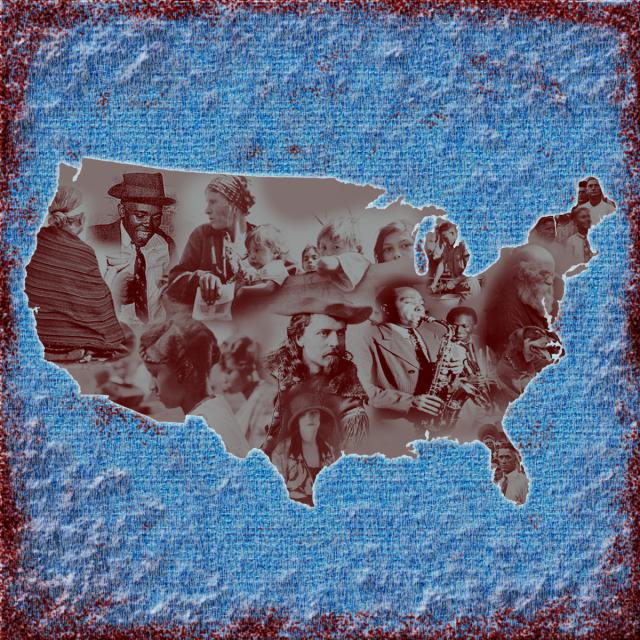
As most famously defined by F. O. Matthiessen in his groundbreaking book, The American Renaissance: Art and Expression in the Age of Emerson and Whitman (1941), the “American Renaissance” demarcates a period of tremendous literary activity between the 1830s and 1860s that marked the cultivation, for the first time, of a distinctively American literature.

As most famously defined by F. O. Matthiessen in his groundbreaking book, The American Renaissance: Art and Expression in the Age of Emerson and Whitman (1941), the “American Renaissance” demarcates a period of tremendous literary activity between the 1830s and 1860s that marked the cultivation, for the first time, of a distinctively American literature. For Matthiessen and many other critics, its key figures—Ralph Waldo Emerson, Henry David Thoreau, Walt Whitman, Nathaniel Hawthorne, and Herman Melville—sought to define and explore the new American identity, carving out new modes of expression and self-identification. In the years since Matthiessen’s important work and especially in the past several decades, this characterization of the literary period has been challenged on several fronts, for overstating the innovations of these few authors, for the exclusion of women, African-American, and more popular authors from its account of the United States during a period of social and cultural upheaval and transition, and for its acceptance of a myth of American exceptionalism. We begin this course by taking a look at context: What was it in American culture and society that led to the dramatic outburst of literary creativity in this era? We then explore some of the period’s most famous works, approaching them by genre category. Finally, we attempt to define the emerging American identity represented in this literature.

Upon successful completion of this course, the student will be able to:

Discriminate among the key economic, technological, social, and cultural transformations underpinning the American Renaissance,
Define the transformations in American Protestantism exemplified by the second Great Awakening and transcendentalism.
List the key tenets of transcendentalism and relate them to romanticism more broadly and to social and cultural developments in the antebellum United States.
Analyze Emerson’s place in defining transcendentalism and his key differences from other transcendentalists.
Analyze competing conceptualizations of poetry and its construction and purpose, with particular attention to Poe, Emerson, and Whitman.
Define the formal innovations of Dickinson and their relationship to her central themes.
Describe the emergence of the short story as a form, with reference to specific stories by Hawthorne and Poe.
Distinguish among forms of the novel, with reference to specific works by Hawthorne, Thompson, and Fern.
Analyze the ways that writers such as Melville, Brownson, Davis, and Thoreau saw industrialization and capitalism as a threat to U. S. society.
Develop the relationship between Thoreau’s interest in nature and his political commitments and compare and contrast his thinking with Emerson and other transcendentalists.
Analyze the different ways that sentimentalism constrained and empowered women writers to critique gender conventions, with reference to specific works by writers such as Fern, Alcott, and Stowe.
Define the ways that the slavery question influenced major texts and major controversies over literature during this period.


Go to Class
MOOC List is learner-supported. When you buy through links on our site, we may earn an affiliate commission.

Related Courses

James Joyce (saylor.org) Saylor Academy
Saylor.org

James Joyce (saylor.org)

Many consider James Joyce the most influential author of the 20th century. His innovations in narrative strategy in particular continue to shape and inspire literature today. In this course, we will examine Joyce’s aesthetic and artistic sensibilities through close readings of the major works in his oeuvre, placing special emphasis on Ulysses, whose expansive length and nearly infinite depths has sustained scholarship for decades.

Legacy Course
Self-Paced
Business English: Networking (Coursera) Coursera
University of Washington

Business English: Networking (Coursera)

This course begins with a welcome message and an overview of the Specialization. After this introduction, you will be asked to take a proficiency test to see if this course is right for you. During the course, you will begin learning vocabulary and customs related to socializing and networking in English. The goal is to enable you to interact with business contacts in person, on the phone and over email in a professional way.

Jun 22nd 2026
5-12 Weeks
English Composition II (saylor.org) Saylor Academy
Saylor.org

English Composition II (saylor.org)

The ability to research topics and incorporate information from your sources into your work is an important skill both in college and on the job. This course will reinforce the concepts you practiced in English Composition I by introducing you to basic research concepts and techniques.

Self Paced
Self-Paced
The Meaning of Rome: The Renaissance and Baroque City (edX) EdX
University of Notre Dame,NotreDameX

The Meaning of Rome: The Renaissance and Baroque City (edX)

Learn how the art, architecture, and urban form of Renaissance and Baroque Rome projected the city’s image of itself to its citizens and the world. We can read a city in a number of ways: in its plan, in the buildings that make its streets and public spaces, in the skyline. We can ask, what are the buildings or spaces saying? How do they say it? How does it all stitch together?

No sessions available
5-12 Weeks
Introduction to Galois Theory (Coursera) Coursera
Higher School of Economics - HSE University

Introduction to Galois Theory (Coursera)

A very beautiful classical theory on field extensions of a certain type (Galois extensions) initiated by Galois in the 19th century. Explains, in particular, why it is not possible to solve an equation of degree 5 or more in the same way as we solve quadratic or cubic equations. You will learn to compute Galois groups and (before that) study the properties of various field extensions. We first shall survey the basic notions and properties of field extensions: algebraic, transcendental, finite field extensions, degree of an extension, algebraic closure, decomposition field of a polynomial. Then we shall do a bit of commutative algebra (finite algebras over a field, base change via tensor product) and apply this to study the notion of separability in some detail.

Aug 1st 2022
5-12 Weeks
The American Renaissance: Classic Literature of the 19th Century (edX) EdX
DartmouthX

The American Renaissance: Classic Literature of the 19th Century (edX)

Explore the writings of famous American authors from Ralph Waldo Emerson and Harriet Beecher Stowe to Mark Twain, and examine the historic role Dartmouth College played in their formation. What is the American Renaissance? How did Dartmouth help foster the formation of the American Renaissance and its reevaluation and reinvention in the twentieth? Why should we, as twenty-first century readers, concern ourselves with this literature?

No sessions available
4 Weeks
Cultural and Literary Expression in the English Renaissance (saylor.org) Saylor Academy
Saylor.org

Cultural and Literary Expression in the English Renaissance (saylor.org)

At the outset of the 16th century, Europeans tended to dismiss English literature as inferior to continental literary traditions; the educated Englishman was obliged to travel to the continent and speak in other languages in order to “culture” himself. By the end of the Renaissance, however, some of the greatest works in the English language—from Shakespeare’s dramas to Thomas More’s Utopia—had been written. In this course, we will read and examine these works, situating them within their socio-historical and literary contexts, while attempting to determine how the art of English language and letters came into its own during this dynamic period.

Legacy Course
Self-Paced
Introduction to Literary Theory (saylor.org) Saylor Academy
Saylor.org

Introduction to Literary Theory (saylor.org)

This course will introduce you to the field of literary theory, making its various methods and premises available to you and your endeavors as a critical reader. As we progress through the syllabus, we will identify and engage with the key problems and questions that have animated—and continue to animate—theoretical discussion among literary scholars and critics, including issues pertaining to ideology, cultural value, the patriarchal and colonial bases of Western culture, and more.

Legacy Course
Self-Paced
Fundamentos de la escritura (Coursera) Coursera
Tecnológico de Monterrey

Fundamentos de la escritura (Coursera)

La redacción de un texto, cualquiera que este sea, implica conocer y dominar las reglas y estrategias que hacen del producto final un escrito coherente, de lectura ágil y adecuado al público que se destina. Por medio de ejercicios, videos y ejemplos reales, el primer módulo (Semana 1 y 2) guía al alumno en el proceso de aplicación y dominio de normas elementales de ortografía y puntuación.

Jun 22nd 2026
5-12 Weeks
Speak English Professionally: In Person, Online & On the Phone (Coursera) Coursera
Georgia Institute of Technology

Speak English Professionally: In Person, Online & On the Phone (Coursera)

Do you want to speak better English? This course will help you reach that goal. Speak English Professionally: In person, Online and On the Phone will boost your English speaking skills. In this 5 week course, you will learn how to identify and make a strong personal introduction. You will develop and demonstrate the speaking skills for group discussions: how to agree or disagree, how to clarify, restate and summarise. You will develop and demonstrate the speaking skills for group discussions: how to agree or disagree, how to clarify, restate and summarize.

Jun 22nd 2026
5-12 Weeks
The Korean Alphabet: An Introduction to Hangeul (Coursera) Coursera
Sungkyunkwan University - SKKU

The Korean Alphabet: An Introduction to Hangeul (Coursera)

This course introduces Korean characters,'Hangeul', and provides high-level knowledge related to Hangeul. In this course, the background of 'Hangul' is created, who made the Hangeul, and according to what principle it is systematically explained. It also introduces anecdotes related to Korean tourist destinations related to Hangeul and teaches how to write Hangeul. Learners can increase their understanding of Korea, learn Hangeul accurately, and cultivate high-level knowledge of Hangeul.

Jun 24th 2026
4 Weeks