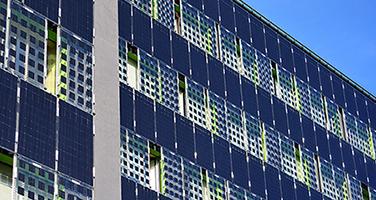
Energy management for real estate - Fundamentals, methods and digital tools (POK)

Offered by Politecnico di Milano,
Energy management for real estate - Fundamentals, methods and digital tools (POK)

This MOOC will provide you with the essential skills and knowledge to address the energy management process in real estate. The figure of the Energy Manager (EM), introduced in the United States in the early 1970s, during the first oil crisis, brought to light the need to get more work out of less energy. In Italy, this figure was officially introduced by Law 308/82, but had its first strong impulse thanks to Law 10/91, aimed at implementing the National Energy Plan on the rational use of energy, energy saving and the development of renewable energy sources.

More in detail, an Energy Manager is a person whose task is to manage what concerns energy within a company, a public body, or more generally a structure, verifying the energy consumption, optimising it, and promoting interventions aimed at energy efficiency and the use of renewable sources.

In such respect, the course will provide the necessary information to:

  • verify consumption, through ad hoc audits or, if available, through digital models or reports produced by remote management;
  • optimise consumption through the correct regulation of systems and their appropriate use from an energy point of view;
  • promote energy-aware behaviour by employees and/or occupants of the facility;
  • propose improvement investments, possibly improving production processes or the performance of related services.

The course is structured into 4 Weeks:
Week 1 – Introduction to the course
Week 2 – Energy framework and Buildings foundamentals
Week 3 – Energy management in buildings
Week 4 – Practical applications
In the first week a brief introduction about the course, highlighting the main skills of the energy manager, is provided. After that, the fundamental about energy in buildings is discussed in the second week. More in detail, the week aims to define the main energy, regulatory and market framework in which the energy manager has to deal with. Within the same week, the fundamentals of building physics and technical plants are also introduced. During week 3, the specific methodology to carry out the energy survey and audit as well as the available solution to improve the energy efficiency of existing buildings are treated. In the last week, the general approach to face with specific digital tools are also shown and, finally, all the knowledge acquired over the weeks is applied in two exemplifying case studies.
Go to Class
MOOC List is learner-supported. When you buy through links on our site, we may earn an affiliate commission.

Related Courses

Act on Climate: Steps to Individual, Community, and Political Action (Coursera) Coursera
University of Michigan

Act on Climate: Steps to Individual, Community, and Political Action (Coursera)

Are you concerned about climate change? Would you like to learn how to address and respond to this challenge? If so, this course is for you. Act on Climate: Steps to Individual, Community, and Political Action is intended to help learners understand, address and respond to climate change as individuals and in partnership with their communities and political leaders.

Sep 7th 2026
5-12 Weeks
Mechanics: Motion, Forces, Energy and Gravity, from Particles to Planets (Coursera) Coursera
UNSW Sydney - University of New South Wales

Mechanics: Motion, Forces, Energy and Gravity, from Particles to Planets (Coursera)

Most of the phenomena in the world around you are, at the fundamental level, based on physics, and much of physics is based on mechanics. Mechanics begins by quantifying motion, and then explaining it in terms of forces, energy and momentum. This allows us to analyse the operation of many familiar phenomena around us, but also the mechanics of planets, stars and galaxies.

Sep 14th 2026
5-12 Weeks
Enabling policies for innovation in the Next Production Revolution (POK) Polimi OPEN KNOWLEDGE
Politecnico di Milano

Enabling policies for innovation in the Next Production Revolution (POK)

A short introduction to enabling policies for innovation in the Next Production Revolution with a focus on energy and digital regulation. The course is part of a series of Sprint MOOC addressing the Next production Revolution (NPR) paradigma, as new wave of technological innovation. It addresses people from anywhere in the world, from industrialized economies as well as from “developing countries” and particularly from Africa.

Available
2 Weeks
Modelling the Energy Transition: the revolution of open-source software (POK) Polimi OPEN KNOWLEDGE
Politecnico di Milano

Modelling the Energy Transition: the revolution of open-source software (POK)

Deep dive on the energy modelling world to discover available open-source software for the analysis of the current and future Energy Transition. The MOOC aims at providing the attendants with the fundamental knowledge of the main challenges that characterize the Energy Transition at both Global and Regional level, and a set of tools to scientifically support their analysis.

Available
3 Weeks
Ecological and Energy Transitions in Southern Countries (Coursera) Coursera
École normale supérieure

Ecological and Energy Transitions in Southern Countries (Coursera)

This MOOC is at the junction between the development of Southern countries and sustainable development. It has: 1) a macroeconomic and financial dimension, developed by Gael Giraud and Alain Grandjean; 2) an ecological and climatic dimension, developed by David Claessen and ENS speakers; and 3) a focus on Southern countries, developed by AFD speakers.

Sep 14th 2026
5-12 Weeks
Fundamentals of Fluid Power (Coursera) Coursera
University of Minnesota

Fundamentals of Fluid Power (Coursera)

In this course, you will be introduced to the fundamental principles and analytical modeling of fluid power components, circuits, and systems. You will learn the benefits and limitations of fluid power compared with other power transmission technologies; the operation, use, and symbols of common hydraulic components; how to formulate and analyze models of hydraulic components and circuits; and how to design and predict the performance of fluid power circuits.

Aug 31st 2026
5-12 Weeks
Measuring the impact of the Energy Transition (POK) Polimi OPEN KNOWLEDGE
Politecnico di Milano

Measuring the impact of the Energy Transition (POK)

The Industrial Ecology approach for assessing the Sustainability of the Energy Transition. The aim of this MOOC is to provide a holistic but quantitative and multi-dimensional perspective on the energy transition underway today. Especially when dealing with cross sectoral linkages and circular economy, the instruments made available by the Industrial Ecology can represent a great support to researchers and practitioners and can be used to better inform policy makers.

Available
3 Weeks
Ressources minérales et transition (Coursera) Coursera
Institut Mines-Telecom

Ressources minérales et transition (Coursera)

Ce MOOC sur les ressources minérales et les transitions invite à se questionner sur la soutenabilité de nos choix technologiques. Les transitions énergétiques et numériques sont en effet confrontées aux enjeux d'approvisionnement des ressources minérales et aux impacts que leur cycle de vie génère sur l’environnement et la société.

Sep 14th 2026
4 Weeks
Oil & Gas Industry Operations and Markets (Coursera) Coursera
Duke University

Oil & Gas Industry Operations and Markets (Coursera)

The oil and gas industry has an enormous impact on all aspects of daily life. Individuals, corporations, and national governments make financial and policy decisions based on the cost, use, and availability of these two natural resources. This two-week course looks at the two most fundamental aspects of the oil and gas industry, its operations and markets, each of which is addressed as a separate module in the course.

Sep 2nd 2026
2 Weeks
Particle Dynamics (Coursera) Coursera
Korea Advanced Institute of Science and Technology - KAIST

Particle Dynamics (Coursera)

This course teaches dynamics, one of the basic mechanics subjects of Mechanical Engineering. Students would be able to organize their knowledge about force and motion, work-energy, impulse-momentum in view of Newton's 2nd law and its integration over time and displacement. The Engineering Dynamics consists of two parts: particle dynamics and rigid body dynamics.

Sep 14th 2026
13-24 Weeks
Energy Harvesting (Coursera) Coursera
Sungkyunkwan University - SKKU

Energy Harvesting (Coursera)

Joining this course presents opportunity to learn about energy harvesting that refers to a technology that converts the energy discarded in our daily lives into useful electrical energy that we can use. As we all know, most of low-power electronics, such as remote sensors, are driven by batteries. However, even when it comes to long-lasting batteries, they face an issue that is a regular replacement. It can turn out to be costly as there are hundreds of sensors in remote locations.

Sep 7th 2026
4 Weeks