The post-truth world is a divided and partisan environment in which factual information has been displaced by subjective and biased viewpoints. Facts and expertise no longer matter when isolated communities deny truth and scientific reasoning in favor of whatever information suits their needs or aligns with their beliefs. Social media and emerging technologies have the power to connect global participants in a meaningful way; yet, they have also led to disconnected communities that fail to communicate past their own self-imposed boundaries.
Class Deals by MOOC List - Click here and see Coursera's Active Discounts, Deals, and Promo Codes.
In this course, you will gain insights to recognize your own biases and identify preconceptions in today’s dynamic social information environment. Through metaliteracy, you will practice self-reflective, metacognitive processes and reexamine fixed mindsets. Together, we will consider the importance of facts and expertise in reinventing a truthful world based on inclusive communities of trust. This course will empower you to be a reflective consumer and a creative, responsible producer of information, and to raise and share your voice in this post-truth milieu.
What You Will Learn
- Learn how to address post-truth problems through metaliteracy
- Evaluate your biases and those of others when interacting with information
- Show that you are able to consume, produce, and share information in ways that you can be proud of
Syllabus
WEEK 1
Empowering Yourself for the Post-Truth World
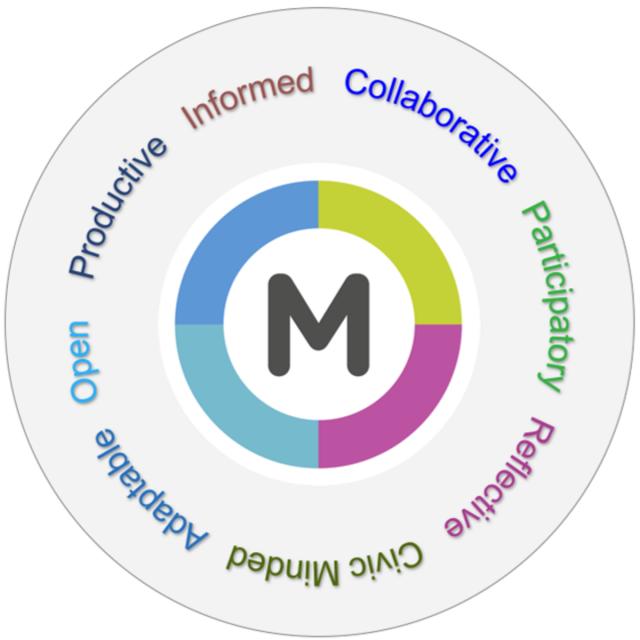
What is the post-truth world? In a post-truth world, subjective biases and uninformed opinions have challenged or replaced objective facts and scientific reasoning. Technologies originally designed to connect global participants have created a profound disconnect among users based on partisan ideologies and beliefs. Metaliteracy empowers learners to traverse this partisan landscape; it it supports metacognitive thinking to reflect on individual biases, as well as the preconceptions or prejudices that are embedded in content and participant viewpoints. As a metaliterate learner, you will learn how to take charge of your learning by identifying your own strengths and areas for growth.
In this module we will introduce you to the metaliteracy model, which will prepare you to be an informed consumer and creative producer. You will explore the active roles you take on as a creator of new information, such as communicator, researcher, and teacher in collaborative social environments.
WEEK 2
Who Are the Experts?
This module will delve into the realms of expertise and authority in connection with both people and information sources. How are expertise and authority connected? How does one determine authority? What impact do one’s beliefs have on perceptions of authority? The module will also consider the impact that the participatory Web has had on our ability to find, process, and respect the voices of experts. There are many advantages to having the world at our fingertips--but how can we be more aware of our biases and those of others so that we can develop metaliterate ways of being responsible information consumers and creators within our own communities?
WEEK 3
Can We Build Trust Online?
In this module, we will explore how metaliteracy prepares individuals to understand the risks and opportunities involved with online environments. In addition, we will describe the active roles that metaliterate learners play in participatory environments to help build communities of trust. Generally, we create communities by working collaboratively toward a common goal and producing information that is authentic and reliable. As part of this module, we will work together to expand the definition of trust in online communities. This will include the exploration of challenges in the post-truth world when online environments can be divisive, untrustworthy and unsecure.
How do we know what and who to trust in online environments, especially when the meaning of truth itself has diminished in the larger societal and political landscape? In this module, we will explore security breaches involving social media platforms in which the personal data of trusting participants was shared without permission. We will raise questions about the accountability of the social media providers as well as your responsibility to critically examine online platforms as you participate in these communities.
WEEK 4
False Representations in Constructed Media
This module will explore misrepresentation in constructed media to prepare individuals to be effective consumers and producers of information in a wide range of formats and settings. Information takes many forms, including text, image, and sound combined through multimedia and circulates instantaneously through a social network. The synergy of word and image is an especially dynamic combination that is powerful artistically and as a form of communication, but has also been used to misrepresent the facts. In a post-truth world, there has been an intentional misuse of images to communicate inaccurate or false narratives. The emergence of “fake news,” for example, intentionally juxtaposed words and images to convey misleading or downright false information.
In this networked world of social media and mass communications, there has also been a change in how we understand established editorial filters associated with professional news gathering and publication. Social technologies have empowered individuals to document alternative perspectives once hidden. This has been an empowering development that effectively leveraged our connected world to challenge traditional hierarchies and assumptions, and often revealed injustices or brought new voices to the fore. At the same time, we have seen the advance of a post-truth world based on the proliferation of false and misleading information that has been created and shared through media without the benefit of proper vetting by experts. As part of this exploration, we will examine a number of related questions: If everyone is now making and sharing content, who plays the role of editor to disseminate truthful information? How do we prepare social media participants to discern what is contextually accurate? What is the role of the consumer in a mass-media environment?
WEEK 5
Raising and Sharing Our Voices
At this point in the course, you have an understanding of the issues surrounding post-truth. You have also learned about metaliteracy as an empowering model for confronting these problems. In the last module, you investigated how media can misrepresent the truth and took on the role of the editor to examine the impact of choices you make as an information producer.
The original vision for social media was to create communities by connecting people in participatory democratic spaces, but this vision has been subverted by proprietary, political, and malicious interests. These could range from creating fake accounts that spread disinformation to cyber crime and online trolling. By raising and sharing our voices and building responsible communities of trust there is hope to move beyond the post-truth world. What is your responsibility in doing so? This module will introduce you to examples where individuals strive to empower and bring value to others by sharing their voices and experiences. As you continue developing your metaliterare learner strategies, you can help play a part in reclaiming the promise of the connected world.
WEEK 6
Reinventing a Truthful World
Through the creation and sharing of your final project, realize your vision for how you would reinvent a truthful world as an empowered metaliterate learner. Reflect on how you would apply the lessons learned in this MOOC to address the challenges of the post-truth world. Imagine how we would work together to effectively build a new future of truth and reason based on interrelated communities of trust. Think about how we move past the use of social media and emerging technologies to simply connect individuals in order to build online communities in which participants collaborate in purposeful ways to solve problems and make meaning. Reflect on what is required to move from post-truth circumstances to a future built on truth, trust, and both individual and community empowerment.