Disorders Due to Substance Use and Addictive Behaviors (Coursera)

Disorders Due to Substance Use and Addictive Behaviors (Coursera)

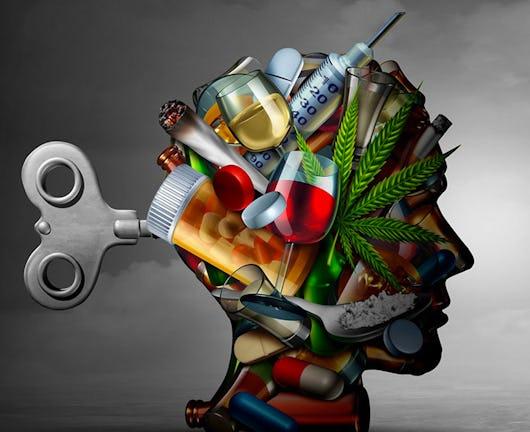
Many people around the world struggle with substance use disorders and addictive behaviors. You might know someone, possibly a family member or close friend, who is currently dealing with one of these problems. This course provides a review of common substance use disorders associated with the use of common depressants, opioids, stimulants, hallucinogens, dissociate drugs, and inhalants. Because they share many of the same characteristics, addictive behaviors, such as gambling and gaming disorders, are covered. In addition, the course discusses the diagnostic criteria, demographics, contributing factors, and treatments for each disorder.

Class Deals by MOOC List - Click here and see Coursera's Active Discounts, Deals, and Promo Codes.

This course is part of the Psychology of Anxiety, Mood, Substance Use, and Addictive Behaviors Specialization.

Syllabus

Learn With PsycLearn Essentials
This module introduces you to your PsycLearn Essentials course. Find out what’s included in this course and how to navigate the modules and lessons. You’ll also learn valuable study tips for successful learning.

Opening to Disorders Due to Substance Use and Addictive Behaviors

Depressants, Alcohol, Cannabis, and Opioids
This module describes the substance use disorders involving depressants, alcohol, and cannabis. For each disorder, the diagnostic criteria, prevalence, demographic characteristics, and neurochemical effects on the brain are described.

Stimulants, Hallucinogens, Dissociative Drugs, and Inhalants
This module describes the substance use disorders for stimulants, hallucinogens, dissociative drugs, and inhalants are introduced. For each disorder, the diagnostic criteria, prevalence, demographic characteristics, and neurochemical effects on the brain are described.

Primary contributing factors
This module describes the biological, psychological, and sociocultural contributing factors for disorders of substance use.

Treatments
This module describes the biological, psychological, and sociocultural treatments for disorders of substance use.

Disorders Due to Addictive Behaviors
This module describes the diagnostic criteria, contributing factors, and treatments for disorders of addictive behaviors.

Conclusion
This final content module brings all of the previous course material together and gives you material to review and questions for you to use to assess your learning.

Cumulative Quiz

Course Resources

PsycLearn Essentials APA Student Resources
This module provides a variety of information and tools from the American Psychological Association (APA) that will help inspire you as you complete your coursework and plan your career goals. Get discounted access to Academic Writer, APA’s online tool for writing effectively, as well as valuable advice that will help you develop and strengthen your skillset for learning success and future employment. Additionally, explore resources on various psychological issues. This module also includes APA resources on scholarly research and writing; a list of sites providing valuable resources on diversity, equity, and inclusion in psychology education and in the professional community; resources on a career in psychology; and links to career opportunities at the APA. You can also view videos that offer tips on dealing with stress.
Go to Class
MOOC List is learner-supported. When you buy through links on our site, we may earn an affiliate commission.

Related Courses

Overcoming Dyslexia (Coursera) Coursera
Yale University

Overcoming Dyslexia (Coursera)

Dyslexia is everywhere, touching so many children and adults, and while science has made extraordinary progress in understanding and clarifying the condition, this incredible powerful knowledge rarely reaches those who most need to know and would greatly benefit from it. Our goal is to change all this with the Coursera you are about to view, produced by Dr. Sally Shaywitz, the Audrey G. Ratner Professor in Learning Development, both the leading scientist studying dyslexia and the most devoted advocate for helping those who are dyslexic.

Jun 13th 2026
5-12 Weeks
History of Medical Cannabis (Coursera) Coursera
University of Colorado Boulder

History of Medical Cannabis (Coursera)

This History of Medical Cannabis course is designed to have you think critically about past, present, and future research on the health effects of cannabis by developing a more nuanced understanding of the barriers to research as well as different approaches to research. You will learn about the history of cannabis cultivation, the legal history of cannabis or "marijuana", and the obstacles that led to the lack of science on its medicinal use.

Jun 1st 2026
4 Weeks
Abnormal Behavior (saylor.org) Saylor Academy
Saylor.org

Abnormal Behavior (saylor.org)

Abnormal psychology is perhaps one of the most recognizable and intriguing subfields of study in psychology. Part of what makes this field so intriguing is that it challenges us to define what is normal and abnormal. Most experts in the field have settled on several criteria to define abnormal behavior; however, this definition and even the very existence of certain disorders still remain a source of debate. This course will help us to define abnormal and normal behaviors and to group these abnormal phenomena into “disorders.”

Legacy Course
Self-Paced
Preventing Dementia (University of Tasmania) Other Providers
University of Tasmania

Preventing Dementia (University of Tasmania)

Preventing Dementia is a Massive Open Online Course (MOOC), offering university-quality education about the latest research in dementia risk and protective factors. The free 4-week course provides an opportunity to engage with the perspectives of a global community, without requiring exams or assignments. This course runs twice a year in May and October.

May 17th 2022
4 Weeks
Comprendre les addictions (FUN) FUN
Université Paris-Sud

Comprendre les addictions (FUN)

Responsables de 20% des causes de mortalité et de 50% des faits de délinquance, les addictions constituent un problème majeur de santé et de sécurité publique qui concerne de près ou de loin quasiment toutes les familles, comme l'ensemble de la société civile. Les addictions contemporaines comportent de multiples facettes : au-delà des problèmes liés à l'alcool, à l’héroïne ou la cocaïne il faut désormais y inclure : les consommations excessives chez les jeunes (cannabis, " binge drinking " ...), l'émergence des nouvelles drogues, les conduites addictives dans les entreprises et les addictions sans produit (jeux d'argent, internet, sexe, achats compulsifs ...). L'attention portée aux questions d'addictions et les données de la science ont considérablement progressé et ont permis l'émergence et l'essor de l’Addictologie.

No sessions available
5-12 Weeks
The Many Faces of Dementia (FutureLearn) FutureLearn
University College London

The Many Faces of Dementia (FutureLearn)

Gain a unique insight into dementia through the stories, symptoms and science behind four less common diagnoses. Explore key issues in dementia care and research, through four less common forms. Dementia is one of the foremost priorities in global health and is estimated to affect over 44 million people worldwide.

Jan 4th 2021
4 Weeks
Conduites addictives (FUN) FUN
Université Paris-Saclay

Conduites addictives (FUN)

L'instauration du Service Sanitaire pour tous les étudiants en Santé s'inscrit dans le cadre de la stratégie nationale de santé dont le premier axe est de mettre en place une politique de prévention et de promotion de la santé. Pour cela, il doit contribuer à la réponse des besoins de prévention dans les territoires, favoriser une intégration de la prévention primaire dans la pratique des futurs professionnels de santé, initier les futurs professionnels de santé (médecin, infirmier, kinésithérapeute, pharmacien, dentiste, sage-femme…) aux enjeux de la prévention primaire et permettre la réalisation d’actions concrètes de prévention dans le cadre de la formation initiale des étudiants en santé.

No sessions available
5-12 Weeks
Falling Down: Problematic Substance Use in Later Life (FutureLearn) FutureLearn
Middlesex University London,Matua Raki

Falling Down: Problematic Substance Use in Later Life (FutureLearn)

Learn more about the issues faced by older people in relation to problematic substance use. Older people face specific issues in relation to problematic substance use. Demography and a growing ageing population make understanding these ever more important. But older people’s problems tend to be more invisible, both in care services and in substance use services. This online course brings these issues together from a health, social care, informal carer and public health point of view.

No sessions available
5-12 Weeks
Understanding Dementia (University of Tasmania) Other Providers
University of Tasmania

Understanding Dementia (University of Tasmania)

The Understanding Dementia MOOC was developed by the Wicking Dementia Research and Education Centre based in the College of Health and Medicine at the University of Tasmania. This world-leading online course is free, easily accessible and available to everyone with an interest in dementia. This course is free and runs twice a year in February and July.

Feb 7th 2023
5-12 Weeks
Introduction to the Biology of Cancer (Coursera) Coursera
Johns Hopkins University

Introduction to the Biology of Cancer (Coursera)

Over 500,000 people in the United States and over 8 million people worldwide are dying every year from cancer. As people live longer, the incidence of cancer is rising worldwide and the disease is expected to strike over 20 million people annually by 2030. This open course is designed for people who would like to develop an understanding of cancer and how it is prevented, diagnosed, and treated.

Jun 8th 2026
5-12 Weeks