Discrete Optimization (Coursera)

Discrete Optimization (Coursera)

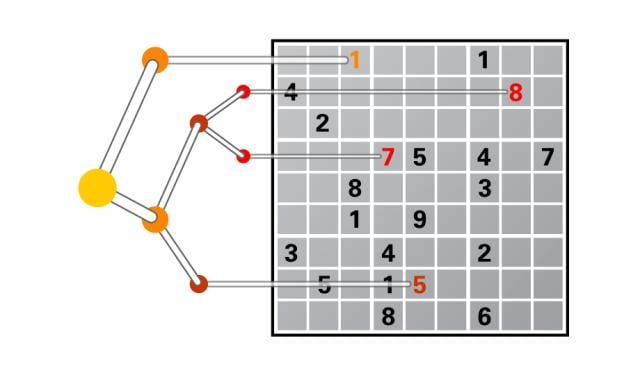
Tired of solving Sudokus by hand? This class teaches you how to solve complex search problems with discrete optimization, including constraint programming, local search, and mixed-integer programming. Optimization technology is ubiquitous in our society. It schedules planes and their crews, coordinates the production of steel, and organizes the transportation of iron ore from the mines to the ports.

Class Deals by MOOC List - Click here and see Coursera's Active Discounts, Deals, and Promo Codes.

Optimization clears the day-ahead and real-time markets to deliver electricity to millions of people. It organizes kidney exchanges and cancer treatments and helps scientists understand the fundamental fabric of life, control complex chemical reactions, and design drugs that may benefit billions of individuals. This class is an introduction to discrete optimization and exposes students to some of the most fundamental concepts and algorithms in the field. It covers constraint programming, local search, and mixed-integer programming from their foundations to their applications for complex practical problems in areas such as scheduling, vehicle routing, supply-chain optimization, and resource allocation.

Syllabus

WEEK 1
Welcome
These lectures and readings give you an introduction to this course: its philosophy, organization, and load. They also tell you how the assignments are a significant part of the class. This week covers the common input/output organization of the assignments, how they are graded, and how to succeed in this class.

WEEK 2
Knapsack
These lectures introduce optimization problems and some optimization techniques through the knapsack problem, one of the most well-known problem in the field. It discusses how to formalize and model optimization problems using knapsack as an example. It then reviews how to apply dynamic programming and branch and bound to the knapsack problem, providing intuition behind these two fundamental optimization techniques. The concept of relaxation and search are also discussed.

WEEK 3
Constraint Programming
Constraint programming is an optimization technique that emerged from the field of artificial intelligence. It is characterized by two key ideas: To express the optimization problem at a high level to reveal its structure and to use constraints to reduce the search space by removing, from the variable domains, values that cannot appear in solutions. These lectures cover constraint programming in detail, describing the language of constraint programming, its underlying computational paradigm and how it can be applied in practice.

WEEK 4
Local Search
Local search is probably the oldest and most intuitive optimization technique. It consists in starting from a solution and improving it by performing (typically) local perturbations (often called moves). Local search has evolved substantially in the last decades with a lot of attention being devoted on which moves to explore. These lectures explore the theory and practice of local search, from the concept of neighborhood and connectivity to meta-heuristics such as tabu search and simulated annealing.

WEEK 5
Linear Programming
Linear programming has been, and remains, a workhorse of optimization. It consists in optimizing a linear objective subject to linear constraints, admits efficient algorithmic solutions, and is often an important building block for other optimization techniques. These lectures review fundamental concepts in linear programming, including the infamous simplex algorithm, simplex tableau, and duality. .

WEEK 6
Mixed Integer Programming
Mixed Integer Programming generalizes linear programming by allowing integer variables, which dramatically changes the complexity of the problems but also broadens the potential applications significantly. These lectures review how to model problems in mixed-integer programming and how to solve mixed-integer programs using branch and bound. Advanced techniques such as cutting planes and polyhedral cuts are also covered.

WEEK 7
Advanced Topics: Part I
These lectures cover some more advanced concepts in optimization. They introduce constraint-programming techniques for scheduling and routing.

WEEK 8
Advanced Topics: Part II
These lectures continues to cover some more advanced concepts in optimization. They introduce large neighborhood search, which often combines constraint programming and local search, and column generation which decomposes an optimization model into a master and pricing problem, using more complex variables.

Go to Class
MOOC List is learner-supported. When you buy through links on our site, we may earn an affiliate commission.

Related Courses

Introduction to Spreadsheets and Models (Coursera) Coursera
University of Pennsylvania

Introduction to Spreadsheets and Models (Coursera)

The simple spreadsheet is one of the most powerful data analysis tools that exists, and it’s available to almost anyone. Major corporations and small businesses alike use spreadsheet models to determine where key measures of their success are now, and where they are likely to be in the future. But in order to get the most out of a spreadsheet, you have know how to use it. This course is designed to give you an introduction to basic spreadsheet tools and formulas so that you can begin harness the power of spreadsheets to map the data you have now and to predict the data you may have in the future.

Jun 22nd 2026
4 Weeks
Algorithms on Graphs (Coursera) Coursera
University of California, San Diego,Higher School of Economics - HSE University

Algorithms on Graphs (Coursera)

If you have ever used a navigation service to find optimal route and estimate time to destination, you've used algorithms on graphs. Graphs arise in various real-world situations as there are road networks, computer networks and, most recently, social networks! If you're looking for the fastest time to get to work, cheapest way to connect set of computers into a network or efficient algorithm to automatically find communities and opinion leaders in Facebook, you're going to work with graphs and algorithms on graphs.

Jun 22nd 2026
5-12 Weeks
Using Python to Interact with the Operating System (Coursera) Coursera
Google

Using Python to Interact with the Operating System (Coursera)

By the end of this course, you’ll be able to manipulate files and processes on your computer’s operating system. You’ll also have learned about regular expressions -- a very powerful tool for processing text files -- and you’ll get practice using the Linux command line on a virtual machine. And, this might feel like a stretch right now, but you’ll also write a program that processes a bunch of errors in an actual log file and then generates a summary file. That’s a super useful skill for IT Specialists to know.

Jun 23rd 2026
5-12 Weeks
Functional Programming Principles in Scala (Coursera) Coursera
École Polytechnique Fédérale de Lausanne

Functional Programming Principles in Scala (Coursera)

Functional programming is becoming increasingly widespread in industry. This trend is driven by the adoption of Scala as the main programming language for many applications. Scala fuses functional and object-oriented programming in a practical package. It interoperates seamlessly with both Java and Javascript. Scala is the implementation language of many important frameworks, including Apache Spark, Kafka, and Akka. It provides the core infrastructure for sites such as Twitter, Tumblr and also Coursera.

Jun 22nd 2026
5-12 Weeks
Java Programming: Principles of Software Design (Coursera) Coursera
Duke University

Java Programming: Principles of Software Design (Coursera)

Solve real world problems with Java using multiple classes. Learn how to create programming solutions that scale using Java interfaces. Recognize that software engineering is more than writing code - it also involves logical thinking and design. By the end of this course you will have written a program that analyzes and sorts earthquake data, and developed a predictive text generator.

Jun 22nd 2026
4 Weeks
Machine Learning With Big Data (Coursera) Coursera
University of California, San Diego

Machine Learning With Big Data (Coursera)

Want to make sense of the volumes of data you have collected? Need to incorporate data-driven decisions into your process? This course provides an overview of machine learning techniques to explore, analyze, and leverage data. You will be introduced to tools and algorithms you can use to create machine learning models that learn from data, and to scale those models up to big data problems.

Jun 22nd 2026
5-12 Weeks
Introduction to CSS3 (Coursera) Coursera
University of Michigan

Introduction to CSS3 (Coursera)

The web today is almost unrecognizable from the early days of white pages with lists of blue links. Now, sites are designed with complex layouts, unique fonts, and customized color schemes. This course will show you the basics of Cascading Style Sheets (CSS3). The emphasis will be on learning how to write CSS rules, how to test code, and how to establish good programming habits.

Jun 22nd 2026
4 Weeks
Machine Learning: Regression (Coursera) Coursera
University of Washington

Machine Learning: Regression (Coursera)

Case Study - Predicting Housing Prices. In our first case study, predicting house prices, you will create models that predict a continuous value (price) from input features (square footage, number of bedrooms and bathrooms,...). This is just one of the many places where regression can be applied. Other applications range from predicting health outcomes in medicine, stock prices in finance, and power usage in high-performance computing, to analyzing which regulators are important for gene expression.

Jun 22nd 2026
5-12 Weeks
Networking and Security in iOS Applications (Coursera) Coursera
University of California, Irvine

Networking and Security in iOS Applications (Coursera)

You will learn to extend your knowledge of making iOS apps so that they can securely interact with web services and receive push notifications. You'll learn how to store data securely on a device using Core Data. You’ll also learn to securely deploy apps to the App Store and beta users over-the-air. The format of the course is through a series of code tutorials. We will walk you through the creation of several apps that you can keep as a personal app toolbox. When you make your own apps after this course, you can bring in these capabilities as needed. When necessary we pop out of the code tutorials to talk about concepts at a higher level so that what you are programming makes sense.

Jun 22nd 2026
4 Weeks