Learn HTML and CSS (Coursera)

Offered by Scrimba,
Learn HTML and CSS (Coursera)

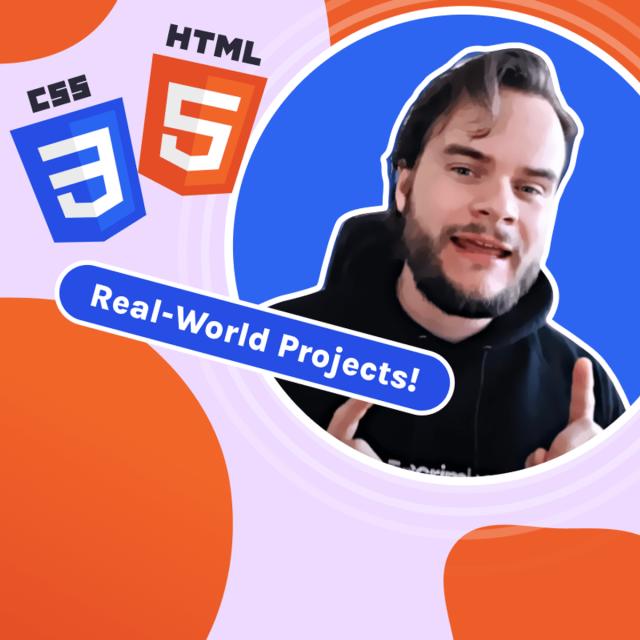
This course is perfect if you want to learn how to code websites from scratch. You will learn the basics of HTML and CSS through interactive challenges. Along the way, you will build multiple projects, like a Google.com clone, a Space Exploration page, and a fun birthday site filled with GIFs. While most of the challenges are done in Scrimba's interactive editor, you will also learn how to use professional tools like VS Code for code editing, GitHub for hosting your code, and Netlify for deploying your projects to the world wide web.

Class Deals by MOOC List - Click here and see Coursera's Active Discounts, Deals, and Promo Codes.

What You Will Learn

  • How to code websites from scratch with HTML and CSS
  • How to build beautiful layouts using color palettes, fonts, images, and other styling techniques
  • How to use professional tools for code editing, collaboration, and deployment

Syllabus

WEEK 1
Build and deploy your first website
In this module, you will learn the basics of HTML through interactive coding challenges. At the end, you will build a personal website that we will deploy to the web so that you can share with the world.

WEEK 2
Build a Google.com Clone
In this module, you will learn the basics of CSS by building a clone of the Google.com homepage.

WEEK 3
Build a Digital Business Card
In this module, you will deepen your CSS skills by building a digital business card for yourself.

WEEK 4
Build a Space Exploration Site
In this module, you will build a website about space exploration. It will teach you several techniques for making your projects look beautiful and polished.

WEEK 5
Build a Birthday GIFt Site
In this module, you will build a fun website that you can use for a friend or family member's birthday. You will deepen your layout skills and learn how to get setup with a local development environment.

Go to Class
MOOC List is learner-supported. When you buy through links on our site, we may earn an affiliate commission.

Related Courses

Using Python to Interact with the Operating System (Coursera) Coursera
Google

Using Python to Interact with the Operating System (Coursera)

By the end of this course, you’ll be able to manipulate files and processes on your computer’s operating system. You’ll also have learned about regular expressions -- a very powerful tool for processing text files -- and you’ll get practice using the Linux command line on a virtual machine. And, this might feel like a stretch right now, but you’ll also write a program that processes a bunch of errors in an actual log file and then generates a summary file. That’s a super useful skill for IT Specialists to know.

Jun 23rd 2026
5-12 Weeks
TDD - Desenvolvimento de Software Guiado por Testes (Coursera) Coursera
Instituto Tecnológico de Aeronáutica

TDD - Desenvolvimento de Software Guiado por Testes (Coursera)

Neste curso, assumimos que você já sabe projetar e desenvolver programas mais complexos em Java, com método e organização graças às boas práticas e princípios exercitados no curso anterior; mas você talvez não se sinta ainda confortável em projetar programas usando técnicas ágeis, como o desenvolvimento guiado por testes (TDD).

Jun 22nd 2026
4 Weeks
The Data Scientist's Toolbox (Coursera) Coursera
Johns Hopkins University

The Data Scientist's Toolbox (Coursera)

In this course you will get an introduction to the main tools and ideas in the data scientist's toolbox. The course gives an overview of the data, questions, and tools that data analysts and data scientists work with. There are two components to this course. The first is a conceptual introduction to the ideas behind turning data into actionable knowledge. The second is a practical introduction to the tools that will be used in the program like version control, markdown, git, GitHub, R, and RStudio.

Jun 22nd 2026
4 Weeks
Functional Program Design in Scala (Coursera) Coursera
École Polytechnique Fédérale de Lausanne

Functional Program Design in Scala (Coursera)

In this course you will learn how to apply the functional programming style in the design of larger applications. You'll get to know important new functional programming concepts, from lazy evaluation to structuring your libraries using monads. We'll work on larger and more involved examples, from state space exploration to random testing to discrete circuit simulators. You’ll also learn some best practices on how to write good Scala code in the real world.

Jun 22nd 2026
5-12 Weeks
Cloud Computing Concepts, Part 1 (Coursera) Coursera
University of Illinois at Urbana-Champaign

Cloud Computing Concepts, Part 1 (Coursera)

Cloud computing systems today, whether open-source or used inside companies, are built using a common set of core techniques, algorithms, and design philosophies—all centered around distributed systems. Learn about such fundamental distributed computing "concepts" for cloud computing. Some of these concepts include: clouds, MapReduce, key-value/NoSQL stores, classical distributed algorithms, widely-used distributed algorithms, scalability, trending areas, and much, much more!

Jun 22nd 2026
5-12 Weeks
Object Oriented Programming in Java (Coursera) Coursera
University of California, San Diego

Object Oriented Programming in Java (Coursera)

Welcome to our course on Object Oriented Programming in Java using data visualization. People come to this course with many different goals -- and we are really excited to work with all of you! Some of you want to be professional software developers, others want to improve your programming skills to implement that cool personal project that you’ve been thinking about, while others of you might not yet know why you’re here and are trying to figure out what this course is all about.

Jun 22nd 2026
5-12 Weeks
Introduction to Web Development (Coursera) Coursera
University of California, Davis

Introduction to Web Development (Coursera)

This course is designed to start you on a path toward future studies in web development and design, no matter how little experience or technical knowledge you currently have. The web is a very big place, and if you are the typical internet user, you probably visit several websites every day, whether for business, entertainment or education. But have you ever wondered how these websites actually work? How are they built? How do browsers, computers, and mobile devices interact with the web? What skills are necessary to build a website? With almost 1 billion websites now on the internet, the answers to these questions could be your first step toward a better understanding of the internet and developing a new set of internet skills.

Jun 22nd 2026
5-12 Weeks
Creative Programming for Digital Media & Mobile Apps (Coursera) Coursera
University of London,Goldsmiths, University of London

Creative Programming for Digital Media & Mobile Apps (Coursera)

This course is for anyone who would like to apply their technical skills to creative work ranging from video games to art installations to interactive music, and also for artists who would like to use programming in their artistic practice. This course will teach you how to develop and apply programming skills to creative work. This is an important skill within the development of creative mobile applications, digital music and video games. It will teach the technical skills needed to write software that make use of images, audio and graphics, and will concentrate on the application of these skills to creative projects. Additional resources will be provided for students with no programming background.

Jun 22nd 2026
5-12 Weeks
Parallel Programming in Java (Coursera) Coursera
Rice University

Parallel Programming in Java (Coursera)

This course teaches learners (industry professionals and students) the fundamental concepts of parallel programming in the context of Java 8. Parallel programming enables developers to use multicore computers to make their applications run faster by using multiple processors at the same time. By the end of this course, you will learn how to use popular parallel Java frameworks (such as ForkJoin, Stream, and Phaser) to write parallel programs for a wide range of multicore platforms including servers, desktops, or mobile devices, while also learning about their theoretical foundations including computation graphs, ideal parallelism, parallel speedup, Amdahl's Law, data races, and determinism.

Jun 22nd 2026
4 Weeks