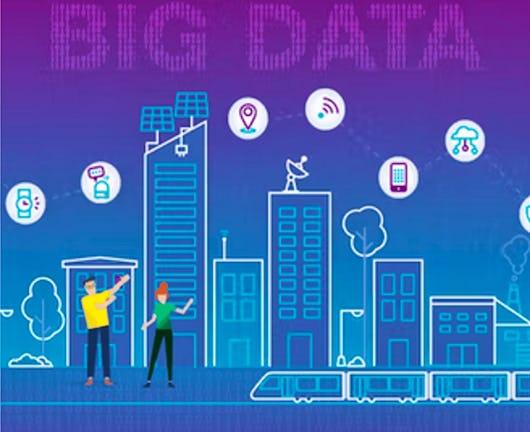
Digital transformation of megapolises: from zero to #1 in UN digital e-government ranking (Coursera)

Digital transformation of megapolises: from zero to #1 in UN digital e-government ranking (Coursera)

This course will help you to navigate ambiguity in definitions of "Smart City". You can review successful cases and practices of different approaches to transformation management, determine the potential of your city in the digital transformation, as well as find useful practical advices on search for funding of various digital projects in your city. In addition, lecturers introduce you with formation of Smart City structure and infrastructure from the officials’ point of view.

Class Deals by MOOC List - Click here and see Coursera's Active Discounts, Deals, and Promo Codes.

If you are already an expert in the field of Smart Cities, the course will give you the opportunity to assess your strengths and to improve knowledge in this field. You will gain additional skills in managing digital transformation programs with real examples, as well as you will be acquainted with communication methods and marketing of government projects.

Syllabus

WEEK 1
Introduction.
In this module we meet the authors of the course and together will consider the main definitions and approaches to the smart city and examples of smart cities around the world. We will deal with the question of whether there is a universal approach to defining smart cities.

WEEK 2
Smart City structure/architecture.
During this module we will understand what parts of the smart city structure are built from. Which areas are affected by digitalization and what consequences it will have for the residents. We will consider the world practices of digitalization of various spheres of urban life and projects implemented in Moscow in detail. We will talk about the controversial issue of electronic voting on concrete examples.

WEEK 3
Efficient government.
Building an Effective Government will be considered this week. Good governance requires effective government. Organization of urban economy is essential for effective activity. First of all, we need for effective solutions in the sphere of service provision. It is the urban economy and finance and the provision of modern equipment for civil servants. We’ll look at the urban economy parts: cloud accounting, open budget and e-procurement.

WEEK 4
Smart City infrastructure
This module will cover three main sections: physical infrastructure, logical infrastructure and data infrastructure. Let's look at constituents of the ICT infrastructure and how to form it. We will also study the cybersecurity issues in smart city.

WEEK 5
City digital transformation program.
We will consider the goals of digital transformation, key performance indicators: how they are defined by cities, what KPI systems exist in the direction of a smart city. We will also consider models of smart city maturity, approaches to digital transformation on the example of Moscow and New York. We will study the stages of digital transformation program creation, possible structures of digitalization management or IT industry in the city.

WEEK 6
Financial mechanisms of digital transformation program realization.
We will consider the main types of contracts (classical contract, service contract, concession, etc.), advantages and disadvantages and concrete examples of the application of various contracts. We will also consider possible ways of implementing a project with limited financing (PPP, business implementation), as well as attracting money to the budget through digitalization.

WEEK 7
Implementing disruptive technologies to urban management.
On this week we will look at disruptive technologies - there are key technology trends which set the vector for the development of the world's smart cities. They support, and often ensure the functioning of many smart initiatives, and affect all spheres of public life. Let's look at concrete examples of the application of various types of end-to-end technologies in cities around the world.

WEEK 8
City digital transformation projects success factors.
On the last week we will answer to the questions:
What are the main problems which may arise on the path of digital transformation? How to build an effective marketing or promotion system for the city and urban services? What we know about the citizen? Why is communication matrix needed and how is it formed? What indices can we use for the evaluation of smart city projects?

Go to Class
MOOC List is learner-supported. When you buy through links on our site, we may earn an affiliate commission.

Related Courses

Age of Cathedrals (Coursera) Coursera
Yale University

Age of Cathedrals (Coursera)

An introduction to some of the most astonishing architectural monuments the world has ever known—Gothic cathedrals. We shall study the art, literature, intellectual life, economics, and new social arrangements that arose in the shadow of the cathedrals and that were such an important part of the revival of cities in the twelfth and thirteenth centuries. The goal of the course is a better appreciation of the High Middle Ages, a world that is still recognizably our own.

Aug 31st 2026
5-12 Weeks
Digitalisation in the Aerospace Industry (Coursera) Coursera
Technische Universität München - TUM

Digitalisation in the Aerospace Industry (Coursera)

The online course Digitalisation in Aerospace aims at making you aware of special production requirements connected with digitalisation. You will learn about the role of robotics and automation in manufacturing and gain a better understanding of differing perspectives on research and manufacturing as well as the points where these intersect.

Sep 7th 2026
3 Weeks
Art and the Digital Transformation (Coursera) Coursera
Copenhagen Business School

Art and the Digital Transformation (Coursera)

More than two decades into the new millennium, it is difficult to envision a future in which digital technologies do not play a significant role. Digital technologies frequently make a lot of promises. However, in recent years, we have seen an increasing number of artists address fundamental issues of the Digital Transformation, such as surveillance, lack of representation, and digital illiteracy. Artists have demonstrated that, while digital technologies have the potential to support processes leading to greater equality, they are frequently viewed as perpetuating and even exacerbating inequalities.

Sep 7th 2026
5-12 Weeks
Strengthening territorial response for better health (Coursera) Coursera
Politecnico di Milano

Strengthening territorial response for better health (Coursera)

This course was developed by the reference network for the European Regional and Local Health Authorities (EUREGHA), Agència de Qualitat i Avaluació Sanitàries de Catalunya (AQuAS), and Mental Health Europe (MHE) as part of the research project 'Pan-European Response to the Impacts of the COVID-19 and future Pandemics and Epidemics' (PERISCOPE).

Sep 21st 2026
4 Weeks
Digital Competition in Financial Services (Coursera) Coursera
Copenhagen Business School

Digital Competition in Financial Services (Coursera)

Welcome to Digital Transformation Strategy! As you probably know, this is the first course in a three part specialization focused on the digital transformation of finance. We'll aim to bring you insights about how digitalization intersects with finance, culled from one of the world's top regions for digital innovation. I'm excited to have you in the class and look forward to helping you learn more about this important topic.

Sep 7th 2026
4 Weeks
Perspectives in Digital Transformation: Agribusiness (Coursera) Coursera
Inter-American Development Bank - IDB

Perspectives in Digital Transformation: Agribusiness (Coursera)

In this course, you will be learn how to apply the best practices that have been tested by global companies to make the most of the potentialities of digital transformation and its application to your business. Discover what the level of digital maturity is for your organization by identifying current trends in digital transformation, the use of technologies, and the impact on sustainability in the agribusiness sector in Latin America.

Sep 14th 2026
3 Weeks
Cities are back in town : sociologie urbaine pour un monde globalisé (Coursera) Coursera
Sciences Po

Cities are back in town : sociologie urbaine pour un monde globalisé (Coursera)

La mondialisation et l'européanisation favorisent le développement rapide des villes à travers le monde. L'urbanisation atteint de nouveaux sommets aujourd’hui avec l'essor des mégacités (plus de 15 millions d'habitants) comme Calcutta, Los Angeles, Dhaka, Le Caire, Tokyo, New York, Shanghai, Mexico ou Séoul. Au-delà de la métropole moderne, les chercheurs tentent de donner un sens à ces grandes régions urbaines au moyen de concepts divers tels que « post-métropoles », « villes globales », et « régions métropolitaines globales ».

Sep 21st 2026
5-12 Weeks
El Abogado del Futuro: Legaltech y la Transformación Digital del Derecho (Coursera) Coursera
Universidad Austral

El Abogado del Futuro: Legaltech y la Transformación Digital del Derecho (Coursera)

La revolución digital cambió nuestra manera de comunicarnos, de comerciar y de relacionarnos. Ahora, está llegando al mundo del derecho. Este programa te ofrecerá una visión amplia de las principales tendencias que están afectando a la industria legal: - El nacimiento del mercado de legaltech y la aplicación de tecnología en el derecho. - El rol de la inteligencia artificial en la automatización del trabajo de los abogados. - La tecnología de blockchain y su impacto en la forma en que firmamos y ejecutamos contratos. - Las iniciativas para asegurar el acceso a la justicia a través de cortes virtuales y jueces robot.

Sep 7th 2026
5-12 Weeks
Transforming with Data Analytics and Organization (Coursera) Coursera
University of Maryland, College Park

Transforming with Data Analytics and Organization (Coursera)

This course will give you a framework to help you successfully navigate the challenges posed by digital transformation. First, we will discuss how to use the organization's dynamic capabilities to start the digital transformation. Second, we will use fitness landscapes to build a competitive digital business model. Finally, we will implement a strategic foresight function to help evolve the digital business model for the organization's continued success.

Sep 7th 2026
5-12 Weeks
How Technology Will Shape Marketing with Jagdish Sheth (Coursera) Coursera
University System of Georgia

How Technology Will Shape Marketing with Jagdish Sheth (Coursera)

This course explains how digital technology is transforming marketing. It focuses on how technology will enable salespeople from selling products to becoming trusted advisors for customers, especially in financial and health services. Technology will also impact all 4 P’s of Marketing from product, promotion, price, and distribution, especially with the rise of e-commerce. For example, pricing will become more dynamic in a real-time basis based on demand and supply, and we will switch to digital advertising from print and television advertising.

Sep 7th 2026
3 Weeks
Introduction to Digital Transformation Part 1 (Coursera) Coursera
Darden School of Business, University of Virginia

Introduction to Digital Transformation Part 1 (Coursera)

This course was designed to introduce the key components of digital transformation so you can understand the drivers and economics of innovation and technological change to create competitive advantage in your own industry. You'll learn the business value of data and how the exponential growth in core technologies such as artificial intelligence and autonomy are impacting the nature of competition.

Sep 7th 2026
4 Weeks
Transformación digital (Coursera) Coursera
University of Virginia,Boston Consulting Group - BCG

Transformación digital (Coursera)

La transformación digital es un tema de gran interés, pero ¿qué es exactamente y qué significa para las compañías? En este curso, desarrollado en la Darden School of Business en la Universidad de Virginia y dirigido por los mejores profesores de Darden y expertos en gestión global de Boston Consulting Group, hablamos de transformación digital de dos maneras. Primero discutimos el ritmo del cambio y el imperativo que crea para las empresas. Luego, brindamos el contexto para esta transformación y lo que se necesita para ganar en la era digital.

Sep 7th 2026
4 Weeks