EdX

Developing the Risk Management Plan with Expert Judgement (edX)

Developing the Risk Management Plan with Expert Judgement (edX)

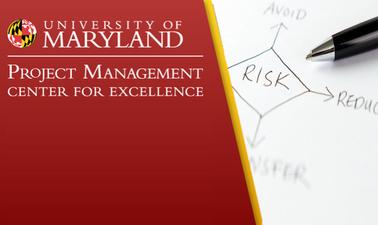
Every project faces risk. The project risk management plan (PRMP) is the fundamental instrument for identifying risks, managing, and responding. Projects based on new technology or new markets face the chance of those opportunities failing in some way. Learn how to leverage expert judgement to properly formulate a winning PRMP.

Class Deals by MOOC List - Click here and see EdX's Active Discounts, Deals, and Promo Codes.

Project risk management involves identifying, assessing, quantifying, modeling, and managing risks that may face a project. Complex projects face the challenge of accurately estimating costs and completion times, or even of failing to deliver outcomes as planned. Even the simplest projects always have some element of risk.
Ways are needed to identify and manage risks to prevent project failure. A risk plan is the way to lessen the chance of adverse outcomes.
The project risk management plan is the fundamental instrument for identifying elements and activities of project risk management, establishing risk breakdown structures, quantifying the extent of risk, and planning a mitigation strategy.
The initial step in planning for project risk management is developing the risk register. A risk register is a detailed inventory of things that could go wrong. The risk register provides a plan to follow the project through completion.
Assigning probabilities and consequences to the many items in the risk register is in itself challenging. Contemporary lessons from cognitive psychology and behavioral economics provide insights into how to do so.
Finally, the project manager must consider the best responses to risk including how to avoid, mitigate, plan contingencies, or transfer the risk. There are many ways to re-organize the project and ownership of risk, as well as adjust how the project objective is achieved.
This course is part of the Project Risk Management: Effective Decision Making Strategies Professional Certificate.

What you'll learn

  • The fundamentals of risk management and their importance to projects
  • How to build a project risk management plan
  • How to develop a risk register and framework for project risk
  • How to use expert judgement to assign risk impacts and likelihoods to prioritize and address project risk
  • How to adjust for our understanding of risk over time
  • How to think about project risk response strategies

Syllabus

Week 1: What is Risk
Week 2: Risk Management Plan
Week 3: Epistemic Probability.
Week 4: Noise in Subjective Judgement.
Week 5: Risk Transfer


Go to Class
MOOC List is learner-supported. When you buy through links on our site, we may earn an affiliate commission.

Related Courses

Sustainable Urban Development (edX) EdX
Wageningen University,Delft University of Technology,DelftX,WageningenX

Sustainable Urban Development (edX)

Learn why cities are key in resolving global urbanization and sustainability challenges and how you can engineer tomorrow’s cities today. Did you know that cities take up less than 3% of the earth’s land surface, but more than 50% of the world’s population live in them? And, cities generate more than 70% of the global emissions? Large cities and their hinterlands (jointly called metropolitan regions) greatly contribute to global urbanization and sustainability challenges, yet are also key to resolving these same challenges.

Self Paced
Self-Paced
Responsible Innovation: Ethics, Safety and Technology (edX) EdX
Delft University of Technology,DelftX

Responsible Innovation: Ethics, Safety and Technology (edX)

How to deal with risks and ethical questions raised by development of new technologies. There is no doubt that technological innovation is one of the key elements driving human progress. However, new technologies also raise ethical questions, have serious implications for society and the environment and pose new risks, often unknown and unknowable before the new technologies reach maturity.

This course is archived
5-12 Weeks
Sustainable Supply Chain Planning, Sourcing, and Procurement (edX) EdX
International Supply Chain Education Alliance,ISCEA

Sustainable Supply Chain Planning, Sourcing, and Procurement (edX)

Learn the fundamental concepts of planning, sourcing, and procurement with applied sustainable techniques. The course will begin with content on how to integrate sustainability and circularity into planning and sourcing. The course demonstrates the importance of efficiency and long-term planning to ensure the minimization of waste and the maximization of productive Supply Chain flow.

Self Paced
Self-Paced
Foundations of Finance (edX) EdX
University of Cambridge

Foundations of Finance (edX)

This course provides a rigorous, but straightforward, introduction to the key concepts of financial understanding. Using real-world case studies and practitioner interviews, as well as timely knowledge checks, you will integrate your new knowledge and problem solving skills with practical application. No prior knowledge is required or assumed.

Self Paced
Self-Paced
Cybersecurity Risk Management (edX) EdX
Rochester Institute of Technology,RITx

Cybersecurity Risk Management (edX)

Learn key principles of risk analysis, risk assessment and risk mitigation for information security using both qualitative and quantitative methodologies. Cybersecurity risk management guides a growing number of IT decisions. Cybersecurity risks continue to have critical impacts on overall IT risk modeling, assessment and mitigation.

Aug 17th 2026
5-12 Weeks
Herramientas y Metodologías de Gestión de Proyectos (edX) EdX
Universidad Nacional de Córdoba,UNCordobaX

Herramientas y Metodologías de Gestión de Proyectos (edX)

Este curso ahonda en las competencias blandas necesarias para gestionar eficientemente un proyecto. y en dos factores críticos al momento de implementar un proyecto como lo son el tiempo y los riesgos asociados. A su vez, presenta documentación y herramientas propias de la gestión de proyectos, las cuales resumen todos los factores que hacen a una correcta formulación e implementación y permiten por ende, tener una visión integral del proyecto.

Self Paced
Self-Paced