Design of CPS with ARM processor using Embedded C (Coursera)

Offered by L&T EduTech,
Design of CPS with ARM processor using Embedded C (Coursera)

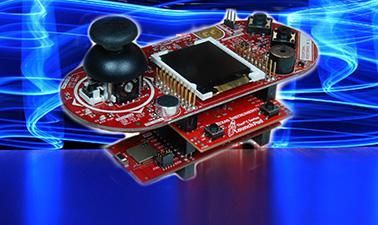
This comprehensive course is designed to equip participants with the knowledge and practical skills required to design and implement Cyber-Physical Systems (CPS) tailored for industrial applications. From foundational concepts to hands-on development using Embedded C programming on ARM processors, participants will explore the interdisciplinary nature of CPS, demystify its complexities, and gain the expertise needed to navigate the evolving landscape of smart systems.

Class Deals by MOOC List - Click here and see Coursera's Active Discounts, Deals, and Promo Codes.

This course is part of the VLSI chip design with CPS for Industrial Applications Specialization.

Syllabus

Demystifying Cyber Physical Systems (CPS)
This module aims to provide a comprehensive understanding of Cyber-Physical Systems (CPS) by exploring its various facets. From the foundational components of embedded processors and memory systems to advanced topics such as wireless communication, cybersecurity, and cloud-edge computing, participants will gain insights into the interdisciplinary nature of CPS. Through a blend of theoretical concepts and practical applications, this module aims to demystify the complexities of CPS, enabling participants to navigate the evolving landscape of smart systems.

Demo on Design and Development of CPS Components in Industrial Applications using Embedded C
This module provides a hands-on approach to the design and development of Cyber-Physical Systems (CPS) components in industrial applications using Embedded C programming. Participants will delve into the intricacies of Advanced RISC Machines (ARM) architectures, with a specific focus on the STM32F4XX Microcontroller. The module covers practical aspects such as getting started with the IAR Embedded Workbench, interfacing ARM Cortex Processors with various peripherals, and developing drivers for essential components like UART, ADC, LCD, Matrix Key, Buzzer, Relay, and STEPPER Motor. Through a series of demonstrations, participants will gain practical insights into implementing CPS components for real-world industrial applications.

Demo on Design and Development of CPS Components in Industrial Sensors and Control using Embedded C-I
This module offers a hands-on exploration of the design and development of Cyber-Physical Systems (CPS) components for industrial sensors and control, focusing on practical applications using Embedded C programming. Participants will delve into the architecture of the STM32F103F, an ARM Cortex processor, and gain practical insights by working with the STM Cube IDE. The module includes demonstrations on interfacing sensors such as OLED, Humidity & Temperature Sensor, Ultrasonic Distance Sensor, and Hall effect sensor with the ARM Cortex processor. Participants will acquire skills to implement real-world CPS components for industrial sensor applications.

Demo on Design and Development of CPS Components in Industrial Sensors and Control using Embedded C-II
Building on the foundations laid in the first part of the module, "Demo on Design and Development of CPS Components in Industrial Sensors and Control using Embedded C," this second part continues the exploration of practical applications in industrial sensors and control. Participants will engage in hands-on demonstrations and learn how to interface various sensors — Sound, Current, Voltage, Soil Moisture, Tilt, and Touch — with an ARM Cortex processor. Through these practical sessions using Embedded C programming, participants will deepen their understanding of sensor integration and control mechanisms in Cyber-Physical Systems (CPS) for industrial applications.
Go to Class
MOOC List is learner-supported. When you buy through links on our site, we may earn an affiliate commission.

Related Courses

Real-Time Embedded Systems Concepts and Practices (Coursera) Coursera
University of Colorado Boulder

Real-Time Embedded Systems Concepts and Practices (Coursera)

This course can also be taken for academic credit as ECEA 5315, part of CU Boulder’s Master of Science in Electrical Engineering degree. Course Description: In this course, students will design and build a microprocessor-based embedded system application using a real-time operating system or RT POSIX extensions with Embedded Linux. The course focus is on the process as well as fundamentals of integrating microprocessor-based embedded system elements for digital command and control of typical embedded hardware systems.

Jun 22nd 2026
4 Weeks
Introduction to Architecting Smart IoT Devices (Coursera) Coursera
EIT Digital

Introduction to Architecting Smart IoT Devices (Coursera)

Embedded Systems are so ubiquitous that some of us take them for granted: we find them in smartphones, GPS systems, airplanes and so on. But have you ever wondered how these devices actually work? If so, you're in the right place! In this course, you'll learn about the characteristics of embedded systems: the possibilities, dangers, complications and recipes for success.

Jun 15th 2026
3 Weeks
Design and Prototype Embedded Computer Systems (FutureLearn) FutureLearn
Raspberry Pi Foundation,National Centre for Computing Education

Design and Prototype Embedded Computer Systems (FutureLearn)

Discover embedded system design and work your way through the product design lifecycle. Supported by Google. Learn how to design your own embedded system. On this course from the Raspberry Pi Foundation, you will explore how embedded systems are used in the world around us. You will learn what makes an embedded system different from a general purpose system (such as a PC) and discover how embedded systems are specialised for a particular use case.

Nov 1st 2021
3 Weeks
Let Us PIC: A Datasheet Approcah for PIC Programming (Skillshare) Skillshare
Skillshare

Let Us PIC: A Datasheet Approcah for PIC Programming (Skillshare)

This course introduces basic concepts of PIC micro-controller programming using C. Starting from installation of required software, this course gives insight of programming the PIC microcontroller to access General Purpose Input Output (GPIO) pins, Configuring external interrupts, Timers and counters, ADCs, LCD and Keypad interfacing, PWM generation and few communication protocols like UART, I2C and SPI.

Self Paced
Self-Paced
System Validation (Canvas Network) Canvas Network
Halmstad University

System Validation (Canvas Network)

Anyone who has ever designed an embedded system or a communication protocol involving several components executing simultaneously knows that such software is inherently susceptible to bugs. Typical problems include race conditions, deadlocks, and unexpected interplay between different components. The parallel nature of these systems makes it notoriously hard to detect such bugs using testing (timing, e.g., plays a crucial role). This course is designed to provide an introduction to the problems that arise in the design of such systems. It provides ways to model such systems and reason about them.

Self Paced
Self-Paced
Systèmes embarqués et objets connectés - Démarche de conception (FUN) FUN
Université Fédérale Toulouse Midi-Pyrénées

Systèmes embarqués et objets connectés - Démarche de conception (FUN)

Coproduit par l'INP Toulouse et l'INSA Toulouse, ce MOOC constitue un module de positionnement général des systèmes embarqués et objets connectés dans leurs contextes opérationnels. Fortement novateur, il aborde ces systèmes selon un ensemble de points de vue pluridisciplinaires. L'objectif de ce MOOC est de vous permettre d'acquérir une démarche méthodologique, de mettre en place une pensée globale prenant en compte l'écosystème du domaine des systèmes embarqués et objets connectés dans une finalité de compréhension générale du système.

No sessions available
5-12 Weeks
Embedded Systems Essentials with Arm: Get Practical with Hardware (edX) EdX
Arm Education,ArmEducationX

Embedded Systems Essentials with Arm: Get Practical with Hardware (edX)

Spark your creativity with Arm. Level up your Embedded Systems skills by developing working embedded prototypes using the Mbed API and an Arm-based development board, and unlock the boundless opportunities of the Internet of Things. Embedded systems are the fundamental building blocks of our connected world, and Arm-based devices are the industry standard. This course will provide you with the practical skills and confidence to build your own embedded system using the popular and affordable ST Nucleo F401RE development board.

Self Paced
Self-Paced
Modeling of Autonomous Systems (Coursera) Coursera
University of Colorado Boulder

Modeling of Autonomous Systems (Coursera)

This course will explain the core structure in any autonomous system which includes sensors, actuators, and potentially communication networks. Then, it will cover different formal modeling frameworks used for autonomous systems including state-space representations (difference or differential equations), timed automata, hybrid automata, and in general transition systems. It will describe solutions and behaviors of systems and different interconnections between systems.

Jun 1st 2026
4 Weeks
Modeling and Debugging Embedded Systems (Coursera) Coursera
University of Colorado Boulder

Modeling and Debugging Embedded Systems (Coursera)

This is part 3 of the specialization. In this course students will learn : * About SystemC and how it can be used to create models of cyber-physical systems in order to perform "what-if" scenarios; * About Trimble Engineering's embedded systems for heavy equipment automation; * A deeper understanding of embedded systems in the Automotive and Transportation market segment; * How to debug deeply embedded systems; * About Lauterbach's TRACE32 debugging tools; * How to promote technical ideas within a company; * What can be learned from studying engineering failures.

Jun 15th 2026
4 Weeks