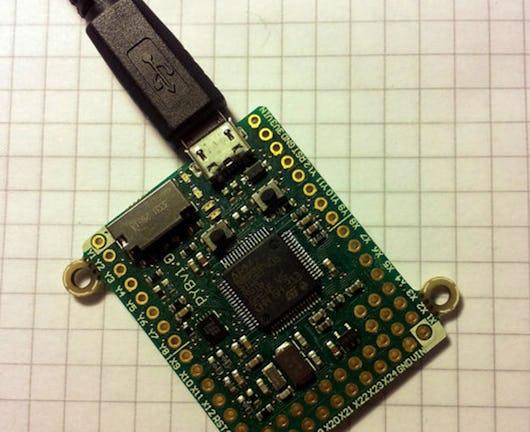
CPS Design with ARM Core using MicroPython for Industries (Coursera)

Offered by L&T EduTech,
CPS Design with ARM Core using MicroPython for Industries (Coursera)

This course equips participants with the knowledge and hands-on skills needed to design and implement ARM Processor with Micro python in Cyber-Physical Systems (CPS) for industrial and use. Covering foundational concepts and practical development with Micro python programming on ARM processors, participants will explore the Consumer Industry, Smart City Perspective of CPS, and gain expertise to design and control the evolving smart systems.

Class Deals by MOOC List - Click here and see Coursera's Active Discounts, Deals, and Promo Codes.

Participants will gain insights of Raspberry Pi Pico, Thonny IDE and Installing Micro Python for Pico and delve deep into the exploration of embedded systems in CPS. This covers 16x2 LCD Display using I2C Protocol, Interfacing ADC with Pico and displaying in OLED, Simple Weather Monitoring System, Interfacing Bluetooth with Pico and various embedded control systems for washing machine, design of Coffee machine, Vacuum cleaner and more using embedded system. Refrigeration Appliances, Weigh-In-Motion, induction, microwave oven. Furthermore, they will intricate concepts of civil structures, importance of sensors in smart civil structures and various controlling devices and systems for smart civil structures, gain knowledge in Smart city structures includes smart waste management, detection of underground utilities, smart metering and wireless occupancy and surveillance.
This course is part of the VLSI chip design with CPS for Industrial Applications Specialization.

Syllabus

Design of Cyber Physical System with ARM processor using Micropython Programming for Industrial Applications
This module offers a comprehensive journey into the world of embedded systems using Raspberry Pi Pico. This module aims to give participants a solid grasp of Raspberry Pi Pico, covering the basics and diving into practical programming with Thonny IDE software and Micro Python. Explore hands-on demonstrations, from controlling LEDs to connecting external components and creating responsive systems like traffic lights. The module wraps up with a deep dive into integrating PIR sensors, explaining their features, functions, and practical use in exciting embedded projects.

Demo on Design and Development of CPS Components in Industrial Applications using Micropython Programming-II
Immerse yourself in advanced peripheral interfacing with Raspberry Pi Pico. This module explores diverse components, from LCD displays, Analog to Digital Converters (ADCs), Ultrasonic Distance Sensors, to Bluetooth interfaces. Through hands-on programming in Micro Python using Thonny IDE, participants will gain practical insights into interfacing and controlling these peripherals, paving the way for sophisticated projects and applications.

CPS from embedded perspective in Consumer Industry-I
Embark on a comprehensive exploration of advanced applications in embedded systems, unraveling the intricate roles and working principles of various devices. This module navigates through diverse topics, including the fundamental components of washing machines, smart vacuum cleaners, and smart speakers. Participants will delve into the significance of microcontrollers, motors, communication protocols, and automation advantages, extending the scope to specialized domains like coffee machines, smart homes, and smart petrol filling stations. The module offers a holistic view of the evolving landscape of embedded systems, emphasizing real-world applications and emerging technologies.

CPS from embedded perspective in Consumer Industry-II
Embark on an exploration of advanced technologies embedded in modern home appliances. This module covers the basics of refrigeration cycles, providing a functional overview of refrigeration systems. Participants will delve into the working principles of BLDC motors and their application in smart refrigerators. The module then shifts focus to weigh-in-motion technology, detailing static and dynamic types and the crucial role of sensors. Further, it covers the essentials of induction cooktops, microwave ovens, and smartwatches. Participants will gain insights into the cyber-physical components of smart home automation, concluding with the practical application of building a home automation prototype.

CPS from Embedded Perspective
This module delves into the pivotal role of smart civil structures in the contemporary era, emphasizing their importance and the fundamental components that define them. Participants will gain insights into the various systems employed for vibration control, self-repairing mechanisms, and energy harvesting in smart civil structures. The basics of sensors and sensory systems, along with the working principles of different sensors, will be explored. The module will also cover seismic response control in civil structures, highlighting the significance of sensors, actuators, and dampers during seismic activities. Participants will understand the broad classification of damping devices and systems, delve into structural health monitoring, and grasp the intricacies of data processing, signal pre-processing, and vibrational control. The concept of energy harvesting and power supply for smart civil structures will be explained, providing a comprehensive overview of different energy harvesting systems.

CPS from Embedded Perspective for Smart City
This module explores the integration of smart systems in various aspects of urban infrastructure, ranging from traffic control to waste management, underground utilities, predictive maintenance, parking systems, metering applications, and occupancy monitoring. Participants will gain a comprehensive understanding of the concepts, architectures, and technologies that underpin these smart systems. The module covers the design processes for Converged Intelligent Transportation System (ITS) Architecture, smart waste management, underground utilities detection, and predictive maintenance. Additionally, it delves into smart parking systems, including RFID technology, LoRaWAN sensors, and the broader concept of smart metering for gas and water applications. The module concludes with an exploration of real-time occupancy monitoring systems and their key features.


Go to Class
MOOC List is learner-supported. When you buy through links on our site, we may earn an affiliate commission.

Related Courses

Industry 4.0: How to Revolutionize your Business (edX) EdX
The Hong Kong Polytechnic University,HKPolyUx

Industry 4.0: How to Revolutionize your Business (edX)

An introduction to the fourth industrial revolution, it's major systems and technologies and how new products and services will impact business and society. We have witnessed the power of mechanization in the early nineteen century, automation in the seventies, information and the internet in the last decades. But now, the adaptation of connected intelligence into the business and social fabrics is advancing at an astonishing speed, which will completely change the way we conduct business.

Self Paced
Self-Paced
Modeling and Debugging Embedded Systems (Coursera) Coursera
University of Colorado Boulder

Modeling and Debugging Embedded Systems (Coursera)

This is part 3 of the specialization. In this course students will learn : * About SystemC and how it can be used to create models of cyber-physical systems in order to perform "what-if" scenarios; * About Trimble Engineering's embedded systems for heavy equipment automation; * A deeper understanding of embedded systems in the Automotive and Transportation market segment; * How to debug deeply embedded systems; * About Lauterbach's TRACE32 debugging tools; * How to promote technical ideas within a company; * What can be learned from studying engineering failures.

Jun 15th 2026
4 Weeks
Embedded Systems Essentials with Arm: Get Practical with Hardware (edX) EdX
Arm Education,ArmEducationX

Embedded Systems Essentials with Arm: Get Practical with Hardware (edX)

Spark your creativity with Arm. Level up your Embedded Systems skills by developing working embedded prototypes using the Mbed API and an Arm-based development board, and unlock the boundless opportunities of the Internet of Things. Embedded systems are the fundamental building blocks of our connected world, and Arm-based devices are the industry standard. This course will provide you with the practical skills and confidence to build your own embedded system using the popular and affordable ST Nucleo F401RE development board.

Self Paced
Self-Paced
UX and Interface Design for Embedded Systems (Coursera) Coursera
University of Colorado Boulder

UX and Interface Design for Embedded Systems (Coursera)

UX and Interface Design for Embedded Systems is the first of three classes in the Embedded Interface Design (EID) specialization, an online version of the on-campus EID class taught in graduate embedded systems design. This first course is focused on user experience (UX) and the related methods, practices, and principles that will help ensure your embedded interface designs for devices and systems are what your users both need and want.

Jun 22nd 2026
5-12 Weeks
Let Us PIC: A Datasheet Approcah for PIC Programming (Skillshare) Skillshare
Skillshare

Let Us PIC: A Datasheet Approcah for PIC Programming (Skillshare)

This course introduces basic concepts of PIC micro-controller programming using C. Starting from installation of required software, this course gives insight of programming the PIC microcontroller to access General Purpose Input Output (GPIO) pins, Configuring external interrupts, Timers and counters, ADCs, LCD and Keypad interfacing, PWM generation and few communication protocols like UART, I2C and SPI.

Self Paced
Self-Paced
Design and Prototype Embedded Computer Systems (FutureLearn) FutureLearn
Raspberry Pi Foundation,National Centre for Computing Education

Design and Prototype Embedded Computer Systems (FutureLearn)

Discover embedded system design and work your way through the product design lifecycle. Supported by Google. Learn how to design your own embedded system. On this course from the Raspberry Pi Foundation, you will explore how embedded systems are used in the world around us. You will learn what makes an embedded system different from a general purpose system (such as a PC) and discover how embedded systems are specialised for a particular use case.

Nov 1st 2021
3 Weeks
Systèmes embarqués et objets connectés - Démarche de conception (FUN) FUN
Université Fédérale Toulouse Midi-Pyrénées

Systèmes embarqués et objets connectés - Démarche de conception (FUN)

Coproduit par l'INP Toulouse et l'INSA Toulouse, ce MOOC constitue un module de positionnement général des systèmes embarqués et objets connectés dans leurs contextes opérationnels. Fortement novateur, il aborde ces systèmes selon un ensemble de points de vue pluridisciplinaires. L'objectif de ce MOOC est de vous permettre d'acquérir une démarche méthodologique, de mettre en place une pensée globale prenant en compte l'écosystème du domaine des systèmes embarqués et objets connectés dans une finalité de compréhension générale du système.

No sessions available
5-12 Weeks
System Validation (Canvas Network) Canvas Network
Halmstad University

System Validation (Canvas Network)

Anyone who has ever designed an embedded system or a communication protocol involving several components executing simultaneously knows that such software is inherently susceptible to bugs. Typical problems include race conditions, deadlocks, and unexpected interplay between different components. The parallel nature of these systems makes it notoriously hard to detect such bugs using testing (timing, e.g., plays a crucial role). This course is designed to provide an introduction to the problems that arise in the design of such systems. It provides ways to model such systems and reason about them.

Self Paced
Self-Paced
Introduction to Architecting Smart IoT Devices (Coursera) Coursera
EIT Digital

Introduction to Architecting Smart IoT Devices (Coursera)

Embedded Systems are so ubiquitous that some of us take them for granted: we find them in smartphones, GPS systems, airplanes and so on. But have you ever wondered how these devices actually work? If so, you're in the right place! In this course, you'll learn about the characteristics of embedded systems: the possibilities, dangers, complications and recipes for success.

Jun 15th 2026
3 Weeks
Real-Time Embedded Systems Theory and Analysis (Coursera) Coursera
University of Colorado Boulder

Real-Time Embedded Systems Theory and Analysis (Coursera)

This course provides an in-depth and full mathematical derivation and review of models for scheduling policies and feasibility determination by hand and with rate monotonic tools along with comparison to actual performance for real-time scheduled threads running on a native Linux system.

Jun 22nd 2026
4 Weeks
Capstone: Autonomous Runway Detection for IoT (Coursera) Coursera
EIT Digital

Capstone: Autonomous Runway Detection for IoT (Coursera)

The students will develop a larger system using the learning outcomes from these courses, and the students will evaluate the developed system in a real-world programming environment. This course is a true engineering task in which the student must, not only implement the algorithm code, but also handle the interfaces between many different actors and hardware platforms.

Jun 15th 2026
3 Weeks