Design Computing: 3D Modeling in Rhinoceros with Python/Rhinoscript (Coursera)

Design Computing: 3D Modeling in Rhinoceros with Python/Rhinoscript (Coursera)

Why should a designer learn to code? As our world is increasingly impacted by the use of algorithms, designers must learn how to use and create design computing programs. Designers must go beyond the narrowly focused use of computers in the automation of simple drafting/modeling tasks and instead explore the extraordinary potential digitalization holds for design culture/practice.

Class Deals by MOOC List - Click here and see Coursera's Active Discounts, Deals, and Promo Codes.

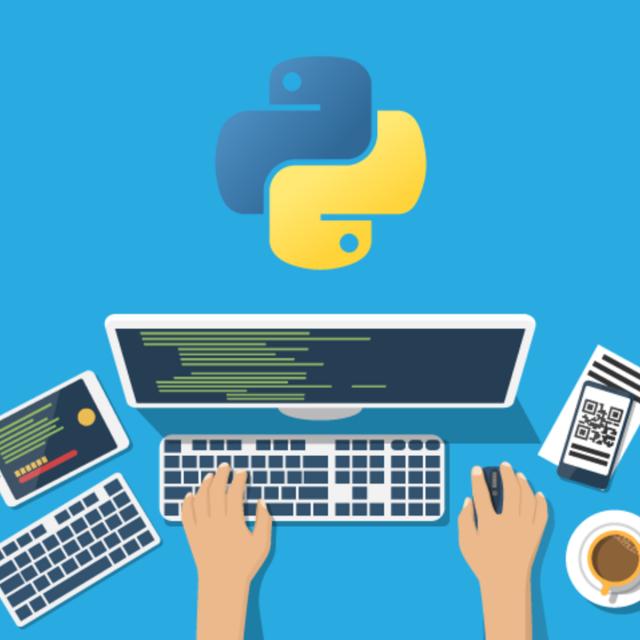
Structured around a series of fundamental design problems, this course will show you Python code in terms of its rules and syntax, and what we can do with it in its application and design. So, by the end of this course, you will know the fundamentals of Python and Rhino script, but importantly, through the lens of their application in geometrically focused design lessons and exercises.
Subjects covered in this course

  • An introduction to Design Computing as a subject and why designers should learn to code.
  • The fundamentals of coding in the Python scripting language. By the end of the course students will be familiar with the basic structure and syntax of this language.
  • The understanding and application of Rhinoscriptsyntax, a native coding language in Rhinoceros that’s imported into Python, which allows one to create and control geometries through authoring code.
  • The application of Procedural Logics - the structuring of coding systems to produce variable geometric form.
  • The output of geometries in still and animate forms.

Syllabus

WEEK 1
Following an introduction to the fundamentals of the interface and explaining what code does, we will look at Variables and Points, the building blocks of code and geometry.

WEEK 2
The heart of code
This week we dive deeply into the specific elements of Python coding and explore the possibilities of using them to create more complex and variable geometric systems.

WEEK 3
Expanding possibilities
Building on the material from the previous two weeks we will expand the possibilities and interconnectivity of our geometric systems by introducing higher level elements of Python code.

WEEK 4
3 dimensional structures
This week we jump into 3D and explore the design possibilities of 3D matrix structures culminating in the design of a wall structure.

WEEK 5
Surfaces as geometry generators
In this final week we will explore the possibilities of NURB surfaces as generative base geometries and complete the course with a tower project.

Go to Class
MOOC List is learner-supported. When you buy through links on our site, we may earn an affiliate commission.

Related Courses

Architecting Smart IoT Devices (Coursera) Coursera
EIT Digital

Architecting Smart IoT Devices (Coursera)

This course will teach you how to develop an embedded systems device. In order to reduce the time to market, many pre-made hardware and software components are available today. You'll discover all the available hardware and software components, such as processor families, operating systems, boards and networks. You'll also learn how to actually use and integrate these components.

Sep 21st 2026
5-12 Weeks
Introduction to Open Source Application Development (Coursera) Coursera
Illinois Tech

Introduction to Open Source Application Development (Coursera)

This course introduces basic concepts of systems programming using a modern open source language. You will learn to apply basic programming concepts toward solving problems, writing pseudocode, working with and effectively using basic data types, abstract data types, control structures, code modularization and arrays. You will learn to detect errors, work with variables and loops, and discover how functions, methods, and operators work with different data types. You will also be introduced to the object paradigm including classes, inheritance, and polymorphism.

Sep 14th 2026
5-12 Weeks
An Introduction to Logic for Computer Science (Coursera) Coursera
University of Leeds

An Introduction to Logic for Computer Science (Coursera)

Logic plays a fundamental role in computer science. This course is designed to equip you with a solid understanding of the fundamental principles of logic and their relevance in the field of computer science. In this course, you'll explore proposition logic and discover its practical applications in problem-solving, algorithm design, and the development of intelligent systems. By engaging in hands-on exercises, exploring real-world examples, and participating in discussions, you'll develop strong logical reasoning and critical thinking skills.

Sep 21st 2026
2 Weeks
GitHub Copilot: The AI Pair Programmer for Coding (Coursera) Coursera
Edureka

GitHub Copilot: The AI Pair Programmer for Coding (Coursera)

Welcome to the 'GitHub Copilot: The AI Pair Programmer for Coding' course, where you will embark on an insightful journey to develop a profound understanding of the AI principles that power GitHub Copilot's coding assistance. This course is designed to transform your coding practices, leveraging the advanced capabilities of GitHub Copilot.

Sep 14th 2026
1 Week
Problem Solving, Python Programming, and Video Games (Coursera) Coursera
University of Alberta

Problem Solving, Python Programming, and Video Games (Coursera)

This course is an introduction to computer science and programming in Python. Important computer science concepts such as problem solving (computational thinking), problem decomposition, algorithms, abstraction, and software quality are emphasized throughout. The Python programming language and video games are used to demonstrate computer science concepts in a concrete and fun manner. However, a learner can take the knowledge and skills from this course and apply them to non-game problems, other programming languages, and other computer science courses.

Sep 21st 2026
5-12 Weeks
Internet History, Technology, and Security (Coursera) Coursera
University of Michigan

Internet History, Technology, and Security (Coursera)

The impact of technology and networks on our lives, culture, and society continues to increase. The very fact that you can take this course from anywhere in the world requires a technological infrastructure that was designed, engineered, and built over the past sixty years. To function in an information-centric world, we need to understand the workings of network technology. This course will open up the Internet and show you how it was created, who created it and how it works. Along the way we will meet many of the innovators who developed the Internet and Web technologies that we use today.

Sep 21st 2026
5-12 Weeks
System Validation (2): Model process behaviour (Coursera) Coursera
EIT Digital

System Validation (2): Model process behaviour (Coursera)

System Validation is the field that studies the fundamentals of system communication and information processing. It is the next logical step in computer science and improving software development in general. It allows automated analysis based on behavioural models of a system to see if a system works correctly. We want to guarantee that the systems does exactly what it is supposed to do.

Sep 14th 2026
3 Weeks
Programming for Data Science (Coursera) Coursera
University of Leeds

Programming for Data Science (Coursera)

Explore the basics of programming and familiarise yourself with the Python language. After completing this course, you will be able to write Python programs in Jupyter Notebook and describe basic programming. In this course, you will learn everything you need to start your programming journey. You will discover the different data types available in Python and how to use them, learn how to apply conditional and looping control structures, and write your own functions.

Sep 21st 2026
3 Weeks
Build a Modern Computer from First Principles: Nand to Tetris Part II (project-centered course) (Coursera) Coursera
Hebrew University of Jerusalem

Build a Modern Computer from First Principles: Nand to Tetris Part II (project-centered course) (Coursera)

In this project-centered course you will build a modern software hierarchy, designed to enable the translation and execution of object-based, high-level languages on a bare-bone computer hardware platform. In particular, you will implement a virtual machine and a compiler for a simple, Java-like programming language, and you will develop a basic operating system that closes gaps between the high-level language and the underlying hardware platform.

Sep 14th 2026
5-12 Weeks