Data Use for Disease Control & Global Health Decision-Making (Coursera)

Data Use for Disease Control & Global Health Decision-Making (Coursera)

This informative three-week course will prepare you to meet the challenges of conducting epidemiologic surveillance to gather data to inform decision-making and planning. Using the polio eradication effort as a case study, you’ll address the application of surveillance systems in a wide variety of settings.

Class Deals by MOOC List - Click here and see Coursera's Active Discounts, Deals, and Promo Codes.

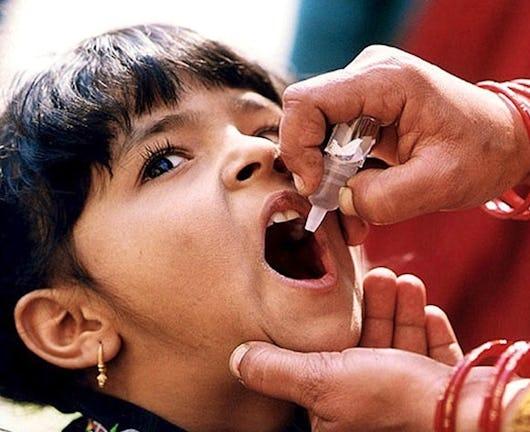
Throughout the course, you’ll reflect on and apply the lessons learned from the global polio eradication initiative, an effort led by the World Health Organisation resolved to eradicate the disease poliomyelitis. You will learn lessons from this initiative - the largest of its kind in history -and will apply data for decision-making going forward. You’ll also discuss the challenges and strategies that can be presented when applying data.
You will identify various different epidemiological systems in countries, such as the Democratic Republic of Congo and Nigeria, and on how to conduct data collection in remote areas. Then, you will discuss the best practices for conducting epidemiologic surveillance in a wide range of locations and will come to a range of solutions for the conclusion of how to conduct and use data in a variety of different situations.

  • Conduct epidemiologic surveillance to inform decision-making
  • Apply best practices for healthcare data collection and analysis
  • Apply the lessons learned from the polio eradication effort

Syllabus

Polio eradication basics
This course considers polio as a case study for addressing viruses and vaccines. This module will begin with an overview of the Global Polio Eradication Initiative and Implementation Science. Then, we will go into some details about the polio virus and vaccine, and eradication as a strategy for global disease control. It's important to think about how the characteristics of a disease, and the strategies chosen to control it, determine what data are collected and how.

Field Epidemiology and Outbreak Response
In this module, we will begin with an overview of surveillance systems - a core component of disease control and eradication. We will learn about surveillance as a decision support system for planned as well as outbreak responses. We will then consider various strategies for quality and complete surveillance in diverse contexts, and end the week with a roundtable discussion on conducting surveillance in hard to reach areas.

Data for Decision-making
In this module, we will begin with an overview of the different types of data collected by the polio program. We will then consider how these data are used to make critical decisions for the program. We will discuss strategies for collecting quality and complete data, and end the week with a roundtable discussion on incentivizing quality data.

Go to Class
MOOC List is learner-supported. When you buy through links on our site, we may earn an affiliate commission.

Related Courses

Confronting Gender Based Violence: Global Lessons for Healthcare Workers (Coursera) Coursera
Johns Hopkins University

Confronting Gender Based Violence: Global Lessons for Healthcare Workers (Coursera)

This course introduces participants from the healthcare sector to gender based violence (GBV), including global epidemiology of GBV; health outcomes; seminal research; and clinical best practices for GBV prevention, support, and management. A core curriculum is supplemented by lectures that contextualize the content with specific examples and programs from around the world.

Jun 22nd 2026
4 Weeks
Estadística aplicada a los negocios (Coursera) Coursera
Universidad Austral

Estadística aplicada a los negocios (Coursera)

La toma de decisiones está en la esencia de los negocios. Gerenciar es tomar decisiones, muchas veces bajo presión, con información desordenada y en un contexto de incertidumbre. Un aspecto básico es entender y analizar la información, organizar los datos de forma de facilitar su posterior uso y la toma de decisiones.

Jun 22nd 2026
4 Weeks
Managing the Organization (Coursera) Coursera
University of Illinois at Urbana-Champaign

Managing the Organization (Coursera)

This course is intended to help you become a better manager by helping you to more fully understand and deal with some of the complexities and challenges associated with managerial life in organizations. In this course, you will learn theories, principles, and frameworks that will help you to more effectively manage and lead the organizations that you belong to. We will view organizations from different perspectives that we will use as lenses to help us highlight common managerial challenges and point us toward solutions to those challenges. Some of these common challenges that we will explore in this course include using power effectively, implementing organizational change, understanding and managing organizational culture, decision-making including decision-making pitfalls and ethical traps, and leadership. As you learn and apply the principles from this course, you will be better prepared to navigate some of the complex challenges that you face as a manager.

Jun 24th 2026
4 Weeks
Future Healthcare Payment Models (Coursera) Coursera
Northeastern University

Future Healthcare Payment Models (Coursera)

This course will review the drivers of healthcare cost and solutions that have been proposed to address cost, quality and value of health care. Many point blame for high costs on payment models that pay healthcare providers for every service they provide to patients, essentially paying more for volume and service intensity. This is called a Fee for Service (FFS) payment model. Some solutions, arguably the more sustainable solutions, are the combined strategies of new payment models, care management, insurance plan designs, consumer engagement tools, and technology.

Jun 24th 2026
4 Weeks
Solución de problemas y toma de decisiones (Coursera) Coursera
Universidad Nacional Autónoma de México

Solución de problemas y toma de decisiones (Coursera)

Este curso te presenta técnicas que permiten entender las ventajas del pensamiento divergente (creativo) como una habilidad fundamental en la solución de problemas. Revisa, también, la metodología para manejar estilos participativos en la toma de decisiones asegurando la efectividad de las mismas y la aceptación por parte del personal al ser tomado en cuenta.

Jun 22nd 2026
4 Weeks
Python for Data Science, AI & Development (Coursera) Coursera
IBM

Python for Data Science, AI & Development (Coursera)

Kickstart your learning of Python for data science, as well as programming in general, with this beginner-friendly introduction to Python. Python is one of the world’s most popular programming languages, and there has never been greater demand for professionals with the ability to apply Python fundamentals to drive business solutions across industries.

Jun 23rd 2026
5-12 Weeks
Epidemiology: The Basic Science of Public Health (Coursera) Coursera
University of North Carolina

Epidemiology: The Basic Science of Public Health (Coursera)

Often called “the cornerstone” of public health, epidemiology is the study of the distribution and determinants of diseases, health conditions, or events among populations and the application of that study to control health problems. By applying the concepts learned in this course to current public health problems and issues, students will understand the practice of epidemiology as it relates to real life and makes for a better appreciation of public health programs and policies. This course explores public health issues like cardiovascular and infectious diseases – both locally and globally – through the lens of epidemiology.

Jun 22nd 2026
5-12 Weeks
Disease Screening in Public Health (Coursera) Coursera
University of Geneva

Disease Screening in Public Health (Coursera)

Current and future public health is characterized by the increase of chronic and degenerative diseases, corresponding to the worldwide ageing of the population. The increasing prevalence of these conditions together with the long incubation period of the chronic diseases and the restless technological innovations, offer new opportunities to develop strategies for early diagnosis.

Jun 22nd 2026
5-12 Weeks
Effective Problem-Solving and Decision-Making (Coursera) Coursera
University of California, Irvine

Effective Problem-Solving and Decision-Making (Coursera)

Critical thinking – the application of scientific methods and logical reasoning to problems and decisions – is the foundation of effective problem solving and decision making. Critical thinking enables us to avoid common obstacles, test our beliefs and assumptions, and correct distortions in our thought processes. Gain confidence in assessing problems accurately, evaluating alternative solutions, and anticipating likely risks. Learn how to use analysis, synthesis, and positive inquiry to address individual and organizational problems and develop the critical thinking skills needed in today’s turbulent times. Using case studies and situations encountered by class members, explore successful models and proven methods that are readily transferable on-the-job.

Jun 22nd 2026
4 Weeks
Six Sigma Advanced Define and Measure Phases (Coursera) Coursera
University System of Georgia

Six Sigma Advanced Define and Measure Phases (Coursera)

This course is for you if you are looking to dive deeper into Six Sigma or strengthen and expand your knowledge of the basic components of green belt level of Six Sigma and Lean. Six Sigma skills are widely sought by employers both nationally and internationally. These skills have been proven to help improve business processes and performance. This course will take you deeper into the principles and tools associated with the "Design" and "Measure" phases of the DMAIC structure of Six Sigma.

Jun 22nd 2026
5-12 Weeks