Cultures and Identities in Europe - Past, Present and Future (iversity)

Cultures and Identities in Europe - Past, Present and Future (iversity)

What cultures and identities make up Europe today? Which elements create this unique blend? How do institutions and policies intervene in this process? Enrol and explore these questions through the past, the present and the future of Europe.

This MOOC questions what European identity is and what we understand and promote as European culture. It explains fundamental European policies on culture, creativity and the media, with a specific focus on urban settings. The course critically explores the formation of diverse identities and cultures in Europe, by shedding light on the importance of memories and shared heritages in this process. Finally, it illustrates the policy dimension behind European cultural and media industries and questions dominant economistic approaches to cultural creativity.
Students who take the course will acquire knowledge on:
• Current debates on what is the 'European identity' and what is 'European culture' and what it means to talk of them in the singular or in the plural (cultures, identities).
• Relevant terms and understand the relationship between notions of identity, memory, heritage, and culture.
• Main approaches to cultural heritage and the public use of history.
• European policies in the media and cultural sector.
• Critical approaches to cultural industries: what are they? And why urban settings are so important for their development?

Go to Class
MOOC List is learner-supported. When you buy through links on our site, we may earn an affiliate commission.

Related Courses

The Modern and the Postmodern (Part 2) (Coursera) Coursera
Wesleyan University

The Modern and the Postmodern (Part 2) (Coursera)

This course examines how the idea of "the modern" develops at the end of the 18th century in European philosophy and literature, and how being modern (or progressive, or hip) became one of the crucial criteria for understanding and evaluating cultural change. Are we still in modernity, or have we moved beyond the modern to the postmodern?

Nov 2nd 2026
5-12 Weeks
Doing Business in Europe (Coursera) Coursera
ESCP Europe

Doing Business in Europe (Coursera)

Europe is a major world trade partner as well as a place where to acquire significant business experience. This is the reason why this MOOC has been designed with the view to explaining and guiding you in doing business in Europe. Do you really know Europe? How should you consider and approach the European continent? What business lessons can be drawn in a European perspective?

Oct 19th 2026
5-12 Weeks
Introduction to Intercultural Studies: Language and Culture (FutureLearn) FutureLearn
University of Leeds

Introduction to Intercultural Studies: Language and Culture (FutureLearn)

Explore intercultural communication by understanding the relationship between language and cultural identity. Examine the relationship between language, nationality and cultural identity. On this course you will analyse why language is a social construction and examine how it relates to cultural identity.

Self Paced
2 Weeks
Cosmopolitan Tang: Aristocratic Culture in China (edX) EdX
HarvardX,Harvard University

Cosmopolitan Tang: Aristocratic Culture in China (edX)

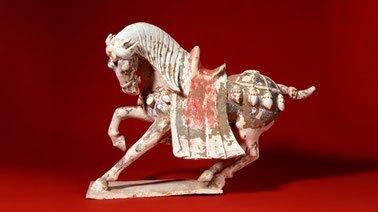
Explore the reunification of China under the Tang with a focus on aristocratic culture — from poetry to calligraphy to literature. By the Tang period, China was divided into northern and southern dynasties with different rulers and political systems. The north was conquered by relatively unsophisticated barbarians, but in the south, the aristocratic families established a refined appreciation of writing and literature.

Self Paced
Self-Paced
Psychology of Personal Growth (edX) EdX
The Hong Kong University of Science and Technology - HKUST,HKUSTx

Psychology of Personal Growth (edX)

Learn to understand personal growth from a comparative perspective. Want to learn about how you become who you are, but not sure where to kick off that journey? This is a fantastic course for you. This course covers important factors influencing your growing up. We discuss personality and emotion, romantic and intimate relationships, as well as the interplay between culture and these factors on your personal growth journey.

Self Paced
Self-Paced
Introduction to Intercultural Studies: The Branding of Culture (FutureLearn) FutureLearn
University of Leeds

Introduction to Intercultural Studies: The Branding of Culture (FutureLearn)

Learn how products move across borders and how branding problematically draws on narratives of culture and place. Discover how marketing uses narratives of culture and place. The course examines an aspect of marketing through the ways branding makes use of cultural stereotypes to promote products or places.

Self Paced
2 Weeks
The Cycle: Management of Successful Arts and Cultural Organizations (Coursera) Coursera
University of Maryland, College Park

The Cycle: Management of Successful Arts and Cultural Organizations (Coursera)

What makes a successful arts and cultural organization? Led by DeVos Institute Chairman Michael M. Kaiser and President Brett Egan, this course will introduce you to a management theory called the Cycle which supports thriving arts and cultural organizations. Learning from our work with managers from over 80 countries around the world, the DeVos Institute developed the Cycle as a simple, but powerful tool to assist managers in their effort to respond to an increasingly complex environment and propel their institutions to excellence.

Nov 2nd 2026
5-12 Weeks
Organizational Behavior: How to Manage People (Coursera) Coursera
IESE Business School

Organizational Behavior: How to Manage People (Coursera)

Peter Drucker, a pioneer in the field of management, once said that people have a perverse tendency to behave like human beings. Of course, we are not machines, and certainly not programmable. But through the study of organizational behavior, we can gain insights into what makes people tick within a work context. Increasing your understanding of your own behavior and that of your colleagues, teams and leaders, is an important first step to bringing positive change to how you and your organization work.

Oct 19th 2026
4 Weeks
International migrations: a global issue (Coursera) Coursera
Sciences Po

International migrations: a global issue (Coursera)

The world is moving, but not all opinions and governments are willing to accept this poorly understood reality. The issue affects both states and the planet, in a process of globalization and of regionalization of migrations, and raises new questions for international relations, now including the South. This course aims at improving knowledge of the subject, addressing the key issues raised by international migration, and assessing the trends of tomorrow.

Oct 19th 2026
5-12 Weeks
The Role of Culture in Teaching English Learners (Coursera) Coursera
Rice University

The Role of Culture in Teaching English Learners (Coursera)

This course is designed for early career teachers (0-3 years of experience) to learn about the foundations of culture and the key role that culture plays in teaching English learners. You will also learn about the connection between language and culture and how to appropriately incorporate cultural topics into instruction. We will discuss how culture is an asset in the classroom and ways to celebrate diversity with students.

Oct 19th 2026
4 Weeks
Global Marketing: Cultural Frameworks (Coursera) Coursera
University of Illinois at Urbana-Champaign

Global Marketing: Cultural Frameworks (Coursera)

This course reviews the dramatic changes that Globalization has brought to businesses. Markets are growing culturally diverse and companies face the challenge of managing an increasing culturally diverse workforce. It is then increasingly important for managers to incorporate cultural variables into their decision making models.

Oct 19th 2026
4 Weeks