EdX

Creating a Digital Cultural Heritage Community (edX)

Creating a Digital Cultural Heritage Community (edX)

Learn how to create a community for digital cultural heritage through innovative practices for user engagement. Do you want to know what happens behind the scenes of museums, archives and libraries? Have you ever wondered what these organisations do to share their collections with audiences? Would you like to learn how to build a strong digital community for cultural heritage?

Class Deals by MOOC List - Click here and see EdX's Active Discounts, Deals, and Promo Codes.

If your answer is yes, then this MOOC is for you! In this course, professionals and volunteers in cultural heritage institutions, as well as teachers, students and amateurs, can learn how to create user engagement with digital cultural heritage.

We will teach you about digital curation and annotation. You will learn how to use online repositories, cutting-edge tools and digital strategies, in order to stimulate true interaction and dialogue. At the end of this program, you will be able to help others to discover and enjoy the benefits of cultural heritage. Among many other examples, we take a look at the use case of Europeana, the digital portal for European cultural heritage content.
After following the main module that teaches you all about user engagement, you will bring theory into practice by diving deeper into specific examples. Apart from the introduction and the recommended module on user engagement, you are able to craft your own path in this MOOC by picking and choosing between modules. They cover topics such as photography, museums, and dance.
These domains offer many possibilities for innovative user engagement strategies. Furthermore, they all form interesting links to perception and memory, enabling them to be used to foster dialogue around cultural heritage.
Do you want to acquire knowledge of user engagement theory? Would you like to learn how to apply these ideas and strategies to cultural heritage contexts? Have you ever wondered how to use digital collections to create new ways of engaging and inspiring audiences? Enroll now and start learning!

What you'll learn

  • How to create and reflect on user engagement with online collections
  • How to curate and annotate digital cultural heritage
  • What strategies can be used to educate audiences
  • How to access and use digital repositories and platforms
  • How to creatively engage with photography and dance content.

Syllabus

Module 1
Introduction
We introduce the Kaleidoscope and CultureMoves projects and give tips on how to best navigate through the course, its modules and units.

Module 2
User engagement
This module explains core concepts and tools to help you better understand user engagement. We introduce the theory behind educating and engaging audiences and teach you how to apply this knowledge to digital cultural heritage contexts.

Module 3
Photography
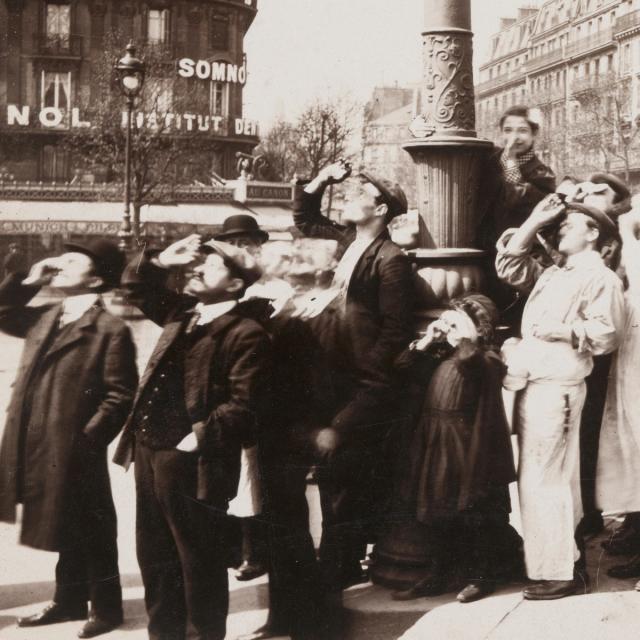
How can digital collections create new ways of inspiring audiences? We try to find answers by looking at case studies from 1950s photography. Examples and exercises will help you read, understand and engage with the visual identity of the past.

Module 4
Museums
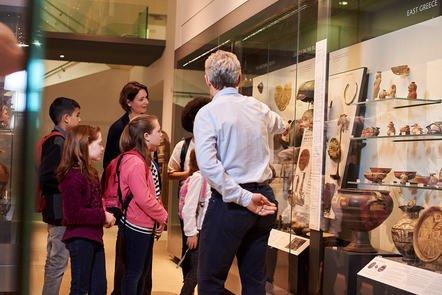
By sharing good practices, we provide insights on digital strategies used to stimulate engagement in museum contexts. We consider interaction with audiences before, during and after a museum visit takes place.

Module 5
Dance and site
In this module, we introduce you to various models of site-dance practice and the intersection of dance and cultural heritage sites through the lens of creative tourism. Learners will be encouraged to use dance tools to create digital stories or scrapbooks.

Module 6
Im/material cultural heritage
The im/material cultural heritage module considers the relationships of dance and material cultural heritage. What happens when dance enters the site of the museum? We will emphasise dance as well as artefacts such as masks and costumes in art historical and archeological museums.

Module 7
Historical dance
This module looks at dance in historical buildings and cultural heritage sites, but also considers dance notation and costumes. It offers you a chance to learn and interact with the basics of Renaissance and Baroque dancing.

Module 8
Final exam
For those that want to obtain an edX certificate, this course closes with a multiple choice exam on the theory and practice of user engagement in digital cultural heritage. It assesses your knowledge of concepts and tools and tests your ability to apply this to the contexts of photography and/or dance.
Go to Class
MOOC List is learner-supported. When you buy through links on our site, we may earn an affiliate commission.

Related Courses

Creating Meaningful and Inclusive Museum Practices (FutureLearn) FutureLearn
International Council of Museums

Creating Meaningful and Inclusive Museum Practices (FutureLearn)

Learn how to engage and collaborate with diverse communities to turn museums into spaces of social inclusion and belonging. Encourage wider cultural participation, community inclusion, and co-curation. This course will broaden your perspective on the role of contemporary museums in community engagement and equip you with the skills to develop meaningful and inclusive museum projects.

Nov 29th 2021
4 Weeks
Stereoscopy: An Introduction to Victorian Stereo Photography (FutureLearn) FutureLearn
University of Edinburgh,National Museum of Scotland

Stereoscopy: An Introduction to Victorian Stereo Photography (FutureLearn)

Discover why the stereoscope and stereo photography mesmerised Victorians when they first appeared at 1851’s Great Exhibition. Following its presentation to the world at the Great Exhibition in London in 1851, the stereoscope – a device that makes images appear 3D – mesmerised Victorians. Collecting and viewing stereo photographs became a craze.

No sessions available
2 Weeks
Developing Digital Transition Strategies for Cultural Heritage Institutions (edX) EdX
KU Leuven University,KULeuvenX

Developing Digital Transition Strategies for Cultural Heritage Institutions (edX)

How to develop and implement effective digital strategies in Cultural Heritage Institutions. Recently, the necessity for Cultural Heritage Institutions (CHIs) to keep up with the rapid changes in the digitization of society and culture brought them to confront new challenges: 1) adaptation of new digital technologies and 2) the development of impactful digital workflows.

Sep 18th 2023
5-12 Weeks
Anthropology of Current World Issues (edX) EdX
University of Queensland,UQx

Anthropology of Current World Issues (edX)

Learn to use anthropological ideas to see the world from a range of perspectives and points of view. This course will allow you to better understand the world around you through utilising the anthropological lens. You will learn about the way in which anthropology as a discipline can shed new perspectives on current world issues, from indigeneity to migration and material culture.

Self Paced
Self-Paced
Recovering the Humankind's Past and Saving the Universal Heritage (Coursera) Coursera
Sapienza University of Rome

Recovering the Humankind's Past and Saving the Universal Heritage (Coursera)

Archaeology has as its objective the recovery and revival of humankind past, and as its aim the rescue and preservation of cultural heritage. Archaeology is, among human sciences, the discipline with the strongest importance for the rediscovery, but also for the preservation and protection of cultural heritage, as Humankind’s universal patrimony. You will be introduced to the way we ourselves reflect on and are engaged with the study of human past: from the practical and material recovery of ancient traces in the field to the study and interpretation. On the other hand, the discovery of human past implies the correct conservation and presentation for both experts and general public: the study and protection of the past we share every day prevent from any possible destruction, misuse, abuse and thus cancellation of human memory.

Jul 27th 2026
5-12 Weeks
Seeing Through Photographs (Coursera) Coursera
The Museum of Modern Art

Seeing Through Photographs (Coursera)

Although taking, sharing, and viewing photographs has become second nature for many of us, our regular engagement with images does not necessarily make us visually literate. This course aims to address the gap between seeing and truly understanding photographs by introducing a diversity of ideas, approaches, and technologies that inform their making. In this course you will look closely at 100 photographs from the collection of The Museum of Modern Art, going behind the scenes of the Museum and into artist studios through original films and audio interviews.

Jul 27th 2026
5-12 Weeks
The organisation of Cultural Enterprises II (EMMA) EMMA
University of Naples Federico II

The organisation of Cultural Enterprises II (EMMA)

The structure of a company can take on different shapes. This course presents the main existing possibilities, looking at them from the inside: the presented examples are directly related to cultural heritage. Knowing the different organizational structures becomes a winning weapon to better address the internal and external dynamics of any organization.

Self Paced
Self-Paced
The Organisation of cultural Enterprises (EMMA) EMMA
University of Naples Federico II

The Organisation of cultural Enterprises (EMMA)

Whenever a group of people work together, we need to think about organisation. If we can guarantee successful organisation, then the results will be good. This course is for anyone who works, or would like to work, in an organisation, or would simply like to know how they work. With a focus on the cultural heritage sector, and how organisations in the field work.

No sessions available
5-12 Weeks
Europeana in your classroom: building 21st-century competences with digital cultural heritage (European Schoolnet Academy) European Schoolnet Academy
European Schoolnet

Europeana in your classroom: building 21st-century competences with digital cultural heritage (European Schoolnet Academy)

The Europeana in your classroom: building 21st-century competences with digital cultural heritage MOOC is meant to enhance teachers' cultural and digital competence and practices, improving their understanding of cultural heritage in order to more efficiently integrate it into their lessons and practices, regardless of the subject they usually teach.

Self Paced
Self-Paced
Tangible Things: Discovering History Through Artworks, Artifacts, Scientific Specimens, and the Stuff Around You (edX) EdX
HarvardX,Harvard University

Tangible Things: Discovering History Through Artworks, Artifacts, Scientific Specimens, and the Stuff Around You (edX)

Gain an understanding of history, museum studies, and curation by looking at, organizing, and interpreting art, artifacts, scientific curiosities, and the stuff of everyday life. Have you ever wondered about how museum, library, and other kinds of historical or scientific collections all come together? Or how and why curators, historians, archivists, and preservationists do what they do?

Self Paced
Self-Paced