Creating and Teaching a Pathways Math Course (Canvas.net)

Offered by Canvas Network,
Creating and Teaching a Pathways Math Course (Canvas.net)

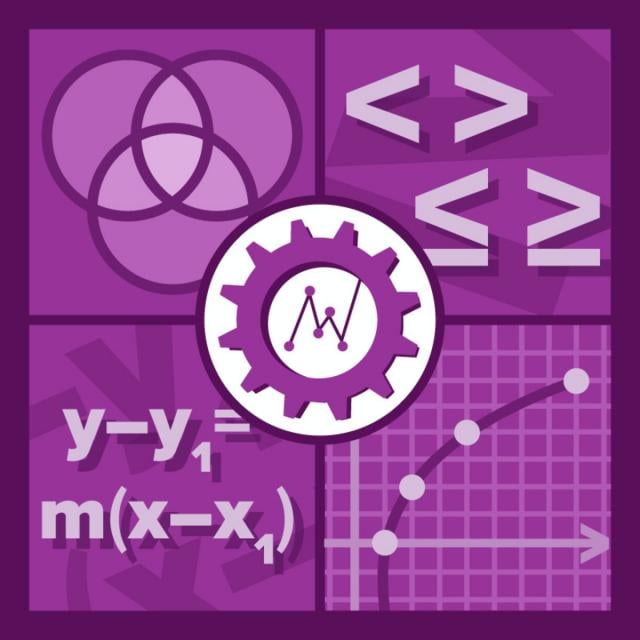
During this four week course, instructors will learn how to create and teach an exciting new type of developmental math course known as a pathways course. These courses (e.g., Math Literacy for College Students, Quantway™, and Statway™) are becoming a popular way to redesign college math programs.

During this four week course, instructors will learn how to create and teach an exciting new type of developmental math course known as a pathways course. These courses (e.g., Math Literacy for College Students, Quantway™, and Statway™) are becoming a popular way to redesign college math programs.
However, their innovative nature provides a set of challenges both in and out of the classroom. To help instructors overcome those challenges, this course will address the following topics concerning pathways courses:

• History and development
• Philosophy
• Real problem solving
• Role of skills and algebra
• Group work
• Assessments
• Implementation problems and strategies

Participants will be a part of an active and engaging class designed to address individual concerns and increase instructor confidence.

More info: https://www.canvas.net/courses/creating-and-teaching-a-pathways-math-course

Go to Class
MOOC List is learner-supported. When you buy through links on our site, we may earn an affiliate commission.

Related Courses

Ubiquitous Learning and Instructional Technologies (Coursera) Coursera
University of Illinois at Urbana-Champaign

Ubiquitous Learning and Instructional Technologies (Coursera)

This course will analyze currently available technologies for learning. Areas addressed include: learning management systems, intelligent tutors, computer adaptive testing, gamification, simulations, learning in and through social media and peer interaction, universal design for learning, differentiated instruction systems, big data and learning analytics, attention monitoring, and affect-aware systems.

Sep 28th 2026
4 Weeks
Designing Learning Innovation (Coursera) Coursera
Politecnico di Milano

Designing Learning Innovation (Coursera)

Where to start to innovate your teaching? But before that, what does it mean to innovate in the classroom? Designing Learning Innovation aims to put the designing culture at the service of learning innovation, supporting those who do not have a specific pedagogical background and those who wish to learn the basic tools of a good teaching design then to continue exploring the frontiers of innovation. A set of logical and methodological tools to innovate teaching, finding the most suitable approaches with one’s own vision of the teaching-learning experience.

Sep 28th 2026
5-12 Weeks
How Do We Stack Up? Using OECD’S PISA to Drive Progress in U.S. Education (Canvas Network) Canvas Network
Foundation for Excellence in Education

How Do We Stack Up? Using OECD’S PISA to Drive Progress in U.S. Education (Canvas Network)

This course will take a deep dive into OECD’s Programme for International Student Assessment (PISA). It will explore how the United States performs relative to other countries and the shared education trends of top performing countries. Participants will gain insight into the implications of these results on U.S. education.

Self Paced
Self-Paced
Differential Equations Part II Series Solutions (Coursera) Coursera
Korea Advanced Institute of Science and Technology - KAIST

Differential Equations Part II Series Solutions (Coursera)

This introductory courses on (Ordinary) Differential Equations are mainly for the people, who need differential equations mostly for the practical use in their own fields. So we try to provide basic terminologies, concepts, and methods of solving various types of differential equations as well as a rudimentary but indispensable knowledge of the underlying theory and some related applications.

Sep 28th 2026
5-12 Weeks
English for Teaching Purposes (Coursera) Coursera
Universitat Autònoma de Barcelona

English for Teaching Purposes (Coursera)

Thinking about teaching your university subject in English but it’s not the Language you normally use? Then, English for teaching purposes is the course for you. A course on English and teaching methodology that aims to help university lecturers do their teaching in English, in line with university internationalisation policies. The course structure is the same for all learners and there are opportunities for them to link up with colleagues from universities all over the world who share the same discipline and discourse community, to ask questions and exchange ideas.

Sep 28th 2026
4 Weeks
Introduction à la théorie de Galois (Coursera) Coursera
École normale supérieure

Introduction à la théorie de Galois (Coursera)

Le cours expose la théorie de Galois, du classique critère de non-résolubilité des équations polynomiales aux méthodes plus avancées de calcul de groupes de Galois par réduction modulo un nombre premier. Le thème général de cette théorie est l'étude des racines d'un polynôme et concerne en particulier la possibilité de les exprimer à partir des coefficients de ce polynôme. Evariste Galois considère les symétries de ces racines et associe ainsi à ce polynôme un groupe de permutations de ses racines, que l'on appelle maintenant son groupe de Galois.

Sep 28th 2026
5-12 Weeks
Estadística y probabilidad (Coursera) Coursera
Universidad Nacional Autónoma de México

Estadística y probabilidad (Coursera)

En este curso podrás apoyar tu formación en temas de estadística y probabilidad I. Más allá de que encuentres aquí un apoyo para lograr una calificación, el curso busca ayudarte a que adquieras los aprendizajes que comprenden temas de estadística descriptiva, datos bivariados y probabilidad, los cuales te serán de utilidad en tu paso por la licenciatura y en tu vida profesional.

Sep 28th 2026
4 Weeks
Calculus: Single Variable Part 4 - Applications (Coursera) Coursera
University of Pennsylvania

Calculus: Single Variable Part 4 - Applications (Coursera)

Calculus is one of the grandest achievements of human thought, explaining everything from planetary orbits to the optimal size of a city to the periodicity of a heartbeat. This brisk course covers the core ideas of single-variable Calculus with emphases on conceptual understanding and applications. The course is ideal for students beginning in the engineering, physical, and social sciences.

Sep 28th 2026
5-12 Weeks