EdX

Crear música con tecnología (edX)

Crear música con tecnología (edX)

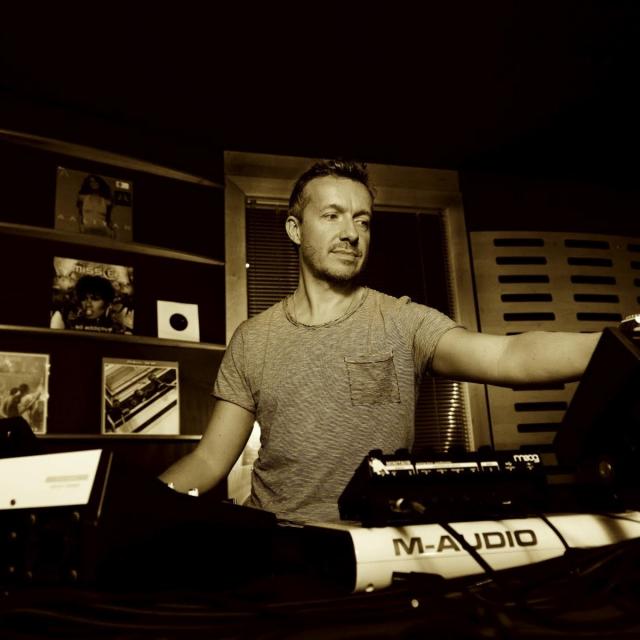
Aprende sobre el proceso de producción de música y tecnología musical -incluyendo la grabación, la edición y la mezcla- y sobre las herramientas disponibles para crear música contemporánea en tu computadora. El curso de producción musical comenzará con algo de información sobre la naturaleza del sonido y la forma en la que lo percibimos.

Class Deals by MOOC List - Click here and see EdX's Active Discounts, Deals, and Promo Codes.

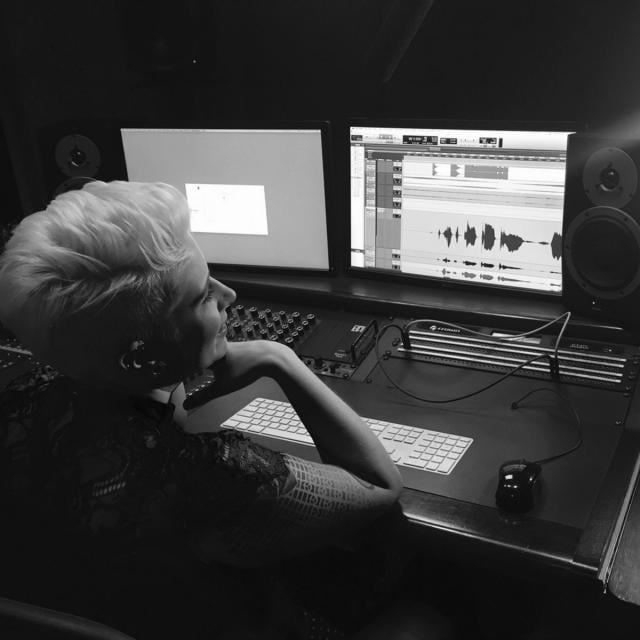
Estudiaremos los componentes necesarios para grabar audio en la computadora, con el fin de comprender los dispositivos que el sonido debe atravesar durante el proceso de producción musical.
En este curso de música nos centraremos en las herramientas de edición, esenciales para la producción de música contemporánea, que todas las estaciones de trabajo de audio digital (EAD) proveen.
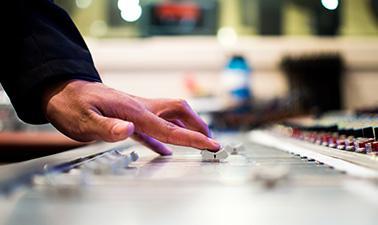
Estudiaremos las funciones básicas del hardware y el software para crear música de las consolas y mezcladoras de sonido, incluidos volumen, panorámicas, mute, buses, inserciones, envíos y submezclas.
En este curso enfocado en las herramientas de la ingeniería de sonido nos centraremos en:

  • Las herramientas que se pueden utilizar para dar efectos musicales a la dinámica de las pistas y en cómo usarlas en un contexto musical
  • Veremos la ecualización y el delay, y estudiaremos los diversos efectos de sonido que se derivan de estos dispositivos
  • Estudiaremos el sintetizador, una herramienta muy importante dentro de la producción de música contemporánea
  • Aprenderemos cómo funciona el sintetizador, el cual te dará un lenguaje para describir el sonido. La música es una forma de arte colaborativa, por lo tanto, no hay nada más poderoso que una comunicación efectiva

This course is part of the Grabación y producción musical XSeries Program.

What you'll learn:

  • Entender cómo viaja el sonido

-Entender cómo configurar tu estación de trabajo de audio digital EADU y cómo grabamos y capturamos señales

  • Identificar las partes de una mezcladora musical y describir cómo funcionan
  • Definir las diferentes categorías de los efectos de sonido
  • Identificar problemas como ruido o distorsión en tus archivos de audio
  • Entender cómo y cuándo usar efectos dinámicos
  • Crear amplitud y espacio es tu mezcla musical
  • Entender el lenguaje del timbre
Go to Class
MOOC List is learner-supported. When you buy through links on our site, we may earn an affiliate commission.

Related Courses

Exploring Beethoven's Piano Sonatas (Coursera) Coursera
Curtis Institute of Music

Exploring Beethoven's Piano Sonatas (Coursera)

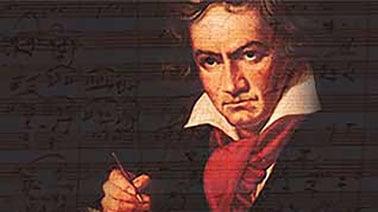
Our relationship to Beethoven is a deep and paradoxical one. For many musicians, he represents a kind of holy grail: His music has an intensity, rigor, and profundity which keep us in its thrall, and it is perhaps unequalled in the interpretive, technical, and even spiritual challenges it poses to performers. At the same time, Beethoven’s music is casually familiar to millions of people who do not attend concerts or consider themselves musically inclined. Two hundred years after his death, he is everywhere in the culture, yet still represents its summit. This course takes an inside-out look at the 32 piano sonatas from the point of view of a performer.

Jun 8th 2026
5-12 Weeks
Soundcool: Módulos de vídeo y propuestas creativas (edX) EdX
Universitat Politècnica de València,UPValenciaX

Soundcool: Módulos de vídeo y propuestas creativas (edX)

Aprende los conceptos básicos para poder usar la parte correspondiente a vídeo del sistema Soundcool para educación musical y creación colaborativa mediante móviles, tablets y Kinect. En este curso en línea aprenderás los conceptos básicos para poder usar la parte de vídeo del sistema Soundcool para educación musical y creación colaborativa mediante móviles, tablets y otros dispositivos.

Self Paced
Self-Paced
English Composition I (Coursera) Coursera
Duke University

English Composition I (Coursera)

You will gain a foundation for college-level writing valuable for nearly any field. Students will learn how to read carefully, write effective arguments, understand the writing process, engage with others' ideas, cite accurately, and craft powerful prose. Course Learning Objectives: summarize, analyze, question, and evaluate written and visual texts; argue and support a position; recognize audience and disciplinary expectations; identify and use the stages of the writing process; identify characteristics of effective prose; apply proper citation practices; discuss applying your writing knowledge to other writing occasions

Jun 8th 2026
5-12 Weeks
First Nights: Monteverdi’s L’Orfeo and the Birth of Opera (edX) EdX
HarvardX,Harvard University

First Nights: Monteverdi’s L’Orfeo and the Birth of Opera (edX)

Learn about Claudio Monteverdi’s L’Orfeo, one of the first operas ever written. Claudio Monteverdi’s L’Orfeo premiered in Mantua in 1607, and continues to be regarded as one of the most important examples of early opera. With L’Orfeo, Monteverdi helped to establish the techniques and traditions that continue to inform the genre of opera to this day.

Self Paced
Self-Paced
First Nights: Berlioz’s Symphonie Fantastique and Program Music in the 19th Century (edX) EdX
HarvardX,Harvard University

First Nights: Berlioz’s Symphonie Fantastique and Program Music in the 19th Century (edX)

Learn about Hector Berlioz’s Symphonie Fantastique, an iconic Romantic symphony that ushered in an era of narrative “program music.” Six years after the premiere of Beethoven’s monumental Ninth Symphony, composer Hector Berlioz sought to make use of the symphonic genre, but on his own terms. Indeed, he wrote not only a five-movement symphony, but also a narrative program to accompany and explain the symphony.

Self Paced
Self-Paced
Fundamentals of Audio and Music Engineering: Part 1 Musical Sound & Electronics (Coursera) Coursera
University of Rochester

Fundamentals of Audio and Music Engineering: Part 1 Musical Sound & Electronics (Coursera)

In this course students learn the basic concepts of acoustics and electronics and how they can applied to understand musical sound and make music with electronic instruments. Topics include: sound waves, musical sound, basic electronics, and applications of these basic principles in amplifiers and speaker design.

Jun 8th 2026
5-12 Weeks
Building Your Career in Music: Developing a Brand and Funding (edX) EdX
Berklee College of Music,BerkleeX

Building Your Career in Music: Developing a Brand and Funding (edX)

Explore how to launch your musical career from developing your artistic identity to recording your first record. This course shares practical tips and strategies to help you take your first step into launching a successful music career as a musical artist. We’ll cover everything from developing your unique identity as an artist and how to lead a band all the way to planning and recording your first independent record with the help of crowdfunding.

Self Paced
Self-Paced
Creativity & Entrepreneurship (edX) EdX
Berklee College of Music,BerkleeX

Creativity & Entrepreneurship (edX)

Learn skills and listen to examples from world-renown entrepreneurs and innovators as they discuss the parallels between the creative and entrepreneurial journeys -- and why entrepreneurship, much like music or creativity, is something we all possess. Creativity & Entrepreneurship will help you tap into your inner creativity and learn how to leverage it for career development or business innovation.

Self Paced
Self-Paced
First Nights - Beethoven's 9th Symphony and the 19th Century Orchestra (edX) EdX
HarvardX,Harvard University

First Nights - Beethoven's 9th Symphony and the 19th Century Orchestra (edX)

Learn about Beethoven’s monumental 9th Symphony and forms of orchestral music. Ludwig van Beethoven’s 9th Symphony premiered in Vienna in 1824, and continues to be one of the most popular symphonies in the repertoire. The monumental symphony’s size and complexity stretches traditional instrumental forms to the breaking point, and its famous choral finale changed our view of orchestral music forever.

Self Paced
Self-Paced
World Music: Global Rhythms (edX) EdX
MIT,MITx

World Music: Global Rhythms (edX)

Learn to recognize, feel and play rhythms from around the world. In this course, you’ll be learning about musical rhythm from across the world. You don’t have to read music notation to take this course; you don’t have to play an instrument. You don’t need to know any special musical terminology or theory to begin; You will learn all the concepts you need as we go… and the terminology and how it varies across the world.

Self Paced
Self-Paced
Guitar for Beginners (Coursera) Coursera
Berklee College of Music

Guitar for Beginners (Coursera)

Grasp the essentials needed to begin playing acoustic or electric guitar. You'll learn an easy approach to get you playing quickly, through a combination of exploring the instrument, performance technique, and basic music theory. For students who have long thought about picking up the acoustic or electric guitar, this course will provide an easy-access foundation that will get you playing.

Jun 8th 2026
5-12 Weeks