A Crash Course in Data Science (Coursera)

A Crash Course in Data Science (Coursera)

By now you have definitely heard about data science and big data. In this one-week class, we will provide a crash course in what these terms mean and how they play a role in successful organizations. This class is for anyone who wants to learn what all the data science action is about, including those who will eventually need to manage data scientists. The goal is to get you up to speed as quickly as possible on data science without all the fluff. We've designed this course to be as convenient as possible without sacrificing any of the essentials.

Class Deals by MOOC List - Click here and see Coursera's Active Discounts, Deals, and Promo Codes.

This is a focused course designed to rapidly get you up to speed on the field of data science. Our goal was to make this as convenient as possible for you without sacrificing any essential content. We've left the technical information aside so that you can focus on managing your team and moving it forward.
After completing this course you will know.

  1. How to describe the role data science plays in various contexts
  2. How statistics, machine learning, and software engineering play a role in data science
  3. How to describe the structure of a data science project
  4. Know the key terms and tools used by data scientists
  5. How to identify a successful and an unsuccessful data science project
  6. The role of a data science manager

What You Will Learn

  • Describe Data Science’s role in various contexts
  • Understand how Statistics and Machine Learning affect Data Science
  • Use the key terms used by data scientist
  • Predict whether a Data Science project will be successful

Course 1 of 5 in the Executive Data Science Specialization.

Syllabus

WEEK 1
A Crash Course in Data Science
This one-module course constitutes the first "week" of the Executive Data Science Specialization. This is an intensive introduction to what you need to know about data science itself. You'll learn important terminology and how successful organizations use data science.

Go to Class
MOOC List is learner-supported. When you buy through links on our site, we may earn an affiliate commission.

Related Courses

Experimentation for Improvement (Coursera) Coursera
McMaster University

Experimentation for Improvement (Coursera)

We are always using experiments to improve our lives, our community, and our work. Are you doing it efficiently? Or are you (incorrectly) changing one thing at a time and hoping for the best? In this course, you will learn how to plan efficient experiments - testing with many variables. Our goal is to find the best results using only a few experiments. A key part of the course is how to optimize a system.

Aug 17th 2026
5-12 Weeks
Matrix Methods (Coursera) Coursera
University of Minnesota

Matrix Methods (Coursera)

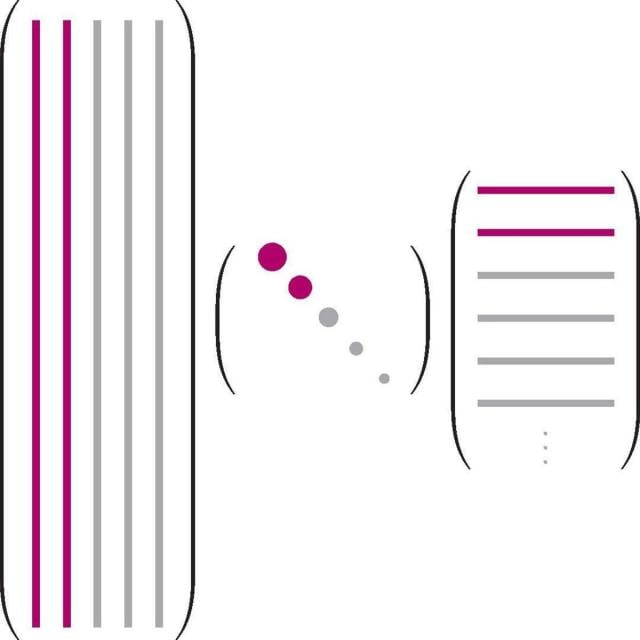
Mathematical Matrix Methods lie at the root of most methods of machine learning and data analysis of tabular data. Learn the basics of Matrix Methods, including matrix-matrix multiplication, solving linear equations, orthogonality, and best least squares approximation. Discover the Singular Value Decomposition that plays a fundamental role in dimensionality reduction, Principal Component Analysis, and noise reduction.

Aug 17th 2026
5-12 Weeks
Fundamentos de Excel para Negocios (Coursera) Coursera
Universidad Austral

Fundamentos de Excel para Negocios (Coursera)

Cuando finalices este curso habrás logrado un gran número de habilidades como introducir información, ordenarla, manipularla, realizar cálculos de diversa índole (matemáticos, trigonométricos, estadísticos, financieros, ingenieriles, probabilísticos), extraer conclusiones, trabajar con fechas y horas, construir gráficos, imprimir reportes y muchas más.

Aug 17th 2026
5-12 Weeks
Redes Ecológicas (Coursera) Coursera
Universidade de São Paulo, Brasil

Redes Ecológicas (Coursera)

Todos os seres vivos estão conectados entre si por interações ecológicas, formando a “colina emaranhada” de Darwin, metáfora inspirada pela “teia da vida” de Humboldt. Desemaranhar essa complexidade é uma tarefa desafiadora, mas factível, desde que você use ferramentas adequadas. A ciência de redes nos ajuda com excelentes ferramentas conceituais e operacionais.

Aug 17th 2026
4 Weeks
Earth Economics (Coursera) Coursera
Erasmus University Rotterdam

Earth Economics (Coursera)

After this course you will be an Earth Economist that can provide evidence-based advise on the best global policy. As an Earth Economist you will better understand the behavior and advice of economists, have become a better economist yourself and know where to find Earth's data and how to analyze these world observations. Our planet is too important: we need you to get engaged!

Aug 17th 2026
5-12 Weeks
Mathematical Biostatistics Boot Camp 1 (Coursera) Coursera
Johns Hopkins University

Mathematical Biostatistics Boot Camp 1 (Coursera)

This class presents the fundamental probability and statistical concepts used in elementary data analysis. It will be taught at an introductory level for students with junior or senior college-level mathematical training including a working knowledge of calculus. A small amount of linear algebra and programming are useful for the class, but not required.

Aug 17th 2026
4 Weeks
Introduction to TensorFlow for Artificial Intelligence, Machine Learning, and Deep Learning (Coursera) Coursera
DeepLearning.AI

Introduction to TensorFlow for Artificial Intelligence, Machine Learning, and Deep Learning (Coursera)

If you are a software developer who wants to build scalable AI-powered algorithms, you need to understand how to use the tools to build them. This course is part of the upcoming Machine Learning in Tensorflow Specialization and will teach you best practices for using TensorFlow, a popular open-source framework for machine learning.

Aug 17th 2026
4 Weeks
Remote Sensing Image Acquisition, Analysis and Applications (Coursera) Coursera
UNSW Sydney - University of New South Wales

Remote Sensing Image Acquisition, Analysis and Applications (Coursera)

Welcome to Remote Sensing Image Acquisition, Analysis and Applications, in which we explore the nature of imaging the earth's surface from space or from airborne vehicles. This course covers the fundamental nature of remote sensing and the platforms and sensor types used. It also provides an in-depth treatment of the computational algorithms employed in image understanding, ranging from the earliest historically important techniques to more recent approaches based on deep learning.

Aug 17th 2026
13-24 Weeks
Julia Scientific Programming (Coursera) Coursera
University of Cape Town

Julia Scientific Programming (Coursera)

This four-module course introduces users to Julia as a first language. Julia is a high-level, high-performance dynamic programming language developed specifically for scientific computing. This language will be particularly useful for applications in physics, chemistry, astronomy, engineering, data science, bioinformatics and many more.

Aug 17th 2026
4 Weeks